Roasted Cauliflower Steaks: The Most Gloriously Satisfying Plant-Based Dinner That Converts Everyone
Introduction: Why Roasted Cauliflower Steaks Are the Most Wonderfully Surprising Dinner You Can Put on the Table
Roasted cauliflower steaks are the recipe that genuinely changes how people think about vegetables — not in an aspirational, theoretical way, but in the immediate, visceral, fork-in-hand way that happens when something tastes significantly better than expected. There is a moment that occurs every single time I serve these at a dinner table — a moment of mild scepticism followed by a first bite followed by a silence that means the person eating is recalibrating their understanding of what a vegetable-centred meal can actually be. That moment is what makes roasted cauliflower steaks one of the most satisfying recipes in my entire repertoire.
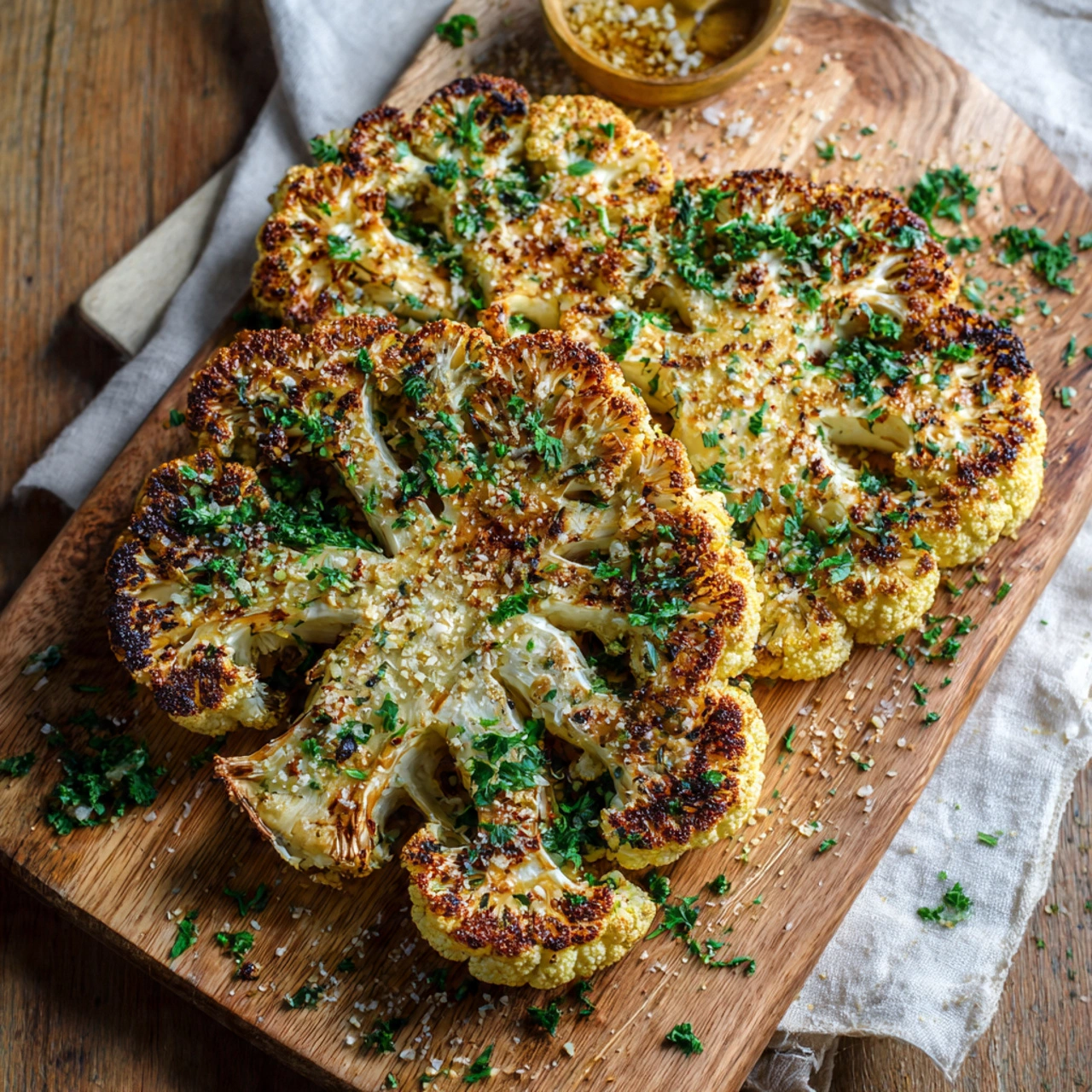
What makes a great roasted cauliflower steak different from a simply roasted piece of cauliflower is the Maillard reaction — the same chemical process that gives a seared steak its deeply caramelised crust, a roasted chicken its golden skin, and a properly made piece of toast its complex flavour. When a thick cauliflower steak is placed in a very hot pan or oven and left to develop colour on its flat cut surface, those same caramelisation and browning reactions occur, producing a deeply golden, slightly nutty, complex flavour that has nothing in common with boiled or steamed cauliflower. The texture transforms simultaneously — crispy and caramelised at the edges, tender and almost creamy at the center — and the result is something genuinely meaty and substantial in a way that satisfies in exactly the way a main course should.
This guide gives you everything you need to make the best roasted cauliflower steaks of your life — the complete ingredient list with the reasoning behind each choice, the step-by-step technique with all the details that matter, the pro tips that separate a truly excellent result from a merely decent one, the common mistakes that are easy to avoid, storage and serving suggestions for every occasion, a complete FAQ, and a full nutrition breakdown.
What Makes Roasted Cauliflower Steaks a Genuinely Brilliant Main Course
Before the recipe itself, it is worth addressing the question that some people bring to this dish — can a cauliflower steak really be satisfying enough to serve as a main course? The answer is an emphatic yes, and the reasons are both culinary and practical.
Culinarily, a properly executed roasted cauliflower steak with a well-built sauce or accompaniment delivers the textural contrast, the flavour complexity, and the visual impact that define a genuinely satisfying plate of food. The steak itself provides the caramelised, slightly charred exterior and the tender, yielding interior. A punchy sauce — chimichurri, romesco, tahini, harissa yoghurt — provides acid, brightness, and additional flavour complexity. A scattering of contrasting textural elements — toasted nuts, crispy chickpeas, pickled vegetables, fresh herbs — provides the variety that makes every bite interesting.
Practically, roasted cauliflower steaks are remarkably versatile, naturally vegan and gluten-free, relatively inexpensive, available year-round, and capable of absorbing and showcasing almost any flavour profile you care to apply to them. They work for weeknight dinners and dinner parties with equal grace.
Ingredients
For the Cauliflower Steaks
- 2 large heads of cauliflower — choose heads that are firm, tightly packed, and without browning or soft spots
- 4 tablespoons good quality olive oil — extra virgin for flavour
- 1½ teaspoons fine sea salt
- 1 teaspoon freshly cracked black pepper
- 1 teaspoon garlic powder
- 1 teaspoon smoked paprika
- ½ teaspoon ground cumin
- ½ teaspoon onion powder
- ¼ teaspoon cayenne pepper (optional — adds a pleasant warmth)
- 1 tablespoon fresh lemon juice — added after roasting for brightness
For the Chimichurri Sauce (The Classic Pairing)
- 1 large bunch fresh flat-leaf parsley — approximately 1 cup packed
- 4 garlic cloves, roughly chopped
- 1 small shallot, roughly chopped
- 3 tablespoons red wine vinegar
- ½ teaspoon crushed red pepper flakes
- ½ teaspoon fine sea salt
- ¼ teaspoon freshly cracked black pepper
- ½ cup extra virgin olive oil
Alternative Sauce Options
- Tahini Lemon Sauce: 3 tablespoons tahini, 2 tablespoons lemon juice, 1 garlic clove minced, 2–3 tablespoons water to thin, salt to taste
- Harissa Yoghurt: 4 tablespoons full-fat Greek yoghurt, 1 tablespoon harissa paste, 1 teaspoon lemon juice, salt to taste
- Romesco Sauce: Roasted red peppers, almonds, tomato, garlic, and sherry vinegar blended to a textured paste
For Optional Garnishes and Accompaniments
- 50g (⅓ cup) toasted pine nuts or roughly chopped toasted walnuts
- 400g (14 oz) can chickpeas, drained, dried and roasted until crispy
- Fresh flat-leaf parsley or fresh mint, roughly torn
- Pickled red onions for acidity and colour contrast
- Pomegranate seeds for sweetness and visual impact
- Lemon wedges for serving
- Flaky sea salt for finishing

Step-by-Step Instructions
Step 1: Prepare the Cauliflower Steaks
The way you cut the cauliflower is the first critical decision in the recipe and the one most likely to determine whether your steaks hold together through the cooking process. Remove the outer leaves from the cauliflower heads but leave the core intact — the core is the structural spine of each steak and cutting through it is what holds the florets attached to the steak rather than falling apart as loose pieces.
Stand each cauliflower head upright on its stem end. Using a large, sharp knife, trim a very thin slice from each side of the head to square it up and reveal the cross-section of the core. Then cut straight down through the center to produce two thick steaks of approximately 2.5–3cm (1–1.25 inches) each. Each head of cauliflower produces two prime steaks from the center — the pieces on the outside that do not contain a portion of the core will fall apart and should be saved for another use (roasting as florets, making soup, or using in a grain bowl). You will have four steaks total from two heads.
Pat the cut surfaces of each steak gently with a paper towel to remove any excess moisture — drier surfaces develop better caramelisation.

Step 2: Make the Seasoning and Marinate
In a small bowl, combine the fine sea salt, black pepper, garlic powder, smoked paprika, ground cumin, onion powder, and cayenne if using. Brush or drizzle the olive oil generously over all surfaces of each cauliflower steak — the top, the bottom, and the sides. Then apply the spice mixture to all surfaces, pressing it gently into the cut surfaces of the cauliflower so it adheres rather than sitting loosely on top.
If you have time, allow the seasoned steaks to sit at room temperature for 15–20 minutes — the salt will begin drawing a small amount of moisture to the surface which will then help the seasoning adhere more effectively. For maximum flavour development, place the seasoned steaks on a wire rack over a baking sheet and leave them uncovered in the refrigerator for up to four hours — this extended marination and surface-drying period produces a noticeably better sear and more complex flavour.

Step 3: Sear the Steaks First
This step is what separates genuinely excellent roasted cauliflower steaks from merely good ones. While roasting alone can produce beautiful results, the combination of stovetop searing followed by oven roasting gives you the best of both methods — an immediate, intense Maillard reaction on the cut surfaces from the direct contact with the hot pan, and then the even, penetrating heat of the oven to cook the interior through to tender without burning the exterior.
Heat a large oven-safe skillet — cast iron is ideal — over medium-high heat until genuinely hot. Add 1 tablespoon of olive oil and let it shimmer. Place two cauliflower steaks carefully in the pan flat-side down. Cook without moving for 3–4 minutes until the flat surface is deeply golden-brown and the edges show some caramelisation. The pan should be sizzling audibly from the moment the cauliflower goes in — if it is silent, the pan is not hot enough. Flip carefully with a wide spatula and cook the other flat side for 2–3 minutes. Transfer to a plate and repeat with the remaining steaks.

Step 4: Roast in the Oven
Preheat your oven to 220°C (425°F). Transfer all four seared steaks to a large baking sheet lined with parchment paper, or leave them in the oven-safe skillet if it is large enough. Drizzle any remaining olive oil from the pan over the steaks. Place in the preheated oven and roast for 15–20 minutes until the steaks are completely tender when pierced with a knife at the thickest point — the core should offer no resistance — and the edges and flat surfaces show deep caramelisation and some darker crisped areas.
For extra caramelisation and a slightly charred finish that adds additional complexity, switch the oven to grill/broil function for the final 3–4 minutes and watch carefully — the high direct heat caramelises the surface beautifully but can go from golden to burnt in under a minute.

Step 5: Make the Chimichurri Sauce
While the cauliflower steaks are roasting, make the chimichurri. Place the roughly chopped parsley, garlic, shallot, red wine vinegar, crushed red pepper flakes, salt, and pepper in a food processor. Pulse five to six times until coarsely chopped — you want texture, not a smooth puree. The chimichurri should be visibly chunky with identifiable herb pieces rather than a homogeneous green paste. Transfer to a bowl and stir in the olive oil. Taste and adjust — more vinegar for brightness, more salt for depth, more red pepper flakes for heat.
If you do not have a food processor, finely chop everything by hand on a cutting board — hand-chopped chimichurri has a slightly different, slightly more textured character that many people prefer to the processor version.

Step 6: Finish and Serve
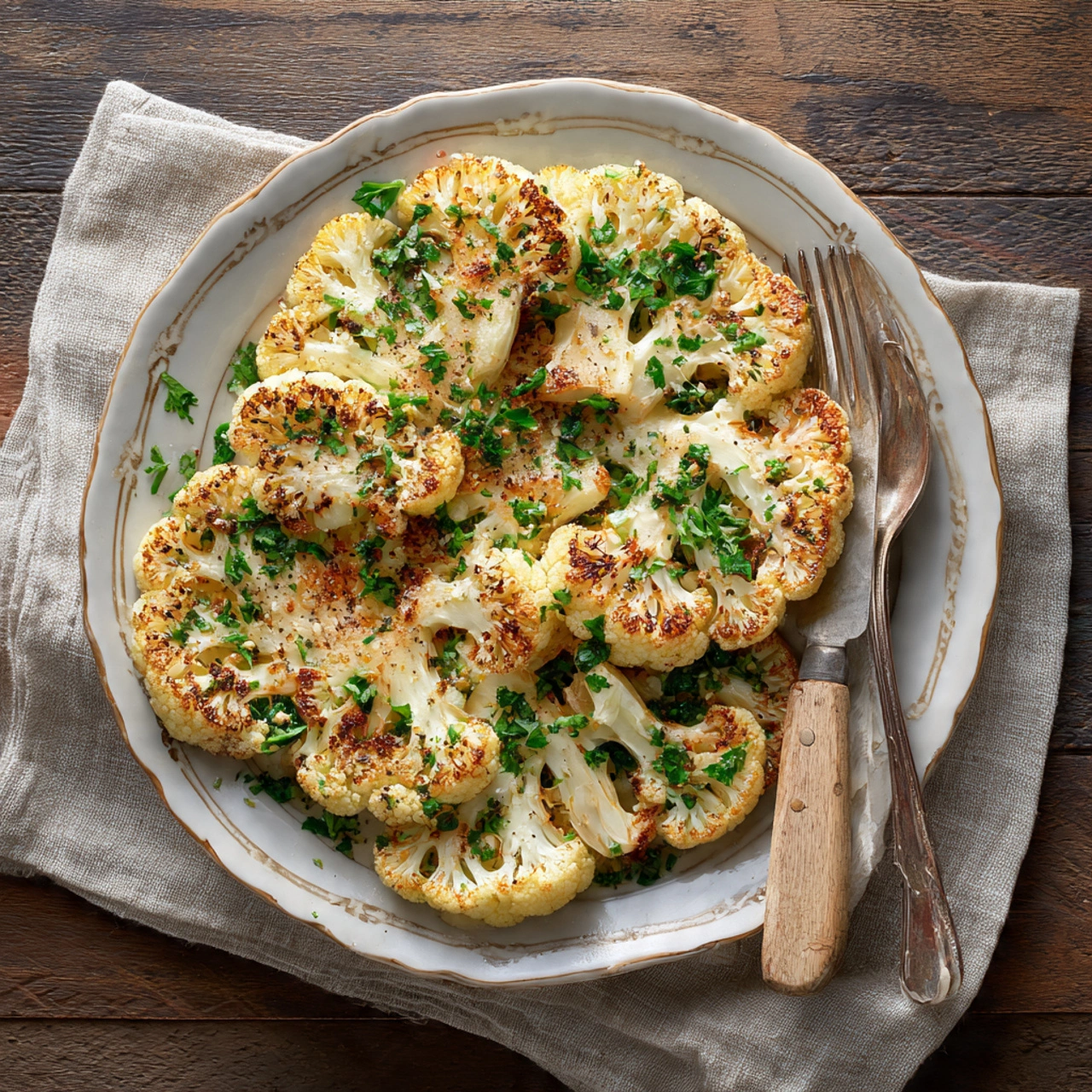
Remove the roasted cauliflower steaks from the oven and immediately squeeze the fresh lemon juice over the top of each steak — the acid brightens every flavour and adds a freshness that counterbalances the rich roasted character. Allow to rest for two minutes. Spoon a generous amount of chimichurri onto each warm plate, place a roasted cauliflower steak on top of the sauce, and add any garnishes — toasted pine nuts, crispy chickpeas, torn fresh parsley, pickled red onions, or pomegranate seeds. Finish with a scatter of flaky sea salt and serve with lemon wedges alongside.

Pro Tips for the Perfect Roasted Cauliflower Steaks
Choose the Right Cauliflower
Size and density matter significantly for cauliflower steaks. Large, dense, tightly packed heads produce steaks that hold together better during cutting and cooking, have more surface area for caramelisation, and provide a more substantial, meaty result. Small or loose-headed cauliflowers fall apart more easily and produce less impressive steaks. When buying, choose the largest, most compact heads you can find and check that the stems are firm and the florets tightly packed with no gaps.
Cut Through the Core Every Time
The core is the structural spine that holds the steak together. Every steak must contain a cross-section of the core running through its center — without this, the florets have nothing to hold them to each other and the steak falls into pieces the moment you try to move or serve it. Make your cuts from the very top of the head straight down through the center, ensuring the core is included in each primary steak.
Get the Pan Seriously Hot Before the Cauliflower Goes In
The Maillard reaction that produces the deeply caramelised, flavourful crust on a cauliflower steak requires high, immediate heat at the surface. A pan that is merely warm will steam the cauliflower rather than sear it. Preheat the pan until the oil shimmers and moves freely — it should sizzle audibly the moment the cauliflower touches the surface. If there is no immediate sound, remove the cauliflower and let the pan heat for another minute.
Baste During Roasting
Halfway through the oven roasting time, use a pastry brush or spoon to baste the steaks with the olive oil and caramelised juices that have collected in the pan. This basting keeps the surface moist enough to continue caramelising rather than drying out, and it adds another layer of flavour to the exterior of the steak. A tablespoon of butter added to the pan at this point and used for basting produces a particularly beautiful, nutty caramelised finish.
Do Not Crowd the Pan
Each steak needs space around it for moisture to evaporate rather than accumulate. Crowded steaks steam in each other’s moisture and develop a pale, soft exterior rather than a golden, caramelised one. Use two baking sheets if necessary rather than crowding four steaks onto one.
The Sauce Is Half the Dish
Roasted cauliflower steaks are spectacular with a great sauce and considerably less compelling without one. The sauce provides the acid, brightness, and additional flavour complexity that elevates the dish from a roasted vegetable into a genuinely complete and satisfying main course. Make the sauce generously and serve it boldly — a timid drizzle does not do the dish justice. Spoon the sauce underneath the steak on the plate so it is the first thing encountered with every bite.
Common Mistakes to Avoid
Cutting through the cauliflower without including the core. This is the most fundamental mistake and the most common cause of steaks that fall apart before they reach the plate. The core must run through the center of every steak. Cut straight down through the very middle of the head, never at an angle, and always include the full depth of the core from top to stem.
Using a cold pan for the initial sear. A pan that is not properly preheated produces steamed rather than seared cauliflower. The steak will sit in the pan going grey rather than golden, releasing moisture rather than developing a crust, and contributing none of the caramelised flavour that makes this recipe exceptional. Preheat the pan until it is genuinely hot — oil shimmering, audible sizzle on contact.
Using a thin or small cauliflower head. Thin steaks fall apart during cooking and dry out in the oven before the interior has time to become tender. Cut your steaks at a minimum of 2.5cm (1 inch) thick — 3cm is better. This thickness ensures the exterior can caramelise properly while the interior reaches the tender, yielding texture that makes the steak satisfying to eat.
Not patting the cut surfaces dry. Surface moisture on the cauliflower inhibits the Maillard reaction. Gently patting the cut surfaces dry before applying the seasoning and oil removes the excess moisture that would otherwise steam the surface rather than allowing it to sear.
Roasting at too low a temperature. Cauliflower steaks need high heat — 220°C (425°F) minimum — to caramelise properly. Lower temperatures produce soft, pale, steamed-tasting results with none of the deeply golden, complex flavour that high heat creates. Do not be conservative with the oven temperature for this recipe.
Moving the steaks too early during the pan sear. The steak will stick to the pan initially as the surface moisture evaporates and the caramelisation begins. Attempting to move it before the crust has properly formed will tear the surface and remove the crust you are building. Leave it completely undisturbed for the full 3–4 minutes and it will release naturally when the crust is ready.
Skipping the sauce. This is a mistake of a different kind but one worth including. A roasted cauliflower steak without a well-made accompanying sauce is a perfectly good roasted vegetable. With a great sauce it becomes a genuinely memorable main course. The sauce is not optional garnish — it is a structural component of the dish.
Storage and Serving Suggestions
Roasted cauliflower steaks store well and reheat successfully, making them an excellent candidate for meal preparation. Allow the cooked steaks to cool completely at room temperature, then store in an airtight container in the refrigerator for up to 3 days. The texture is best on the day they are made — the caramelised crust softens slightly during storage — but the flavour actually deepens overnight and the reheated steaks are still deeply satisfying.
To reheat, place the steaks on a baking sheet and roast at 200°C (400°F) for 8–10 minutes until heated through and the surface has re-crisped. The oven method is significantly better than the microwave for maintaining texture — microwaved cauliflower steaks become soft and slightly watery. If you have a stovetop grill pan, a brief 2 minutes per side over medium-high heat gives the best reheated result.
For freezing, cauliflower steaks do not freeze particularly well — the cellular structure of cauliflower breaks down during freezing and thawing produces a soft, watery texture. Freeze only if necessary and thaw fully in the refrigerator before reheating in a hot oven.
Store the chimichurri sauce separately from the steaks — it keeps well in the refrigerator for up to 5 days in a sealed jar, and the flavour actually improves over the first 24 hours as the ingredients continue to meld. Bring to room temperature and stir before serving.
For serving at a dinner party, roasted cauliflower steaks make a stunning and unexpectedly impressive centrepiece. Serve them on a large wooden board or dark slate with the chimichurri spooned generously alongside, a scattering of pomegranate seeds and toasted pine nuts across the top, and torn fresh herbs finishing the plate. The visual impact of four deeply caramelised steaks arranged on a serving board with vivid green chimichurri and jewel-bright pomegranate seeds is genuinely restaurant-worthy and requires very little additional decoration.
For a complete weeknight meal, pair roasted cauliflower steaks with a simple grain — farro, freekeh, or pearl couscous absorb the sauce beautifully and turn the dish into a more substantial plate. A simple green salad with a sharp lemon dressing provides the freshness and lightness that contrasts well with the rich roasted character of the steaks. Warm flatbreads or crusty bread for sauce-scooping are essentially mandatory.

Frequently Asked Questions
Q1: How do I stop my cauliflower steaks from falling apart? The key is always cutting through the core. Every steak must contain a cross-section of the central core which acts as the structural spine holding the florets together. Cut straight down through the very center of the head, ensuring the core runs through the middle of each steak. Additionally, handle the steaks gently — use a wide spatula rather than tongs when flipping, and support the full surface area of the steak when moving it. Steaks from large, dense, compact heads of cauliflower hold together significantly better than those cut from small or loose heads.
Q2: Can I make roasted cauliflower steaks without the initial pan sear? Yes — you can roast them entirely in the oven for a simpler method. Preheat the oven to 230°C (450°F) and use a dark metal baking sheet preheated in the oven for at least 10 minutes before the cauliflower goes on it. The hot baking sheet provides immediate heat contact on the bottom surface similar to the pan sear. The result will be slightly less caramelised on the flat surfaces than the pan-sear-then-roast method but still excellent. Increase the total roasting time to 25–30 minutes, flipping halfway.
Q3: Are roasted cauliflower steaks vegan and gluten-free? The base recipe as written — cauliflower, olive oil, spices, lemon juice, and chimichurri — is naturally both vegan and gluten-free. The tahini lemon sauce and romesco sauce variations are also vegan and gluten-free. The harissa yoghurt variation is gluten-free but not vegan — substitute with coconut yoghurt for a vegan version. Always verify that any harissa paste used is certified gluten-free if serving to someone with coeliac disease or serious gluten sensitivity.
Q4: What is the best sauce to serve with roasted cauliflower steaks? The best sauce depends on the flavour profile you want to create. Chimichurri is the classic pairing — its bright acidity and herby freshness contrast perfectly with the rich roasted character of the cauliflower. Tahini lemon sauce adds a creamy, nutty, Middle Eastern character that is particularly good paired with chickpeas and pomegranate. Romesco adds a smoky, slightly sweet depth. Harissa yoghurt adds heat and cooling creaminess simultaneously. All of these work beautifully — choose based on what you are pairing the steaks with and what flavour direction suits the occasion.
Q5: Can I prepare roasted cauliflower steaks ahead of time? Yes, with a few approaches depending on how far ahead. The steaks can be cut and seasoned up to 4 hours in advance and stored covered in the refrigerator — the extended seasoning time actually improves flavour and produces a better sear. The chimichurri can be made up to 2 days ahead and improves significantly overnight. The fully cooked steaks can be made up to a day ahead and reheated in a hot oven — the flavour will be excellent but the texture of the crust will be slightly less crisp than freshly made.
Q6: How many steaks does one cauliflower head produce? Each cauliflower head produces two prime steaks — the two center cuts that include a portion of the core. The outside pieces that do not contain core will fall apart and are not usable as steaks, though they make excellent roasted florets or can be reserved for soup. For four servings, you need two heads of cauliflower. Some very large heads can occasionally produce three usable steaks if the head is wide enough, but two is the reliable standard.
Q7: Can I cook roasted cauliflower steaks on an outdoor grill? Yes and the results are spectacular — the smokiness from the grill adds another dimension of flavour that pairs beautifully with chimichurri. Brush the grill grates with oil and preheat to medium-high heat. Grill the steaks for 4–5 minutes per side with the lid closed, checking after 3 minutes for colour development. Move to indirect heat if the exterior is browning too quickly before the interior is tender. The grill marks on a cauliflower steak are visually stunning and the smoky, caramelised flavour is genuinely extraordinary.
Nutrition Information (Approximate Per Serving)
Based on 4 servings using the full recipe with chimichurri sauce, without optional garnishes or accompaniments.
| Nutrient | Amount Per Serving |
|---|---|
| Calories | ~380 kcal |
| Total Fat | 32g |
| Saturated Fat | 5g |
| Cholesterol | 0mg |
| Sodium | 680mg |
| Total Carbohydrates | 18g |
| Dietary Fiber | 6g |
| Total Sugars | 6g |
| Added Sugars | 0g |
| Protein | 5g |
| Vitamin C | 85% DV |
| Vitamin K | 45% DV |
| Folate | 22% DV |
| Potassium | 720mg |
Note: Values are approximate and will vary based on the size of the cauliflower heads, exact amount of olive oil used, specific sauce choice, and whether optional garnishes such as toasted pine nuts or crispy chickpeas are included. Values calculated for the cauliflower steaks with chimichurri sauce only.
Conclusion
There is a particular satisfaction that comes from a dish that challenges expectations and then exceeds them — from putting something on the table that people are not entirely sure about and watching them become genuinely enthusiastic by the end of the first bite. Roasted cauliflower steaks deliver that satisfaction consistently and reliably, and they do it with ingredients that are accessible, affordable, and available year-round.
The techniques in this recipe — the careful cutting, the hot pan sear, the high oven heat, the basting, the generous sauce — are all in service of a single goal: cauliflower that tastes and feels as genuinely satisfying and substantial as any meat-centred main course, without any of the apology or qualification that lesser vegetable cooking sometimes requires. This dish asks for no apology. It asks for a second serving.
Make it once for yourself so you can focus on the technique without distraction. Make it again for guests when you want something that looks spectacular and tastes even better. Choose your sauce based on the mood — chimichurri for brightness, tahini for richness, harissa yoghurt for heat — and add whatever garnishes make you happy. The recipe welcomes that kind of personalisation and rewards it with results that feel genuinely your own.
And do not be surprised when the confirmed meat-eaters at the table ask you for the recipe before the evening is over. It happens every single time.
Now choose your largest cauliflower and preheat that pan.

Roasted Cauliflower Steaks
Ingredients
Equipment
Method
- Remove the outer leaves from the cauliflower heads leaving the core intact. Stand each head upright on its stem end. Trim a thin slice from each side to square up the head. Cut straight down through the very center to produce two steaks of approximately 2.5–3cm (1–1.25 inches) each from each head — ensuring the core runs through the center of each steak. Pat the cut surfaces gently dry with paper towels. You will have 4 steaks total from 2 heads.
- Combine the fine sea salt, black pepper, garlic powder, smoked paprika, ground cumin, onion powder, and cayenne in a small bowl. Brush or drizzle olive oil generously over all surfaces of each steak. Apply the spice mixture to all surfaces, pressing it gently into the cut surfaces. Allow the seasoned steaks to sit at room temperature for 15–20 minutes before cooking — or refrigerate uncovered on a wire rack for up to 4 hours for maximum flavour.
- Heat a large oven-safe cast iron skillet over medium-high heat until genuinely hot. Add 1 tablespoon olive oil and let it shimmer. Place two cauliflower steaks flat-side down in the hot pan — they should sizzle audibly on contact. Cook without moving for 3–4 minutes until deeply golden-brown and releasing naturally from the pan. Flip carefully with a wide spatula and cook the other flat side for 2–3 minutes. Transfer to a plate and repeat with the remaining steaks. Do not clean the pan.
- Preheat your oven to 220°C (425°F). Transfer all four seared steaks to a large parchment-lined baking sheet or leave in the oven-safe skillet. Drizzle any remaining olive oil over the steaks. Roast for 15–20 minutes until completely tender when pierced at the thickest point and the edges show deep caramelisation. For extra caramelisation, switch to grill/broil function for the final 3–4 minutes watching carefully.
- Place the roughly chopped parsley, garlic, shallot, red wine vinegar, crushed red pepper flakes, salt, and pepper in a food processor. Pulse five to six times until coarsely chopped — you want visible herb pieces and texture, not a smooth paste. Transfer to a bowl and stir in the olive oil. Taste and adjust — more vinegar for brightness, more salt for depth, more red pepper flakes for heat. Alternatively, finely chop everything by hand on a cutting board.
- Remove the roasted cauliflower steaks from the oven and immediately squeeze fresh lemon juice over each steak. Rest for 2 minutes. Spoon a generous amount of chimichurri onto each warm plate in a sweeping stroke. Place a roasted cauliflower steak on top of the chimichurri. Add garnishes — toasted pine nuts, pomegranate seeds, torn fresh parsley, or flaky sea salt. Serve with lemon wedges alongside.