
Carrot Ribbon Salad – A Fresh, Vibrant & Easy 15-Minute Recipe

The Carrot Ribbon Salad That Will Make You See Carrots Completely Differently
Carrot ribbon salad is proof that the most humble vegetables, prepared with just a little intention, can completely steal the show on any table. This is not the sad, shredded carrot side dish you might remember from cafeteria trays or forgotten potluck bowls. This is something else entirely — long, silky ribbons of fresh carrot tossed in a bright, tangy dressing with fresh herbs, a touch of sweetness, and just enough heat to keep things interesting.
I came to this recipe almost by accident. I had a bag of carrots sitting in the fridge, a jar of tahini I had been meaning to use, and about fifteen minutes before dinner needed to be on the table. What came out of that slightly desperate kitchen moment has since become one of the most-requested salads in my rotation. Friends ask for the recipe. Guests go back for seconds. My kids — who are not exactly enthusiastic about raw vegetables — actually eat it without negotiation.
In this post I am going to walk you through everything you need to make the best carrot ribbon salad of your life. We will cover ingredients, step-by-step instructions, pro tips, common mistakes, storage ideas, frequently asked questions, and nutrition information. By the end, you will wonder why you ever bought a bag of pre-shredded carrot salad from the supermarket.
What Makes This Carrot Ribbon Salad Special
Most raw carrot recipes rely on grating, which gives you a dense, clumpy texture that is more filler than feature. Ribbons change everything. When you peel carrots into long, thin strips using a standard vegetable peeler, something shifts — the texture becomes delicate and almost silky, the dressing coats every surface evenly, and the visual result is genuinely stunning on a plate.
Add a punchy lemon-tahini dressing, a handful of fresh herbs, some toasted seeds for crunch, and a whisper of chili flakes, and you have a salad that manages to be refreshing and satisfying at the same time. It works as a side dish alongside grilled chicken, fish, or lamb. It holds up beautifully in a lunchbox. It makes a gorgeous addition to a mezze spread or a grain bowl. It is the kind of recipe that earns its permanent place in your repertoire.
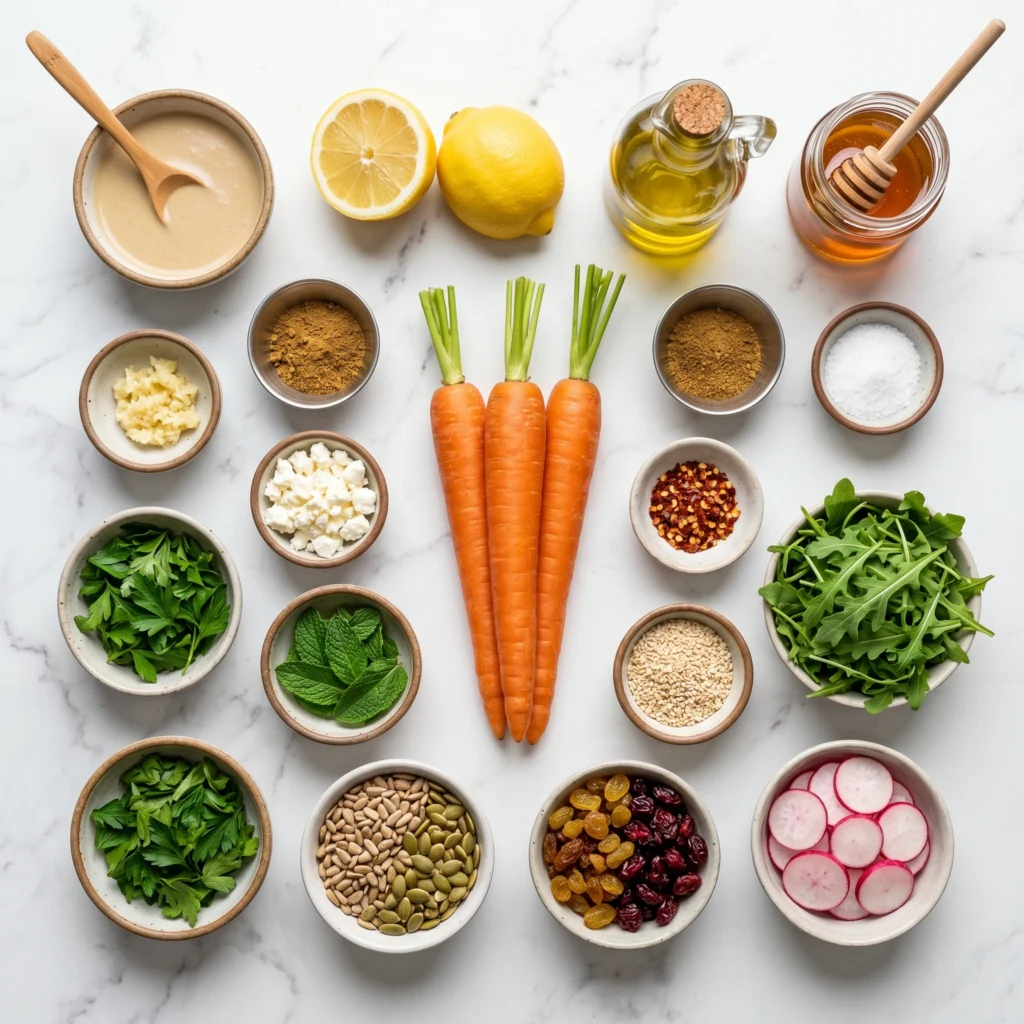
Ingredients for Carrot Ribbon Salad
This recipe serves 4 as a side dish. Every ingredient plays a role — do not be tempted to skip anything.
For the Salad
- 6 large carrots, peeled
- 1/4 cup fresh flat-leaf parsley, roughly chopped
- 1/4 cup fresh mint leaves, torn
- 3 tbsp toasted sunflower seeds or pumpkin seeds
- 2 tbsp golden raisins or dried cranberries (optional but recommended)
- 1/4 tsp red chili flakes, or to taste
- Flaky sea salt, to finish
For the Lemon-Tahini Dressing
- 3 tbsp tahini, well-stirred
- 3 tbsp fresh lemon juice (about 1.5 lemons)
- 1 tbsp extra virgin olive oil
- 1 tbsp honey or maple syrup
- 1 small garlic clove, finely grated
- 1/4 tsp ground cumin
- 1/4 tsp fine sea salt
- 2 to 4 tbsp cold water, to thin
Optional Add-Ins
- 1/4 cup crumbled feta cheese
- 1 tbsp toasted sesame seeds
- A handful of baby arugula or watercress
- Thinly sliced radishes for extra color and crunch
Step-by-Step Instructions
Step 1: Prep the Carrots
Wash and peel your carrots. Once peeled, hold each carrot firmly on a cutting board and use the same vegetable peeler to shave long, wide ribbons from top to bottom. Rotate the carrot a quarter turn after each stroke so you are working from all four sides evenly. When you reach the thin inner core and it becomes difficult to peel further, stop — save the core for stock or eat it as a cook’s snack. Place all the ribbons in a large mixing bowl. They may curl slightly, which only adds to the visual appeal.
Step 2: Make the Dressing
In a small bowl or jar, combine the tahini, lemon juice, olive oil, honey, grated garlic, cumin, and salt. Whisk together — the mixture will seize up and look thick at first. Add cold water one tablespoon at a time, whisking after each addition, until the dressing reaches a pourable consistency similar to a light vinaigrette. Taste and adjust — more lemon for brightness, more honey for sweetness, more salt if it tastes flat.

Step 3: Toast the Seeds
Place the seeds in a dry skillet over medium heat for 2 to 3 minutes, stirring frequently, until golden and fragrant. Watch them closely — seeds go from perfectly toasted to burnt in seconds. Tip them onto a plate to cool.
Step 4: Dress and Toss
Pour about two-thirds of the dressing over the carrot ribbons. Using tongs or clean hands, toss gently to coat every ribbon. The ribbons are delicate so be careful to keep them long and elegant rather than broken into short pieces. Add more dressing as needed.

Step 5: Add the Herbs and Toppings
Add the chopped parsley, torn mint, chili flakes, and dried fruit if using. Toss again lightly. Transfer to a serving plate or shallow bowl and scatter the toasted seeds over the top. Finish with a pinch of flaky sea salt and any optional toppings such as crumbled feta or sesame seeds.
Step 6: Rest and Serve
Let the salad sit for 5 minutes before serving. This short rest allows the ribbons to absorb a little of the dressing and the flavors to settle into each other. Serve at room temperature for the best flavor — straight from the fridge mutes the dressing noticeably.

Pro Tips for the Best Carrot Ribbon Salad
1. Choose the Right Carrots
Large, fat carrots give you the widest, most impressive ribbons. Avoid thin or very tapered ones — they are difficult to peel properly and break more easily. Organic carrots tend to have better sweetness and flavor when eaten raw.
2. Dry the Ribbons Before Dressing
If your ribbons feel wet after peeling, pat them lightly with a paper towel. Excess moisture dilutes the dressing and prevents it from clinging to the carrot surface properly.
3. Always Stir Your Tahini First
Tahini separates in the jar with the oil floating on top and the paste at the bottom. Stir it thoroughly before measuring. Using unseparated tahini results in a dressing that is simultaneously too oily and too thick.
4. Use Fresh Lemon Juice Only
Bottled lemon juice has a flat, slightly bitter edge that affects the brightness of your dressing. Squeeze fresh lemons every single time — it takes thirty seconds and makes a noticeable difference.
5. Add the Herbs at the Last Minute
Mint bruises and darkens quickly in contact with an acidic dressing. Add your herbs right before serving to keep them vibrant, green, and fresh-looking.
6. Dress Lightly at First
It is always easier to add more dressing than to rescue an overdressed salad. Start with two-thirds, toss, taste, and add more as needed.
7. Let It Rest Before Serving
Those five minutes of resting time are not optional. The acid in the dressing very slightly softens the ribbons and pulls all the flavors together into something cohesive.
8. Make the Dressing Ahead
This tahini-lemon dressing keeps in the fridge for up to a week. Make a double batch on Sunday and use it as a weekday salad dressing, grain bowl sauce, or vegetable dip throughout the week.
Common Mistakes to Avoid
Using a Box Grater Instead of a Peeler
Grated carrots become dense and clumpy when dressed. They release excess moisture, dilute the dressing, and lose the visual appeal that makes this salad distinctive. A vegetable peeler is the only right tool here.
Overdressing the Salad
Carrot ribbons are delicate. Too much dressing drowns them, creates a soggy texture, and turns the whole dish heavy. Dress in stages, always starting with less than you think you need.
Skipping the Salt in the Dressing
A dressing without enough salt tastes thin and flat regardless of how well the other elements are balanced. Season the dressing properly and finish the plated salad with a pinch of flaky salt — that second layer is what makes everything sing.
Using Dried or Wilted Herbs
Fresh herbs are not garnish here — they are a structural flavor component. Dried parsley and dried mint will not deliver the same result. If fresh mint is unavailable, fresh cilantro or fresh basil are the best substitutes.
Serving It Straight from the Fridge
Cold mutes flavors dramatically. If you have stored the salad ahead of time, pull it out at least 15 to 20 minutes before serving. The dressing loosens, the herbs revive, and the entire dish tastes more alive.
Not Toasting the Seeds
Raw seeds taste flat and faintly bitter. Three minutes in a dry skillet transforms them into something nutty, aromatic, and genuinely delicious. Do not skip this step.

Storage and Serving Suggestions
How to Store
This carrot ribbon salad is best eaten the day it is made. The individual components, however, store very well separately. Keep undressed ribbons in an airtight container in the fridge for up to 3 days. Store the dressing in a sealed jar in the fridge for up to 7 days. Combine just before serving for the freshest result. If already dressed, the salad will keep for up to 24 hours in the fridge — the herbs will darken and the ribbons will soften slightly but the flavor remains very good.
How to Serve
Serve it as a side dish alongside grilled lamb chops, roasted chicken thighs, or a piece of spiced salmon. It works beautifully as part of a mezze spread with hummus, warm flatbread, and olives. Pile it on top of a grain bowl with quinoa or freekeh, or tuck it inside a wrap with roasted vegetables and chickpeas. For a more substantial main dish salad, add a handful of cooked lentils or chickpeas and serve over a bed of baby arugula.
Frequently Asked Questions
Can I make carrot ribbon salad ahead of time?
Yes, with a small adjustment. Prep the ribbons and make the dressing up to 2 days ahead and store them separately. Add the herbs and seeds just before serving. If you dress it fully in advance the herbs will darken and the ribbons will soften, though the flavor is still very good the next day.
What can I use instead of tahini?
Almond butter or cashew butter both work as substitutes with a slightly sweeter, nuttier result. For a lighter option, skip the nut butter entirely and make a simple lemon-olive oil vinaigrette with honey, garlic, and cumin. The salad will still be delicious, just with a different character.
Is carrot ribbon salad vegan?
The base recipe is completely vegan. Use maple syrup instead of honey for strict vegans. The optional feta topping is not vegan — simply leave it out or substitute with a plant-based alternative.
Can I use other vegetables alongside the carrots?
Absolutely. Thinly shaved zucchini, paper-thin radish slices, shaved fennel, or thin cucumber strips all work beautifully alongside carrot ribbons. Keep the ratios mostly carrot-forward so the salad does not lose its identity, and adjust the dressing quantity accordingly.
How do I make the ribbons stay curly and not go limp?
After peeling your ribbons, place them in a bowl of ice water for 10 minutes. The cold water crisps them up and encourages them to curl into beautiful spirals. Drain and pat dry thoroughly before dressing. This technique works especially well when preparing the salad for a dinner party.
What protein pairs best with this salad?
The lemon-tahini dressing pairs exceptionally well with anything spiced or charred — grilled lamb, harissa chicken, spiced salmon, falafel, or a simple soft-boiled egg. For a plant-based protein, roasted chickpeas tossed in cumin and smoked paprika are a perfect match.
Nutrition Information (Per Serving, Approximate)
Based on 4 servings without optional add-ins. Values are estimates and will vary based on exact ingredients used.
Calories: ~210 kcal | Total Fat: ~12g | Saturated Fat: ~1.5g | Cholesterol: ~0mg | Sodium: ~280mg | Total Carbohydrates: ~24g | Dietary Fiber: ~5g | Total Sugars: ~11g | Protein: ~5g | Vitamin A: ~320% DV | Vitamin C: ~18% DV | Calcium: ~6% DV | Iron: ~8% DV
Conclusion
There is something quietly extraordinary about a recipe this simple delivering this much flavor, color, and texture. Carrot ribbon salad takes an everyday vegetable that most of us walk right past in the produce aisle and transforms it into something genuinely worth talking about at the table.
The technique is easy to master. The dressing comes together in under two minutes. The whole salad is on the table in fifteen. And yet it looks and tastes like something that required real effort and skill — which is honestly the best possible outcome in cooking.
Whether you are making it for a quiet weeknight dinner, a weekend gathering, a meal prep session, or a last-minute side dish when company arrives unannounced, this carrot ribbon salad will not let you down. It is bright, satisfying, endlessly adaptable, and the kind of recipe you will return to again and again without ever getting tired of it.
Try it this week. Leave a comment below and tell me what you paired it with — and if you gave it your own twist with different herbs or toppings, I want to hear about it. Happy cooking.


Carrot Ribbon Salad
Ingredients
Equipment
Method
- Hold each peeled carrot firmly on a cutting board and use a vegetable peeler to shave long, wide ribbons from top to bottom. Rotate the carrot a quarter turn after each stroke. Stop when you reach the thin inner core. Place ribbons in a large mixing bowl.
- In a small bowl, whisk together the tahini, lemon juice, olive oil, honey, grated garlic, cumin, and salt. Add cold water one tablespoon at a time, whisking after each addition, until the dressing is pourable. Taste and adjust seasoning.
- Place seeds in a dry skillet over medium heat for 2 to 3 minutes, stirring frequently, until golden and fragrant. Tip onto a plate to cool.
- Pour two-thirds of the dressing over the carrot ribbons. Toss gently with tongs or clean hands to coat evenly, keeping the ribbons intact. Add more dressing as needed.
- Add the parsley, mint, chili flakes, and dried fruit if using. Toss lightly. Transfer to a serving plate, scatter toasted seeds on top, and finish with a pinch of flaky sea salt. Let rest 5 minutes before serving at room temperature.

