
Ingredients
Equipment
Method
- Preheat your oven to 350°F (175°C). Line two large baking sheets with parchment paper or silicone baking mats. Take butter and egg out of the refrigerator at least 30 minutes before beginning to ensure they are at room temperature.
- In a large mixing bowl, beat the softened butter with the granulated sugar and powdered sugar using a hand mixer or stand mixer on medium speed for 3 to 4 minutes, until the mixture is pale, light, and fluffy. The mixture should look almost white and feel airy.
- Add the egg to the creamed butter mixture and beat on medium speed for 1 minute until fully incorporated. Scrape down the sides of the bowl. Add the almond extract and vanilla extract and mix for another 30 seconds.
- In a separate bowl, whisk together the all-purpose flour, almond flour, baking powder, and salt. Add the dry ingredients to the butter mixture in two additions, mixing on low speed after each addition just until the flour disappears. Stop mixing the moment no dry streaks remain.
- Scoop the dough into balls about 1.5 tablespoons each. Roll briefly between your palms to smooth, then place 2 inches apart on the prepared baking sheets. Gently flatten each ball to about ½ inch thickness with the palm of your hand or the bottom of a flat glass.
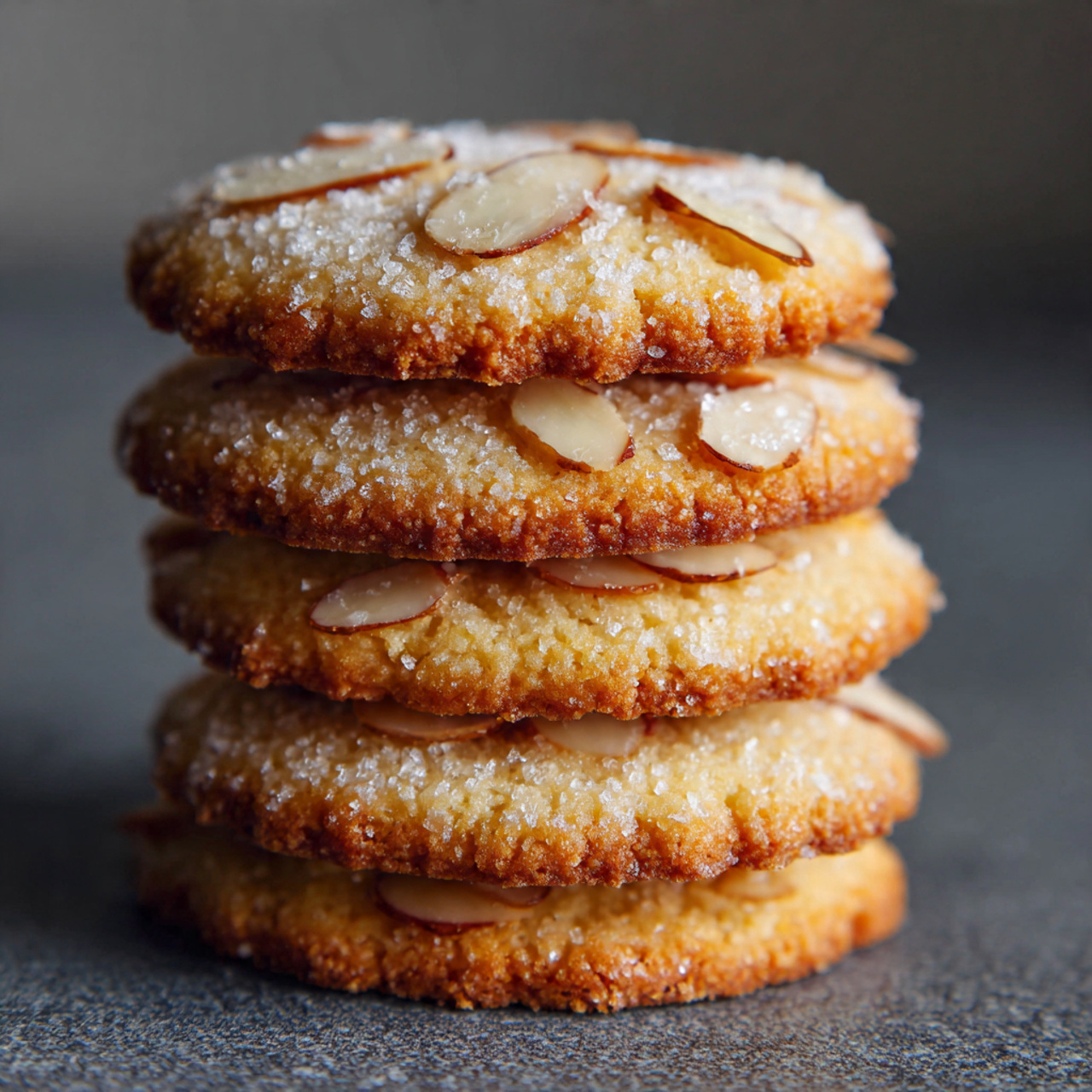
- Lightly brush the top of each flattened cookie with beaten egg white. Press 4 to 5 sliced almonds firmly onto the top of each cookie in a decorative pattern, embedding them slightly into the surface of the dough.
- Bake for 12 to 14 minutes until the edges are lightly golden and the centers look just set. If baking two sheets at once, rotate halfway through. Remove from oven and cool on the baking sheet for 5 minutes before transferring to a wire rack.
- Once fully cooled, dust lightly with sifted powdered sugar if desired. Serve as is or alongside coffee, tea, or ice cream.
Notes
Pro Tips: Always use pure almond extract — not imitation — for the cleanest, most fragrant almond flavor. Make sure your butter is properly softened but not melted; it should leave a slight indent when pressed but still hold its shape. Use blanched almond flour rather than almond meal for a finer, more delicate texture. Measure flour correctly using the spoon-and-level method or a kitchen scale to avoid dense cookies. Press sliced almonds firmly into the egg-white-brushed dough so they stay put during baking. Pull the cookies from the oven when edges are golden but centers still look just barely set — they firm up completely as they cool on the baking sheet.