
Ingredients
Equipment
Method
- Place the dried porcini mushrooms in a small heatproof bowl and pour the boiling water over them. Let them soak for 20–25 minutes until fully softened and the water has turned deep amber-brown. Carefully lift the porcini out, squeeze gently over the bowl, and roughly chop. Strain the soaking liquid through a fine mesh sieve to remove any grit, then add the strained liquid to your warm stock.
- Wipe the fresh mushrooms clean with a damp cloth — never wash under running water. Slice cremini thickly, tear oyster mushrooms into natural pieces, and slice shiitake caps discarding tough stems. Heat a large wide skillet over high heat, add 1 tablespoon olive oil and 1 tablespoon butter. When the butter foam subsides add the mushrooms in a single layer in batches. Cook undisturbed for 2–3 minutes until deeply golden, then stir and cook 2 more minutes. Add two-thirds of the minced garlic and thyme, season generously, and toss for 60 seconds. Remove from heat. Reserve a few whole mushrooms for garnish and add the chopped rehydrated porcini to the rest.
- Pour your stock — with the strained porcini soaking liquid added — into a medium saucepan and keep it over the lowest possible heat throughout the entire risotto cooking process. Taste the stock and adjust seasoning if needed — it should be well-flavoured as it will season the rice from the inside.
- In a large wide heavy-bottomed saucepan, heat 2 tablespoons olive oil and 2 tablespoons butter over medium heat. Add the finely diced onion and shallots and cook gently for 8–10 minutes, stirring occasionally, until completely soft, translucent, and sweet — not browned. Add the remaining minced garlic and cook for another 60 seconds.
- Add the Arborio rice to the soffritto and stir to coat every grain in the butter and oil. Increase heat slightly to medium-high and toast the rice for 2–3 minutes, stirring constantly, until the edges of each grain are slightly translucent with a white dot remaining at the center and the mixture smells faintly nutty.
- Pour the white wine into the toasted rice all at once. Stir continuously until the wine has been completely absorbed by the rice — about 2 minutes. The wine adds acidity that balances the richness of the butter and Parmesan added later.
- Reduce heat to medium. Add the warm stock one ladleful at a time — approximately 80–100ml per addition. Stir after each addition until almost all liquid is absorbed before adding the next ladle. Continue this process for approximately 18–20 minutes, tasting the rice regularly from the 15-minute mark. Stop adding stock when the rice is tender throughout with a very slight resistance at the very center.
- When the rice is one ladle of stock away from being done, fold in the reserved sautéed mushroom mixture. Stir gently to distribute evenly throughout the risotto. Add the final ladle of stock and stir until absorbed. The risotto should look creamy and flowing — add a small splash more stock if it seems too thick. Remove from heat.
- Remove the saucepan completely from the heat. Add the cold butter cubes all at once and the freshly grated Parmigiano-Reggiano. Stir and fold vigorously for 60–90 seconds in a wave-like motion, incorporating the cold butter and cheese into the starchy liquid surrounding the grains until the risotto is silky, glossy, and flows slowly off the spoon. Taste and adjust salt and white pepper.
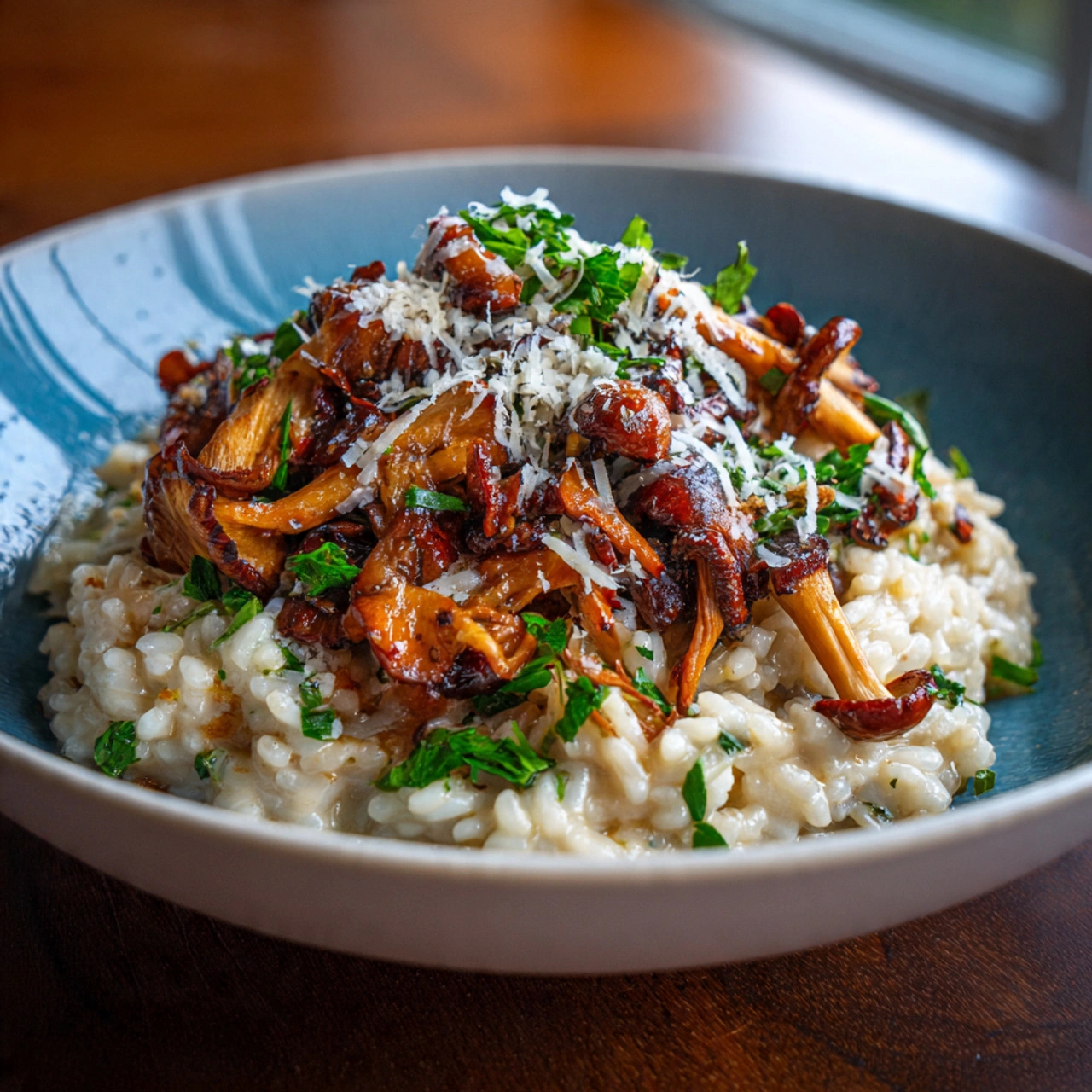
- Rest the risotto for 2 minutes off the heat, then spoon immediately into warm shallow bowls. Garnish with the reserved whole sautéed mushrooms, finely chopped fresh parsley, an extra grating of Parmigiano-Reggiano, and a few drops of truffle oil if using. Serve within minutes of plating.
Notes
Pro Tips: Use Carnaroli rice over Arborio if you can find it — it has a firmer grain and greater forgiveness during cooking. Never skip the dried porcini — they and their soaking liquid add an irreplaceable depth of earthy flavour. Always use cold butter for the mantecatura — it emulsifies into the starchy liquid creating a silky gloss that warm butter cannot achieve. Keep your stock warm over low heat throughout the entire cooking process — cold stock shocks the rice and disrupts the starch release. Never rinse the rice — the surface starch is what creates the creamy consistency. Taste constantly in the final minutes — the window between perfectly cooked and overdone is narrow. Rest the finished risotto for 2 minutes off the heat before serving for the perfect all'onda flowing consistency.