
Ingredients
Equipment
Method
- Rinse the rhubarb stalks under cold running water. Trim and discard both ends. Cut stalks into uniform ½-inch pieces — even sizing ensures the sauce breaks down at the same rate. If stalks are particularly fibrous, peel away the outermost strings as you would with celery.
- Add the chopped rhubarb, granulated sugar, and water to a medium heavy-bottomed saucepan. If using cinnamon, ginger, cardamom, or citrus zest, add those now as well. Stir briefly to coat the rhubarb in the sugar.
- Place the pan over medium heat. Stir every 1–2 minutes. After about 3–5 minutes, the rhubarb will begin releasing its natural juices and the sugar will dissolve. Continue cooking for 12–18 minutes until the rhubarb is completely tender and broken down into a saucy consistency. If the mixture boils aggressively, reduce heat to medium-low. A gentle, steady simmer is ideal.
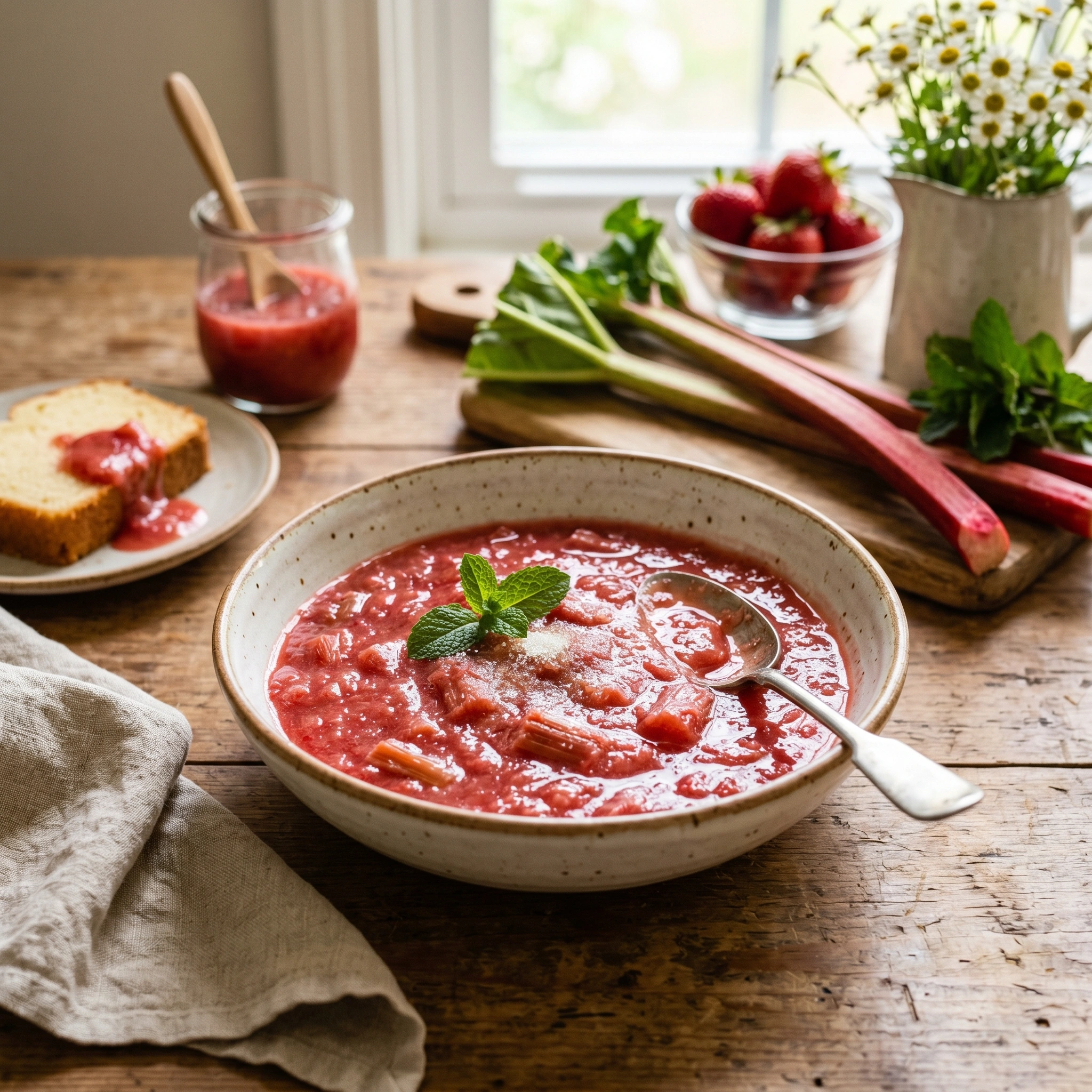
- Remove the pan from heat. Stir in the lemon juice and vanilla extract. Taste the sauce and add more sugar one tablespoon at a time if needed — rhubarb varies widely in tartness. For a smooth sauce, use an immersion blender or pass through a fine-mesh sieve. For a chunkier, more rustic texture, leave as is.
- Allow the sauce to cool in the pan for at least 15 minutes — it will thicken noticeably as it cools. Transfer to a clean, airtight glass jar or container. Refrigerate until ready to use. The flavor deepens and mellows beautifully after a night in the fridge.
Notes
Pro Tips: For the most vibrant pink color, choose deep red rhubarb stalks over green ones. Always add vanilla extract off the heat — it loses its flavor if cooked. For a more intense sauce, macerate the rhubarb in sugar for 30–60 minutes before cooking so it releases its own juices. Use a heavy-bottomed saucepan to prevent scorching. The sauce thickens considerably as it cools, so don't over-reduce it. Freeze leftover sauce in an ice cube tray for perfectly portioned servings throughout the year.