
Mushroom Risotto: 7 Secrets to the Most Gloriously Creamy Bowl You’ll Ever Make
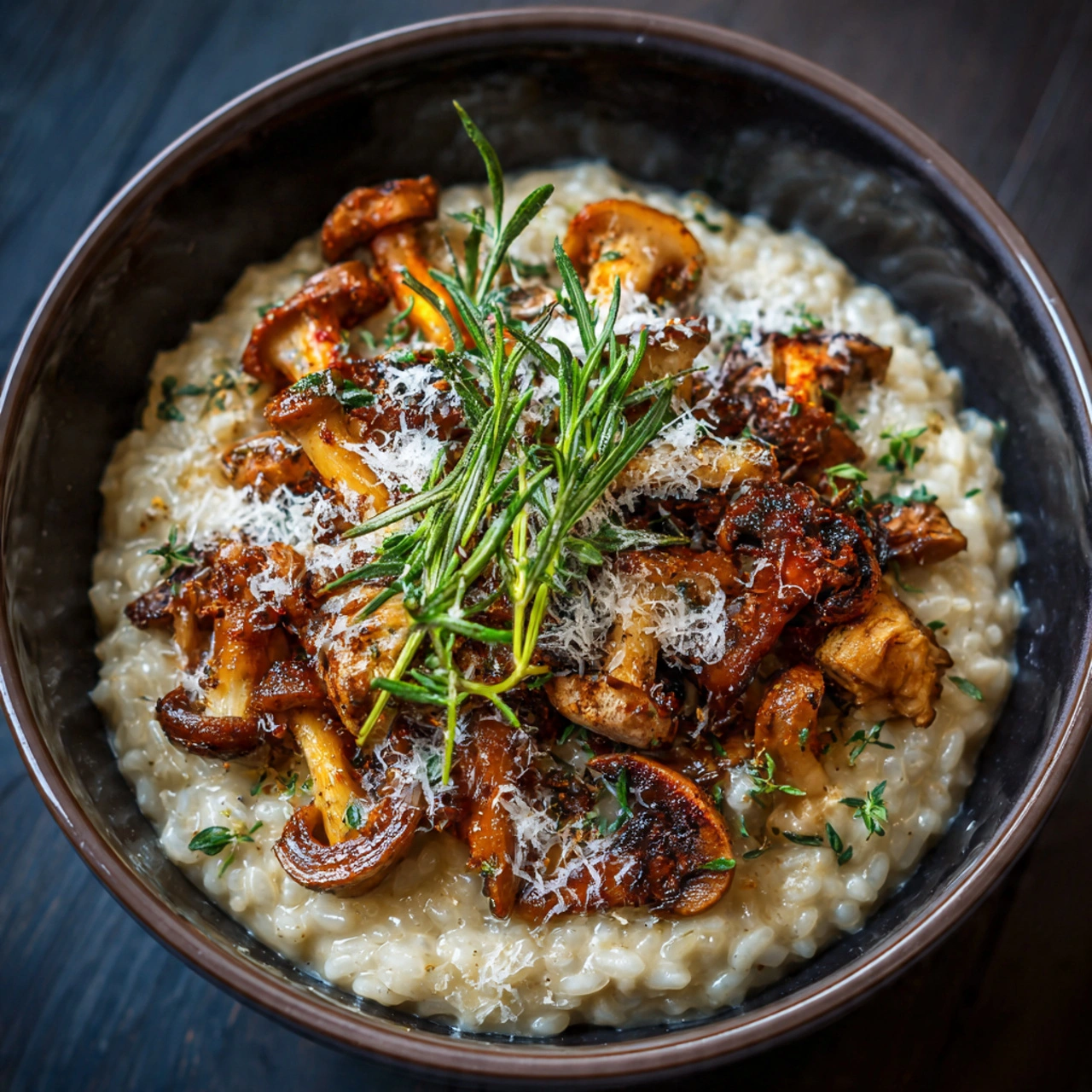
Introduction: Why Mushroom Risotto Is the Most Rewarding Dish You Will Ever Learn to Cook
Mushroom risotto is one of those recipes that divides people neatly into two camps — those who find it intimidating and order it exclusively at restaurants, and those who have made it once, understood what they were actually doing, and never looked back. If you are currently in the first camp, this article is going to move you firmly into the second one. Because here is the truth that most recipes do not bother to tell you: mushroom risotto is not difficult. It is attentive. There is a meaningful difference between those two things, and once you appreciate it, the entire dish opens up.
What risotto requires is not skill in the technical, chef-school sense of the word. It requires presence. You need to be at the stove, stirring, watching, adding stock gradually, and paying attention to what the rice is telling you. In exchange for that attention — twenty-five minutes of it, roughly — you get a bowl of something that is genuinely extraordinary. Silky, deeply savoury, rich with the earthy intensity of mushrooms and the nutty creaminess of properly cooked Arborio rice, finished with cold butter and Parmesan in a technique the Italians call mantecatura that transforms a good risotto into a perfect one.
I have been making mushroom risotto for years, through countless dinner parties and quiet weeknight meals, and I have refined this particular version to the point where I am genuinely proud to share it. This guide covers everything: the right mushrooms to use and why, the rice varieties and their differences, the stock question, the step-by-step technique, the pro tips that make the critical difference, the mistakes that are completely avoidable, storage advice, FAQs, and a full nutrition breakdown. Everything you need is here.
What Makes a Great Mushroom Risotto
Before we get into the recipe, it is worth understanding the architecture of a great mushroom risotto so that every decision in the recipe makes sense rather than just being instructions you follow blindly. A great mushroom risotto has four defining characteristics.
The first is texture — it should flow slowly when spooned onto a plate, described in Italian as all’onda, meaning “like a wave.” Not stiff and mounded, not soupy and thin. A slow, creamy flow that settles slightly and holds a gentle peak. The second is flavour depth — the mushroom element should be earthy, intense, and layered, not mild or one-dimensional. The third is creaminess — which comes not from added cream but from the starch released by the rice during the gradual stock addition and stirring process, finished with the cold butter and Parmesan technique. The fourth is seasoning — risotto needs to be seasoned carefully and consistently throughout the cooking process, not just at the end.
Every technique in this recipe is in service of those four qualities.
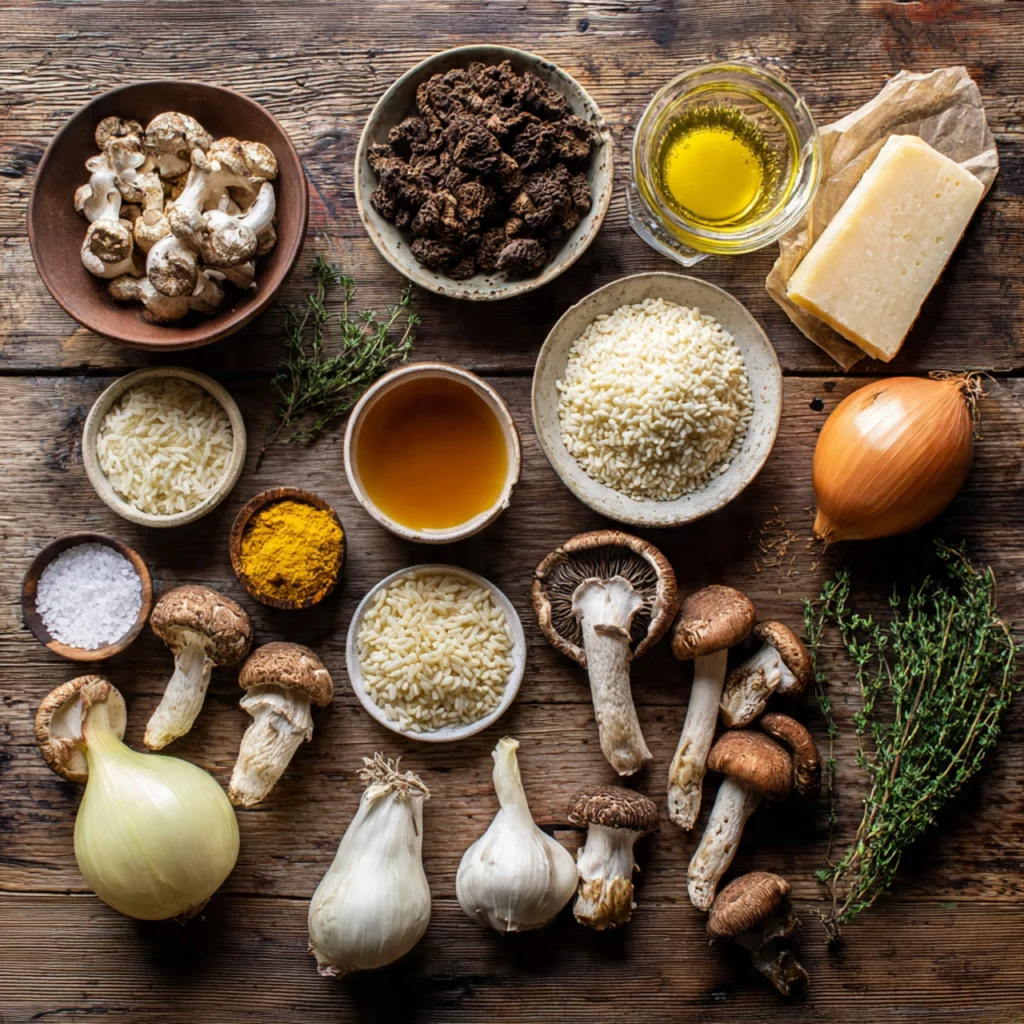
Ingredients
For the Mushroom Base
- 400g (14 oz) mixed fresh mushrooms — cremini, shiitake, and oyster mushrooms in roughly equal portions
- 20g (¾ oz) dried porcini mushrooms
- 200ml (¾ cup) boiling water (for rehydrating the porcini)
- 3 tablespoons unsalted butter, divided
- 2 tablespoons olive oil, divided
- 3 garlic cloves, minced
- 2 tablespoons fresh thyme leaves (or 1 teaspoon dried)
- Salt and freshly cracked black pepper to taste
For the Risotto
- 320g (1⅔ cups) Arborio or Carnaroli rice
- 1 medium white or yellow onion, very finely diced
- 2 shallots, very finely diced
- 3 garlic cloves, minced
- 150ml (⅔ cup) dry white wine — Pinot Grigio or Sauvignon Blanc
- 1.2 litres (5 cups) good quality chicken or vegetable stock, kept warm
- 2 tablespoons olive oil
- 2 tablespoons unsalted butter (for the soffritto)
For the Mantecatura (Finishing)
- 60g (4 tablespoons) cold unsalted butter, cut into small cubes
- 80g (1 cup) freshly grated Parmigiano-Reggiano, plus extra for serving
- Salt and white pepper to taste
Optional Garnish
- Fresh flat-leaf parsley, finely chopped
- Extra Parmigiano-Reggiano
- A few drops of good quality truffle oil
- Sautéed whole mushrooms reserved from the mushroom preparation
Step-by-Step Instructions
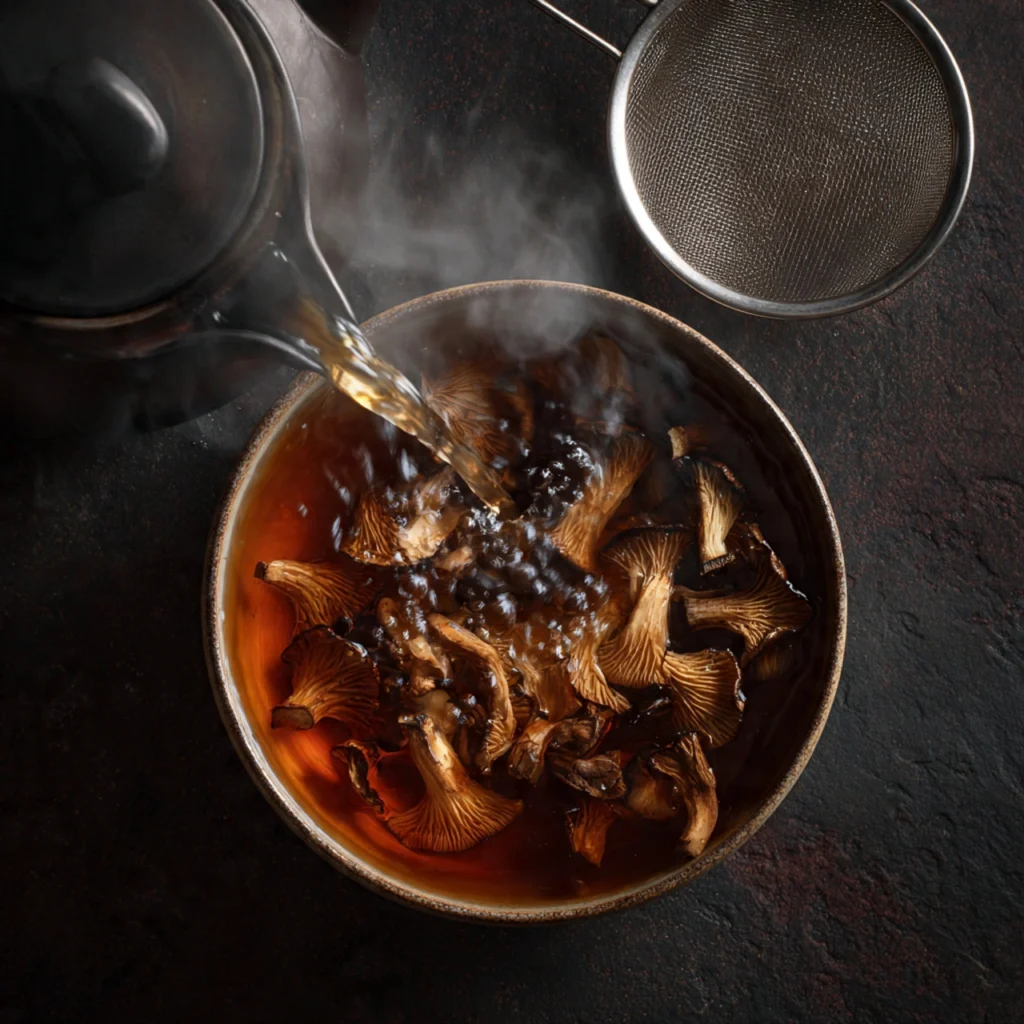
Step 1: Rehydrate the Dried Porcini
Place the dried porcini mushrooms in a small heatproof bowl and pour the boiling water over them. Let them soak for 20–25 minutes until fully softened and the water has turned a deep amber-brown colour. This liquid is pure concentrated mushroom flavour and is one of the most important elements of the entire dish — do not discard it. Carefully lift the porcini out of the soaking liquid and squeeze them gently over the bowl. Roughly chop the rehydrated porcini and set aside. Strain the soaking liquid through a fine mesh sieve or a piece of kitchen paper to catch any grit, then add it to your warm stock. The combination of porcini-infused stock and the chopped porcini themselves will give your mushroom risotto a depth of flavour that fresh mushrooms alone simply cannot achieve.
Step 2: Prepare and Sauté the Fresh Mushrooms
Clean the fresh mushrooms by wiping them with a damp cloth — never wash mushrooms under running water as they absorb moisture and steam rather than sear, giving you a grey, soft result instead of a golden, caramelised one. Slice the cremini mushrooms thickly, tear the oyster mushrooms into natural pieces, and slice the shiitake caps, discarding the tough stems.
Heat a large wide skillet over high heat until very hot. Add 1 tablespoon of olive oil and 1 tablespoon of butter. When the butter foam subsides, add the fresh mushrooms in a single layer — work in two batches if necessary. Do not stir immediately. Let them sit undisturbed for 2–3 minutes until deeply golden and caramelised on the bottom. Then stir and cook for another 2 minutes. Add two-thirds of the minced garlic and the thyme, season generously with salt and pepper, and toss for 60 seconds. Remove from heat. Set aside a few of the best-looking mushrooms for garnishing, then add the chopped rehydrated porcini to the rest of the sautéed mushrooms. Reserve the full mushroom mixture until needed.
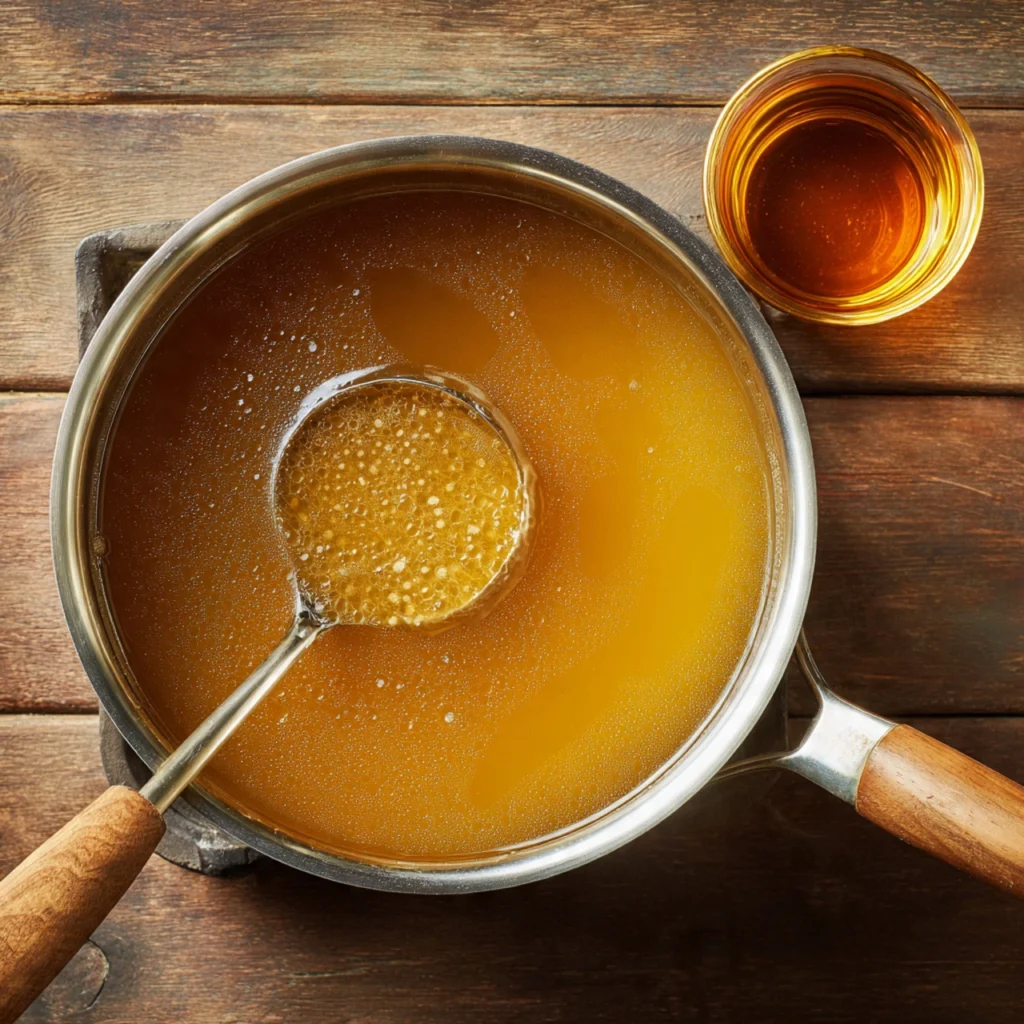
Step 3: Warm Your Stock
This step sounds almost too simple to mention, but it is genuinely critical. Pour your stock — with the strained porcini soaking liquid added — into a medium saucepan and keep it over the lowest possible heat throughout the entire risotto cooking process. Adding cold stock to a hot risotto drops the temperature of the rice, interrupts the starch release process, and extends the cooking time unevenly. Warm stock keeps the risotto cooking at a consistent temperature and pace from the first ladle to the last. Taste the stock at this point — it should be well-seasoned and flavourful, because it will become the backbone of your risotto’s taste.
Step 4: Build the Soffritto
In a large, wide, heavy-bottomed saucepan or Dutch oven, heat the 2 tablespoons of olive oil and 2 tablespoons of butter over medium heat. Add the finely diced onion and shallots and cook gently for 8–10 minutes, stirring occasionally, until they are completely soft, translucent, and sweet — not golden or browned. The soffritto is the aromatic base of the risotto and it needs to be cooked slowly and properly. Rushing this step and browning the onion will give the risotto a slightly bitter, caramelised note that fights with the delicate mushroom flavour. Add the remaining minced garlic and cook for another 60 seconds.
Step 5: Toast the Rice
Add the Arborio rice to the soffritto and stir to coat every grain in the butter and oil. Increase the heat slightly to medium-high and toast the rice for 2–3 minutes, stirring constantly. The rice is properly toasted when the edges of each grain have become slightly translucent while a white dot remains visible in the center of each grain. You will also notice a faintly nutty smell. This toasting step is essential — it firms the outer starch layer of each grain so the rice cooks evenly and maintains its shape throughout, giving you risotto that is creamy on the outside and has just the right gentle resistance in the center.
Step 6: Add the Wine
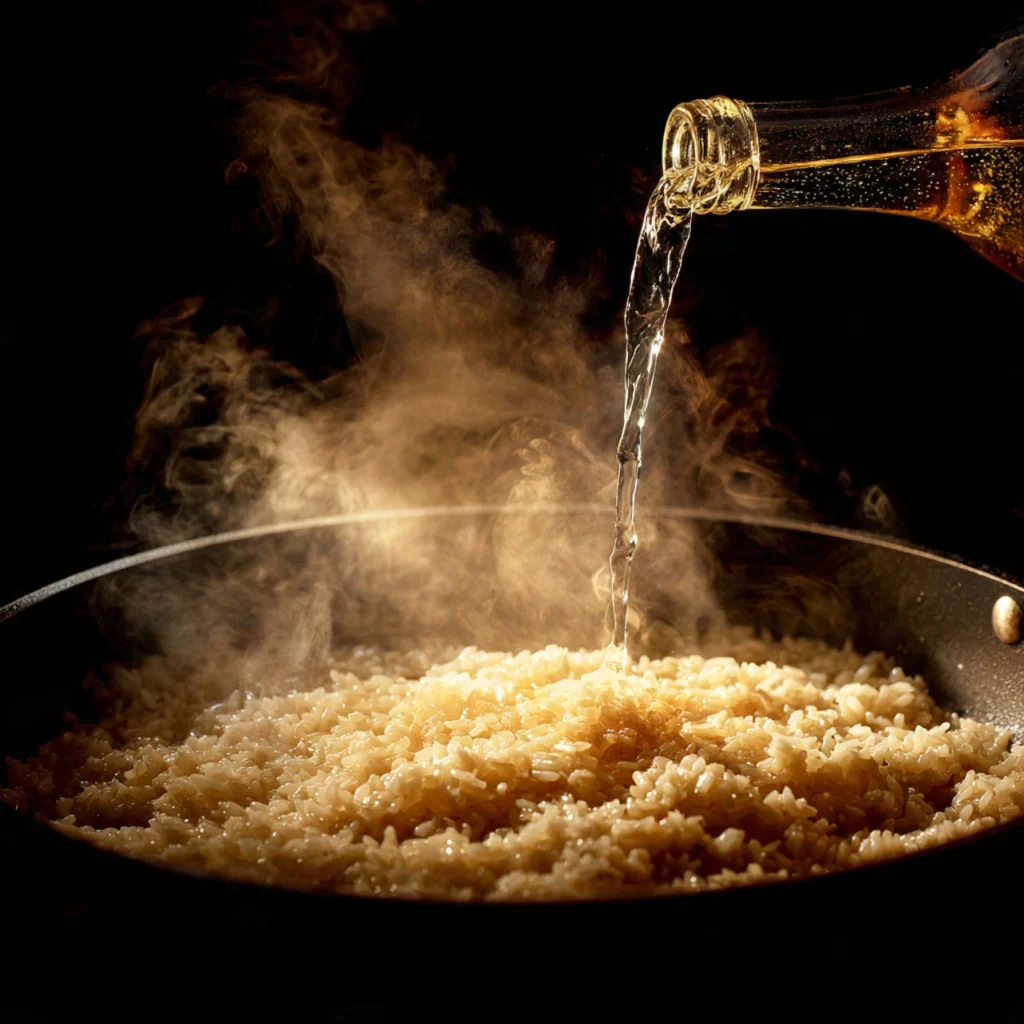
Pour the white wine into the toasted rice all at once. It will sizzle dramatically and release a cloud of steam. Stir continuously until the wine has been completely absorbed by the rice — this takes about 2 minutes. The wine does two things: its acidity balances the richness of the butter and Parmesan that comes later, and its evaporation leaves behind a complex aromatic flavour that adds a layer of depth to the finished dish. Use a wine you would drink — cooking wine has additives and a chemical aftertaste that transfers directly into the food.
Step 7: Add the Stock Gradually
Reduce the heat to medium. Add the warm stock one ladleful at a time — approximately 80–100ml per addition. Stir after each addition, keeping the rice moving, until almost all of the liquid has been absorbed before adding the next ladle. The stirring action is what releases the starch from the surface of the rice grains, and that released starch is what creates the creamy consistency of a great risotto. You are not stirring aggressively — you are stirring consistently. Continue this process for approximately 18–20 minutes, adding stock and stirring, tasting as you go.
At around the 15-minute mark, begin tasting the rice with every ladle. You are looking for rice that is tender throughout with a very slight — almost imperceptible — resistance right at the center. Not crunchy, not soft, not chalky. The moment you reach that point, stop adding stock even if you have some remaining.
Step 8: Fold in the Mushrooms
When the rice is one ladle of stock away from being done, fold in the reserved sautéed mushroom mixture. Stir gently to distribute the mushrooms evenly throughout the risotto. Add the final ladle of stock and stir until absorbed. The risotto should look creamy and flowing at this point — if it seems too thick, add a small splash more stock. Remove from heat.
Step 9: The Mantecatura — The Most Important Step
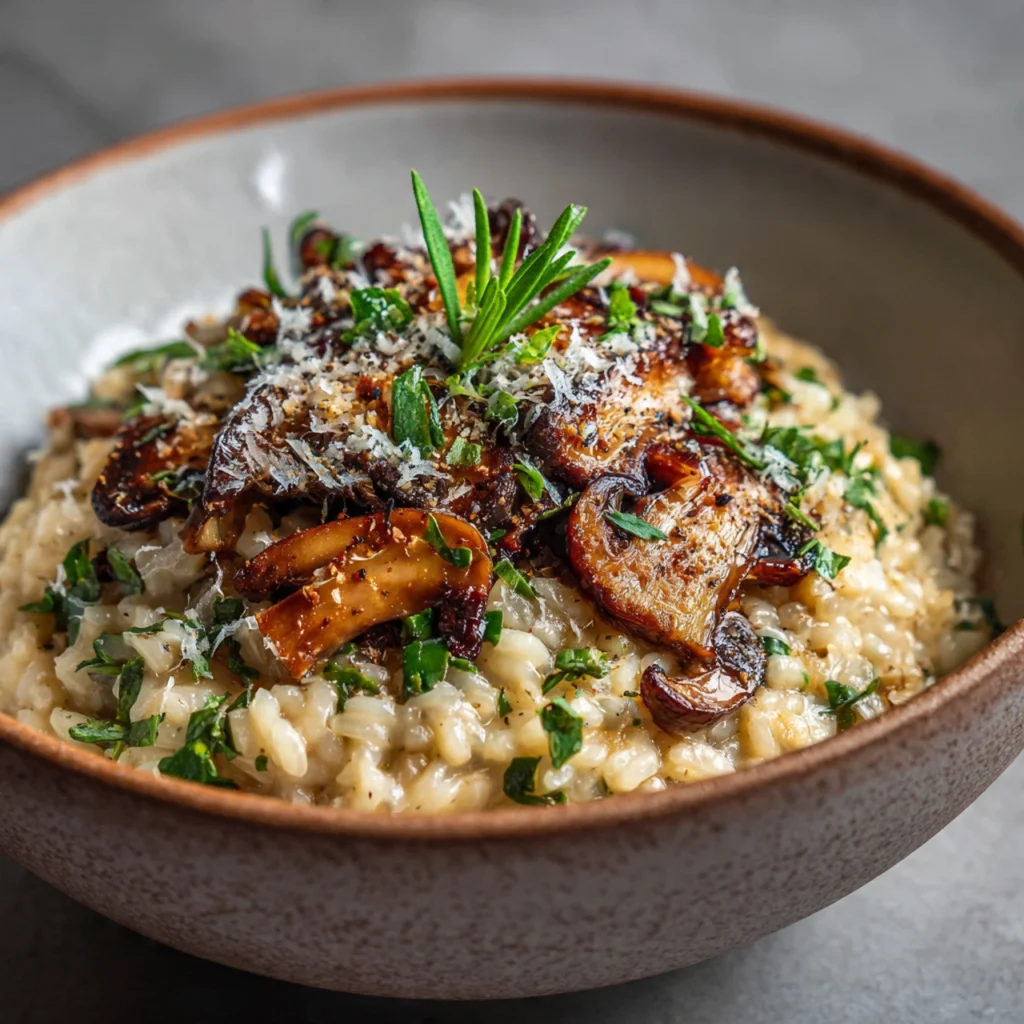
Remove the saucepan completely from the heat. Add the cold butter cubes all at once and the freshly grated Parmigiano-Reggiano. Using a wooden spoon or spatula, stir and fold vigorously for 60–90 seconds, moving the rice in a wave-like motion and incorporating the butter and cheese into the starchy liquid surrounding the grains. The cold butter emulsifies into the starchy cooking liquid, creating a silky, glossy, luxurious sauce that coats every grain of rice. This is the mantecatura — the technique that separates a genuinely great risotto from a merely good one. Taste and adjust salt and white pepper. The risotto should flow slowly off your spoon in a creamy wave.
Step 10: Serve Immediately
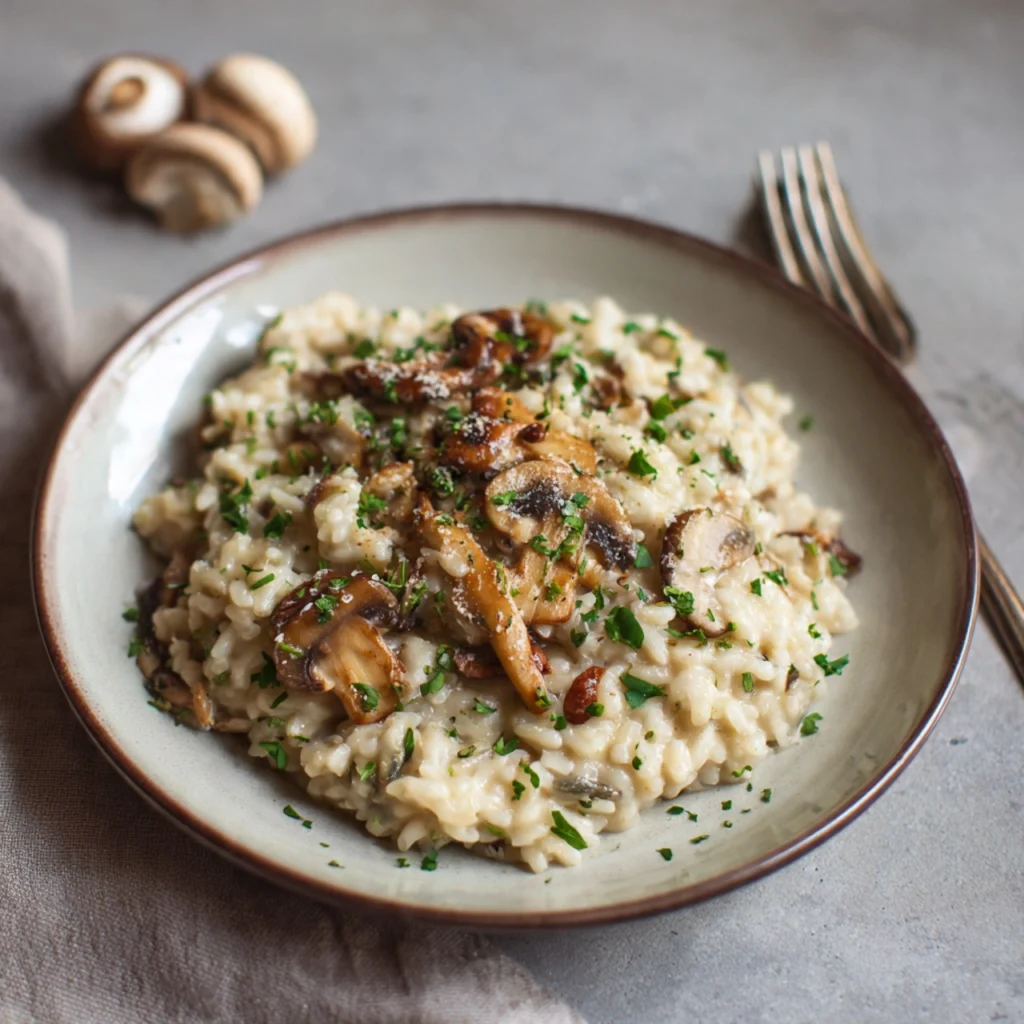
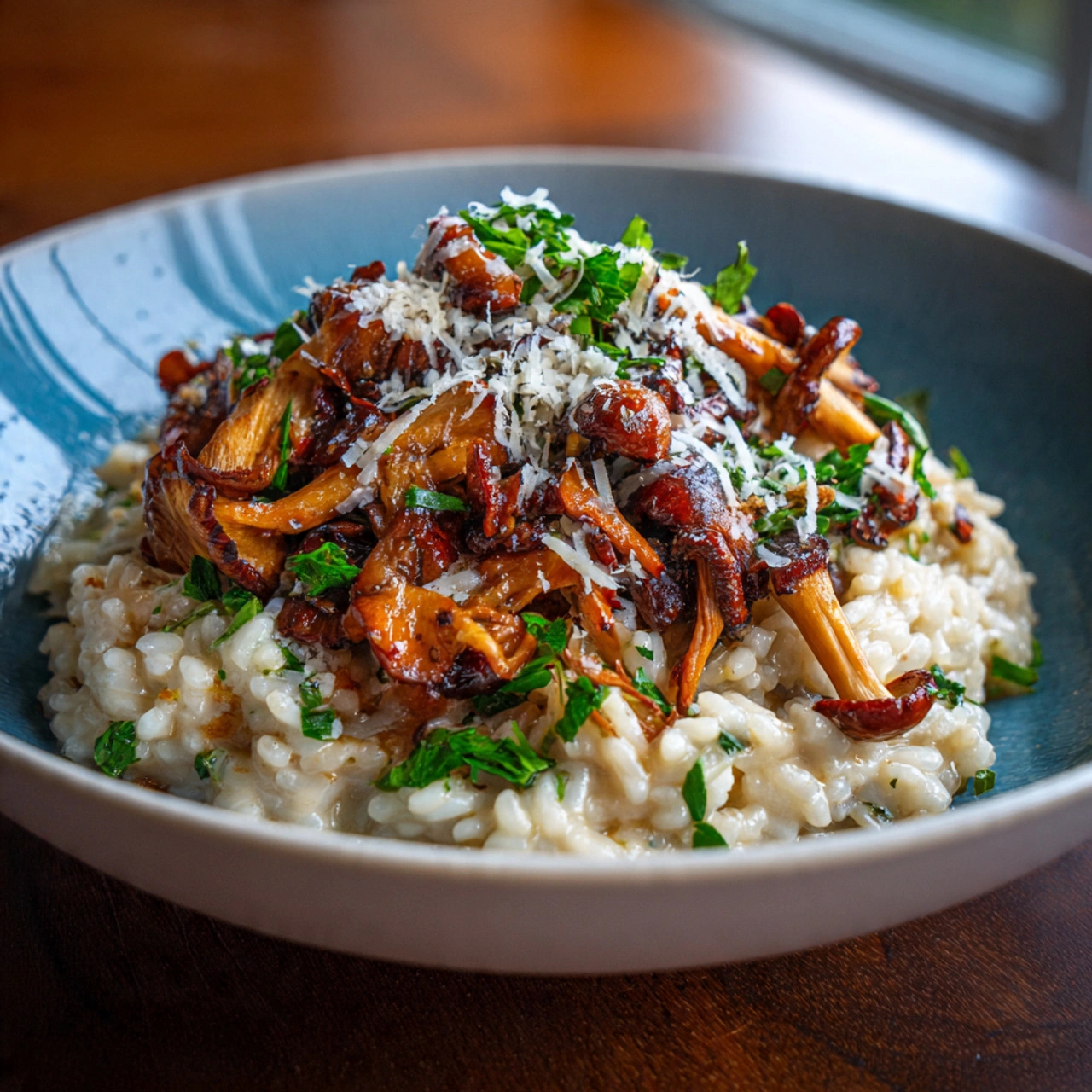
Spoon the mushroom risotto immediately into warm, shallow bowls — pre-warming the bowls prevents the risotto from stiffening on cold ceramic before it reaches the table. Garnish with the reserved whole sautéed mushrooms, a scattering of finely chopped fresh parsley, an extra grating of Parmigiano-Reggiano, and a few drops of truffle oil if using. Serve within minutes of plating — risotto waits for no one.
Pro Tips for the Perfect Mushroom Risotto
Use Carnaroli Rice If You Can Find It
Arborio is the most widely available risotto rice and it works beautifully, but Carnaroli — often called the king of risotto rice — has a slightly firmer grain and higher starch content that gives a superior texture and greater forgiveness if you slightly overcook it. If your supermarket carries it, choose Carnaroli. If not, Arborio is absolutely excellent and will give you outstanding results.
Never Skip the Porcini
Dried porcini mushrooms and their soaking liquid add a dimension of earthy, almost meaty depth to mushroom risotto that fresh mushrooms alone cannot replicate. The glutamates in dried porcini function almost like a natural flavour amplifier for everything else in the dish. Even a small amount — 20g — makes a transformative difference. This is not optional if you want a truly great result.
The Cold Butter Matters
The mantecatura only works properly with cold butter. Cold butter emulsifies into the starchy liquid as it melts gradually, creating a smooth, stable, glossy sauce. Warm or room-temperature butter melts too quickly and pools rather than emulsifying, giving you a greasy rather than creamy finish. Keep your finishing butter in the refrigerator until the exact moment you need it.
Taste the Stock Before You Start
Your stock is the primary seasoning vehicle for the risotto — it is what seasons the rice from the inside as each grain absorbs it. If your stock is bland, your risotto will be bland regardless of how much salt you add at the end. Taste it before you begin and adjust — add a pinch of salt if needed, or reduce it briefly to concentrate the flavour.
Rest for Two Minutes Before Serving
Counterintuitively, a two-minute rest off the heat after the mantecatura allows the risotto to settle into the perfect consistency. Serve it straight from the stove and it can be slightly too loose. Two minutes of rest and it will flow exactly as it should.
Use a Wide Pan
A wide, shallow heavy-bottomed pan rather than a deep narrow pot gives you more surface area for liquid evaporation and more room to stir effectively. A Dutch oven or a wide sauté pan with high sides is ideal.
Common Mistakes to Avoid
Adding cold stock. This is the single most common technical error in risotto making. Cold stock shocks the rice, disrupts the cooking temperature, and creates an uneven texture. Keep your stock warm over low heat for the entire cooking process — it costs nothing and makes a significant difference.
Washing the rice. Never rinse Arborio or Carnaroli rice before making risotto. The surface starch on the grains is what creates the creamy consistency. Rinsing removes it entirely and gives you a loose, watery result that no amount of technique will save.
Cooking over too high a heat. Risotto is a medium heat dish. Too high and the liquid evaporates before the rice absorbs it, the soffritto burns, and the outside of the grains overcooks before the inside is done. Medium heat, consistent stirring, and gradual stock addition.
Using warm butter for the mantecatura. As discussed in the pro tips, room temperature or warm butter pools rather than emulsifies. Cold butter is not optional — it is structural.
Overcrowding the mushrooms when sautéing. Mushrooms need space and high heat to caramelise. Crowded mushrooms steam rather than sear, giving you a grey, soft result with no colour or depth of flavour. Work in batches and use a very hot pan.
Adding all the stock at once. This turns risotto into a boiled rice soup. The entire point of the gradual addition is to coax the starch out of the rice incrementally, building the creamy consistency ladle by ladle. There is no shortcut here.
Not tasting as you go. Risotto needs to be tasted regularly, especially in the final minutes. The window between perfectly cooked and overcooked is narrow — only consistent tasting will catch the exact right moment.
Storage and Serving Suggestions
Mushroom risotto is at its absolute peak the moment it is made and served — this is simply the nature of the dish. That said, leftovers store well and can be transformed into something genuinely delicious in their own right. Allow the risotto to cool to room temperature, then transfer to an airtight container and refrigerate for up to 3 days. The rice will firm up significantly in the refrigerator as the starch sets.
To reheat, place the risotto in a saucepan over medium-low heat and add a splash of warm stock or water — a few tablespoons per portion. Stir gently as it warms, adding more liquid as needed, until it returns to a creamy, flowing consistency. It will not be quite the same as freshly made, but reheated properly it is still deeply satisfying.
Leftover risotto that is too firm to reheat beautifully makes exceptional arancini — Italian fried rice balls. Form the cold risotto into balls, stuff each one with a small cube of mozzarella, coat in breadcrumbs, and shallow or deep fry until golden and crispy. They are extraordinary and are genuinely one of the best uses for leftover risotto imaginable.
For serving, mushroom risotto is a complete dish on its own and needs very little accompaniment. A simple green salad dressed with lemon and olive oil is the ideal partner — it provides freshness and acidity that cuts through the richness of the risotto. A glass of the same dry white wine used in the cooking is the perfect pairing. For a more substantial meal, serve alongside pan-seared chicken thighs, a herb-roasted pork tenderloin, or simply on its own as a first course in the Italian tradition.
Frequently Asked Questions
Q1: Can I make mushroom risotto without wine? Yes, though the wine does add a layer of flavour complexity that is difficult to fully replicate. The best non-alcoholic substitute is a combination of a tablespoon of white wine vinegar or lemon juice diluted in 100ml of extra stock. The acidity is the functional element the wine provides, and either of those substitutes delivers it. Some cooks simply use extra stock in place of the wine with good results — the risotto will be slightly less complex but still excellent.
Q2: What is the best rice for mushroom risotto? Carnaroli and Arborio are the two best options, with Carnaroli being the preferred choice of most Italian chefs for its superior texture and greater forgiveness during cooking. Vialone Nano is a third excellent option popular in the Veneto region of Italy. Do not substitute regular long-grain rice, basmati, or jasmine rice — they do not have the right starch composition and will not produce a creamy risotto regardless of technique.
Q3: Can I make mushroom risotto ahead of time? You can partially cook it — a technique used in professional kitchens called parboiling. Cook the risotto through the gradual stock addition until it is about 70% done, then spread it on a baking sheet to cool rapidly and refrigerate. When ready to serve, return it to the pan, resume adding warm stock, and finish with the mantecatura. This gives you a head start of up to several hours while still delivering a freshly finished risotto at service. A fully cooked risotto cannot be truly replicated on reheating, though as noted above it can be reheated to a satisfying result.
Q4: Why is my risotto gluey or stodgy? Gluey risotto almost always comes from one of two causes: overcooking, which breaks down the rice grains completely and releases too much starch, or adding too much stock at once and essentially boiling the rice. The fix is attentive tasting in the final minutes, gradual stock addition, and removing the pan from heat the moment the rice reaches the correct texture — tender with the very faintest resistance at the center.
Q5: Can I make mushroom risotto vegan? Yes, with a few substitutions. Replace the butter throughout with a good quality vegan butter — one with a high fat content and low water content works best for the mantecatura. Replace the Parmigiano-Reggiano with a vegan Parmesan alternative or nutritional yeast, starting with a smaller amount and tasting as you go. Use vegetable stock rather than chicken stock. The result will be very good — the mushroom flavour is so prominent that the dish carries itself beautifully without dairy.
Q6: How do I know when the risotto is done? Taste it. That is the only reliable method. The rice should be tender all the way through with an extremely subtle, almost ghost-like resistance right at the very center of each grain — what Italians call al dente. The texture surrounding the grains should be creamy and flowing, not stiff or soupy. If you bite a grain and it is still chalky or crunchy in the center, it needs more time. If it is completely soft with no resistance at all, it is slightly overdone — still delicious, but not perfect.
Q7: What mushrooms work best for mushroom risotto? A combination always outperforms a single variety. Cremini mushrooms provide a solid, earthy foundation. Shiitake mushrooms contribute a distinctive savoury depth and a meaty texture. Oyster mushrooms add a delicate, silky element and beautiful visual variety. Dried porcini provide concentrated umami intensity that elevates the entire dish. If you can only use one variety, cremini are the most accessible and reliable. If you want to elevate the dish for a special occasion, adding a small amount of fresh porcini or chanterelles is transformative.
Nutrition Information (Approximate Per Serving)
Based on 4 servings using the full recipe above, without optional garnishes.
| Nutrient | Amount Per Serving |
|---|---|
| Calories | ~520 kcal |
| Total Fat | 26g |
| Saturated Fat | 14g |
| Cholesterol | 60mg |
| Sodium | 720mg |
| Total Carbohydrates | 54g |
| Dietary Fiber | 3g |
| Total Sugars | 4g |
| Added Sugars | 0g |
| Protein | 14g |
| Calcium | 22% DV |
| Iron | 12% DV |
| Vitamin D | 8% DV |
| Potassium | 580mg |
Note: Values are approximate and will vary based on specific stock sodium content, exact cheese quantities, mushroom varieties used, and whether optional ingredients such as truffle oil are included.
Conclusion
There are a handful of recipes in the world that genuinely change the way you think about cooking — dishes that teach you something transferable every time you make them, that reward your attention with results that feel disproportionately excellent for the effort involved. Mushroom risotto is one of those recipes. Learning to make it properly does not just give you one great dish. It gives you a technique, a philosophy of attentive cooking, and a confidence at the stove that carries over into everything else you make.
The recipe in this guide is not complicated. It is methodical. It asks you to be present, to taste often, to add stock gradually and stir with patience, and to finish with cold butter and good Parmesan in a technique that takes sixty seconds and makes all the difference. Follow those principles and what comes out of your pan will be something that would not look out of place on the menu of a serious Italian restaurant.
Make it once for yourself on a quiet evening so you can focus on the process without distraction. Make it again for people you want to impress. By the third time you will find that your hands know the rhythm of it — the pace of the stirring, the colour the rice turns when it is nearly done, the exact moment to pull the pan off the heat. That is when mushroom risotto stops being a recipe and starts being something you simply know how to make, and that knowledge is genuinely yours to keep.
Now go warm that stock.

Mushroom Risotto
Ingredients
Equipment
Method
- Place the dried porcini mushrooms in a small heatproof bowl and pour the boiling water over them. Let them soak for 20–25 minutes until fully softened and the water has turned deep amber-brown. Carefully lift the porcini out, squeeze gently over the bowl, and roughly chop. Strain the soaking liquid through a fine mesh sieve to remove any grit, then add the strained liquid to your warm stock.
- Wipe the fresh mushrooms clean with a damp cloth — never wash under running water. Slice cremini thickly, tear oyster mushrooms into natural pieces, and slice shiitake caps discarding tough stems. Heat a large wide skillet over high heat, add 1 tablespoon olive oil and 1 tablespoon butter. When the butter foam subsides add the mushrooms in a single layer in batches. Cook undisturbed for 2–3 minutes until deeply golden, then stir and cook 2 more minutes. Add two-thirds of the minced garlic and thyme, season generously, and toss for 60 seconds. Remove from heat. Reserve a few whole mushrooms for garnish and add the chopped rehydrated porcini to the rest.
- Pour your stock — with the strained porcini soaking liquid added — into a medium saucepan and keep it over the lowest possible heat throughout the entire risotto cooking process. Taste the stock and adjust seasoning if needed — it should be well-flavoured as it will season the rice from the inside.
- In a large wide heavy-bottomed saucepan, heat 2 tablespoons olive oil and 2 tablespoons butter over medium heat. Add the finely diced onion and shallots and cook gently for 8–10 minutes, stirring occasionally, until completely soft, translucent, and sweet — not browned. Add the remaining minced garlic and cook for another 60 seconds.
- Add the Arborio rice to the soffritto and stir to coat every grain in the butter and oil. Increase heat slightly to medium-high and toast the rice for 2–3 minutes, stirring constantly, until the edges of each grain are slightly translucent with a white dot remaining at the center and the mixture smells faintly nutty.
- Pour the white wine into the toasted rice all at once. Stir continuously until the wine has been completely absorbed by the rice — about 2 minutes. The wine adds acidity that balances the richness of the butter and Parmesan added later.
- Reduce heat to medium. Add the warm stock one ladleful at a time — approximately 80–100ml per addition. Stir after each addition until almost all liquid is absorbed before adding the next ladle. Continue this process for approximately 18–20 minutes, tasting the rice regularly from the 15-minute mark. Stop adding stock when the rice is tender throughout with a very slight resistance at the very center.
- When the rice is one ladle of stock away from being done, fold in the reserved sautéed mushroom mixture. Stir gently to distribute evenly throughout the risotto. Add the final ladle of stock and stir until absorbed. The risotto should look creamy and flowing — add a small splash more stock if it seems too thick. Remove from heat.
- Remove the saucepan completely from the heat. Add the cold butter cubes all at once and the freshly grated Parmigiano-Reggiano. Stir and fold vigorously for 60–90 seconds in a wave-like motion, incorporating the cold butter and cheese into the starchy liquid surrounding the grains until the risotto is silky, glossy, and flows slowly off the spoon. Taste and adjust salt and white pepper.
- Rest the risotto for 2 minutes off the heat, then spoon immediately into warm shallow bowls. Garnish with the reserved whole sautéed mushrooms, finely chopped fresh parsley, an extra grating of Parmigiano-Reggiano, and a few drops of truffle oil if using. Serve within minutes of plating.


