
Ingredients
Equipment
Method
- Pour the certified gluten free chicken or vegetable broth and water into a medium saucepan. Bring to a gentle boil over medium-high heat. Taste the broth and add a small pinch of salt if needed — season conservatively as broth sodium levels vary widely.
- Add the certified gluten free pastina directly to the boiling broth. Stir immediately and reduce heat to medium. Stir every minute throughout cooking to prevent clumping. Cook according to package directions, checking for doneness 1 to 2 minutes early. The pasta should be tender but still holding its shape. The liquid will reduce significantly — this is correct. If liquid evaporates before the pasta is cooked, add a splash more broth or water a few tablespoons at a time. The final consistency should be thick and creamy, similar to a loose risotto.
- While the pasta finishes cooking, crack the egg into a small bowl and beat well with a fork until the yolk and white are fully combined. If using egg yolks only, beat those together in the same way. Set aside.
- Remove the saucepan completely from the heat. Pour the beaten egg over the hot pastina in a thin, slow stream while stirring constantly and vigorously with a wooden spoon. The residual heat will gently cook the egg into a silky, custard-like sauce that coats every piece of pasta. Continue stirring for 30 to 45 seconds until the egg is fully incorporated and the pastina looks glossy and cohesive. Do not add the egg while the pot is still on the heat — this will scramble it.
- Add the cold butter pieces and freshly grated Parmigiano-Reggiano to the pot. Stir until both are fully melted and incorporated into the pastina. The butter and cheese will create a rich, glossy, cohesive sauce.
- Taste the pastina and adjust seasoning with fine sea salt and freshly ground black pepper. For a looser, more soup-like consistency, stir in a splash of warm broth. For a thicker result, let it rest for one minute — it thickens quickly as it stands.
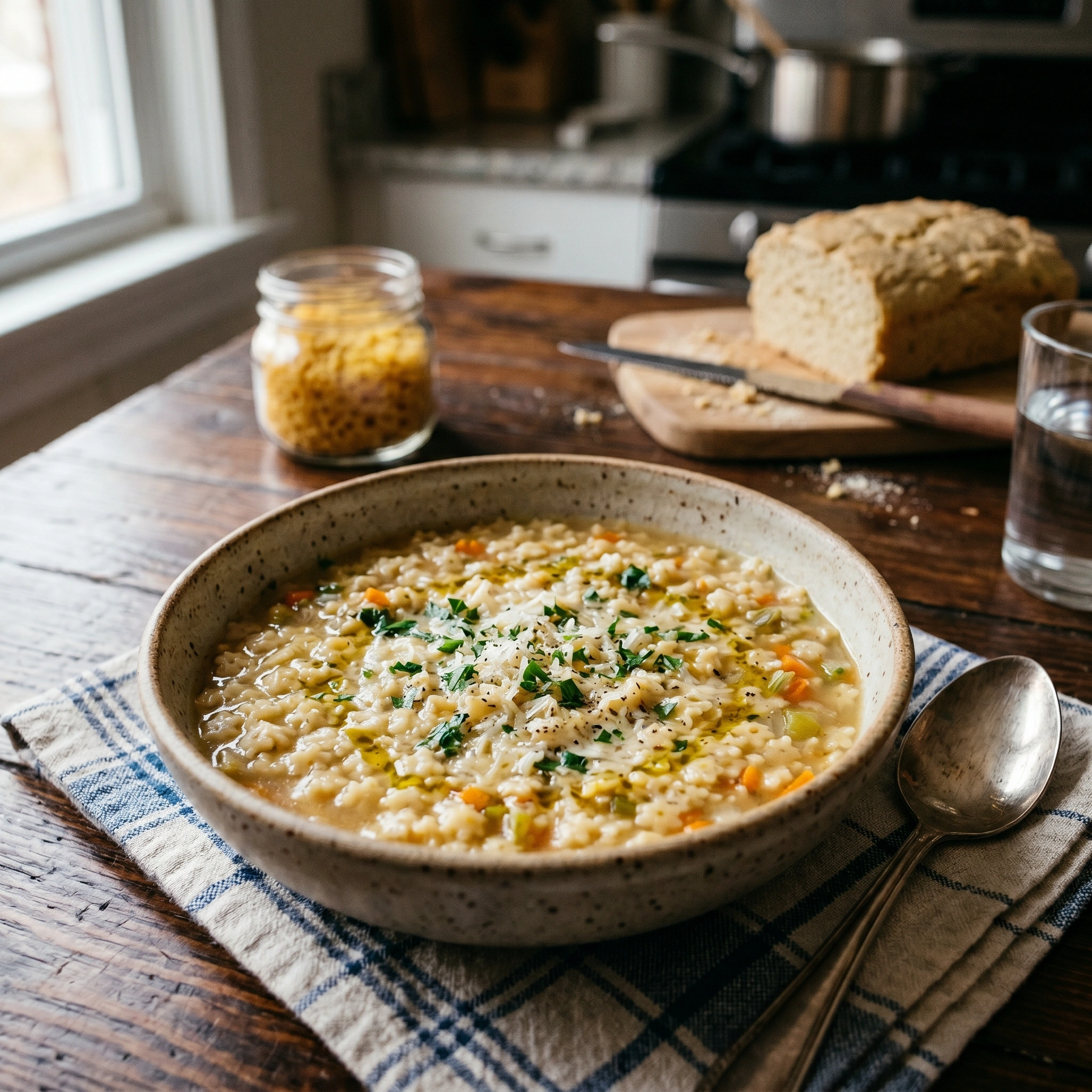
- Ladle immediately into warm bowls. Top with an extra grating of Parmigiano-Reggiano, a crack of fresh black pepper, and a drizzle of good extra virgin olive oil if desired. Serve right away — pastina thickens as it sits and is best eaten immediately.
Notes
Pro Tips: Take the pot fully off the heat before adding the egg — pouring it into boiling pasta will scramble it instead of creating a silky coating. Always use certified gluten free pasta and broth, not just "made without gluten," especially for celiac disease. Use freshly grated Parmigiano-Reggiano rather than pre-shredded — it melts smoothly into the hot pastina without clumping. Add cold butter in small pieces off the heat so it emulsifies into the dish rather than pooling on top. Stir the pasta frequently during cooking to prevent gluten free pasta from clumping. Serve immediately — pastina thickens quickly as it sits. To loosen leftovers, stir in a splash of warm broth over low heat.