Gluten Free Pastina: The Healing Bowl of Comfort You Didn’t Know You Were Missing
Introduction
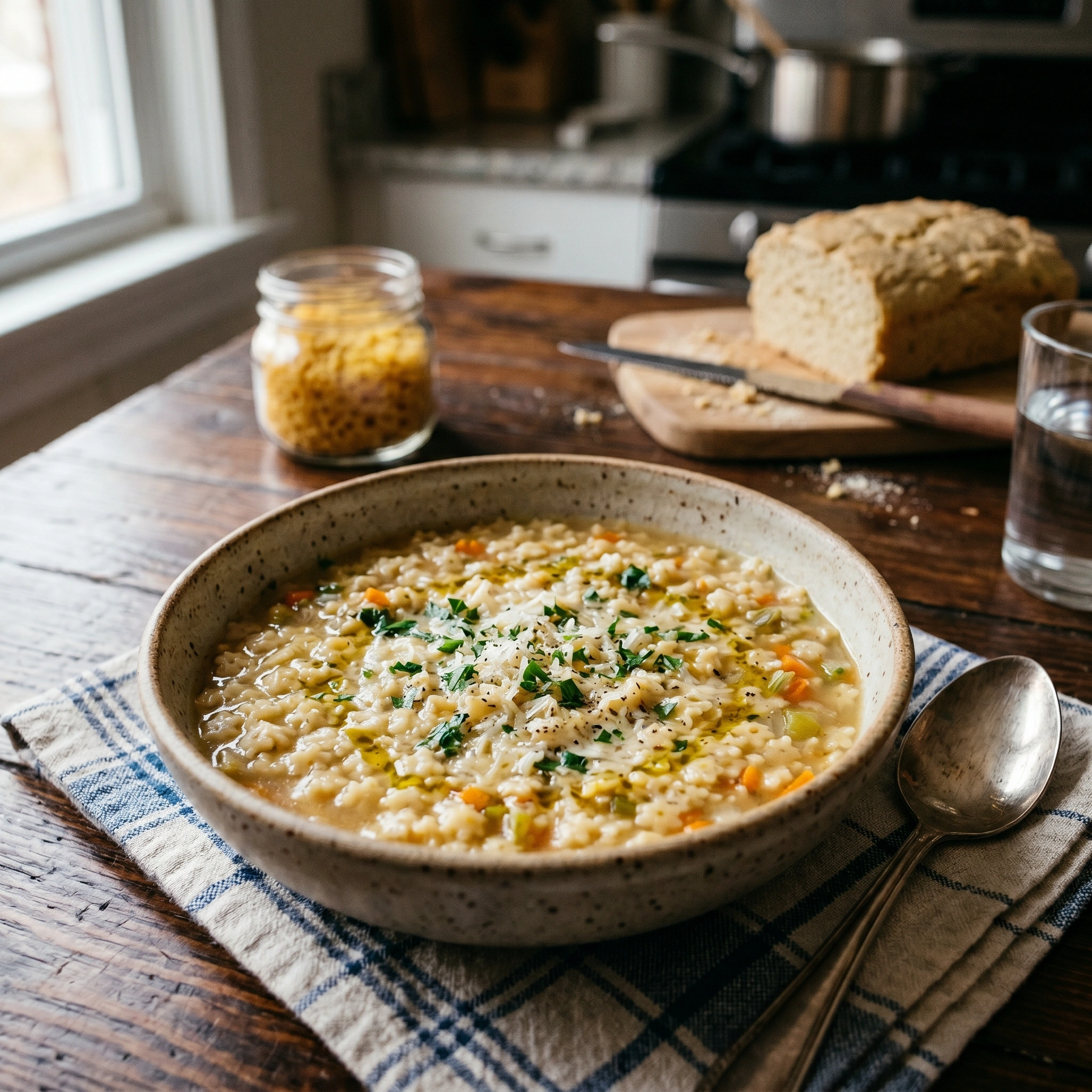
Gluten free pastina is one of those recipes that doesn’t just feed you — it takes care of you. If you grew up in an Italian household, the word “pastina” probably conjures an immediate, visceral memory: a small bowl of tiny star-shaped pasta swimming in golden broth, brought to you by a grandmother who somehow knew exactly when you needed it most. It was the meal you got when you were sick, when you were sad, when the world felt like too much. It was, and still is, the original Italian comfort food.
For those of us who can’t eat gluten, that memory — or the desire to create it — can feel just out of reach. For years, gluten free pasta options were limited, gummy, and nothing like the silky, tender pastina we were after. But that’s changed dramatically. Today, gluten free small-format pastas are widely available, genuinely delicious, and they cook up beautifully into the creamy, buttery, egg-enriched bowl of warmth that pastina has always been.
This gluten free pastina recipe is everything the original should be: simple, deeply comforting, and ready in under fifteen minutes. Five ingredients. One pot. Zero compromise on flavor or texture. Whether you’re making it for a sick child, a tough week, a cold evening, or simply because you want something that feels like a hug in bowl form, this recipe has you completely covered.
I’ve been making this for years — first for myself after being diagnosed with celiac disease, and then for my kids, who have zero idea it’s gluten free and frankly don’t care because it disappears from their bowls in under two minutes. That’s the kind of recipe win that never gets old.
What Is Pastina?
Before we get into the how-to, a quick word on what pastina actually is, because it’s worth understanding before you go hunting for a gluten free version.
Pastina, which translates literally to “little pasta” in Italian, is a category of tiny pasta shapes — not a single specific shape. The most iconic form is stelline, the tiny star-shaped pasta, but pastina can also refer to acini di pepe (tiny rounds), orzo, ditalini, or any miniature pasta. In Italian cooking and especially in Italian-American kitchens, pastina cooked in broth with butter and egg has been a go-to comfort meal for generations.
The traditional preparation is almost absurdly simple: cook the tiny pasta in broth, stir in butter, add a beaten egg or egg yolk, finish with Parmigiano-Reggiano, and eat while it’s steaming hot. The egg creates a silky, almost custard-like coating on each tiny piece of pasta. The butter adds richness. The broth does the heavy lifting on flavor. It’s minimal, brilliant, and endlessly satisfying.
For a gluten free version, we’re not changing any of that. We’re simply swapping the wheat-based pasta for a certified gluten free alternative and ensuring our broth is verified gluten free as well. Everything else stays exactly as it should be.
Choosing the Right Gluten Free Pastina
This is the most important ingredient decision you’ll make with this recipe, so let’s spend a moment on it.
Certified gluten free stelline (star pasta): This is the gold standard for authentic pastina. Jovial Foods makes an excellent certified gluten free stelline made from brown rice that cooks beautifully and has a wonderfully delicate texture. Rummo also produces a gluten free line that’s well-regarded.
Gluten free acini di pepe: Tiny round pearls that work just as well as stelline. DeLallo and other Italian food specialty brands often carry these.
Gluten free orzo: Slightly larger and more substantial, orzo gives you a heartier pastina if that’s your preference. Great for more of a meal-sized bowl rather than a light comfort serving.
Gluten free ditalini or small shells: Also viable, though the texture and feel will be slightly different from traditional pastina — still delicious, just a different experience.
When in doubt, look for rice-based or corn-based gluten free pastas. Chickpea and lentil-based options can work but have a stronger flavor that competes with the subtle broth base. Always check that your pasta is certified gluten free, not just “made without gluten,” especially if you have celiac disease.
Ingredients
For the Gluten Free Pastina (2 servings)
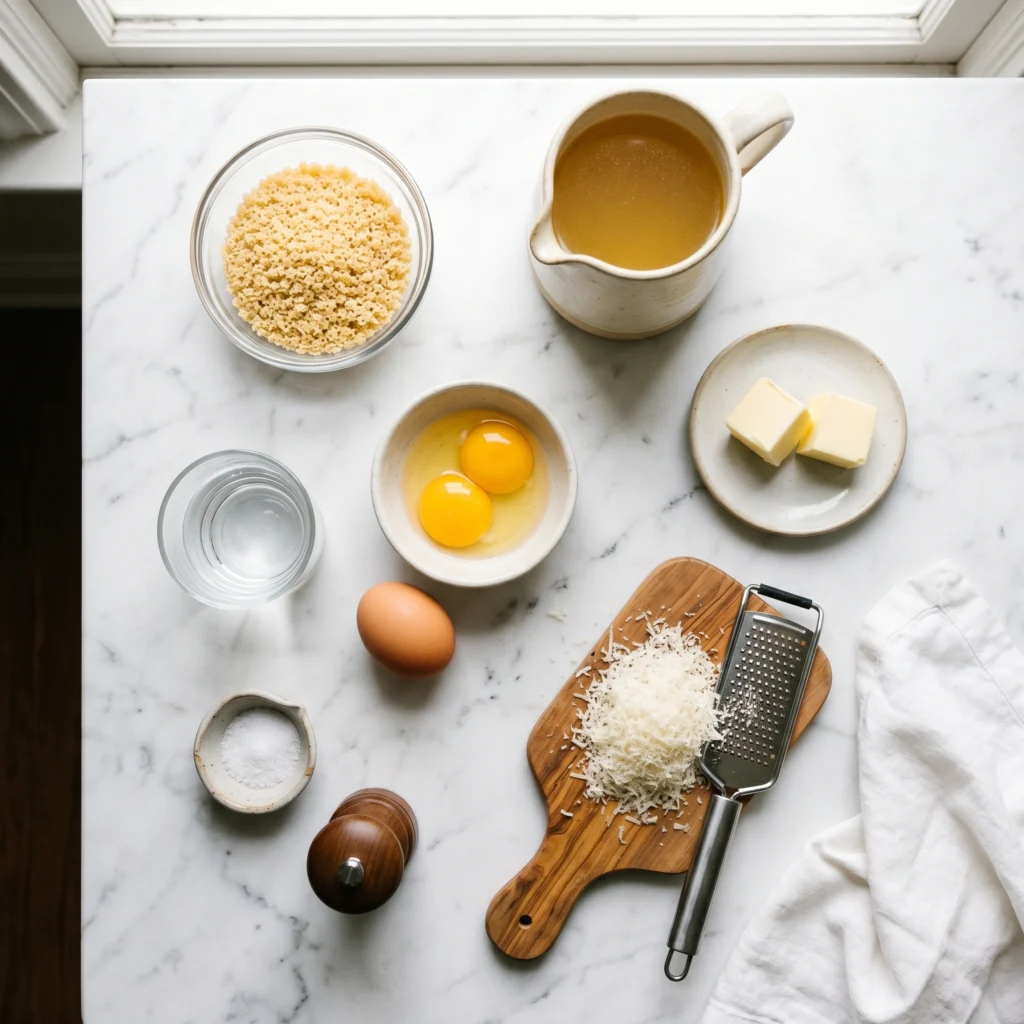
- 1 cup (about 170g) certified gluten free pastina or small-format pasta (stelline, acini di pepe, or orzo)
- 2 cups (480ml) good-quality chicken or vegetable broth, certified gluten free
- 1 cup (240ml) water
- 1 large egg (or 2 egg yolks for extra richness)
- 2 tablespoons unsalted butter
- ¼ cup (25g) finely grated Parmigiano-Reggiano, plus more for serving
- Fine sea salt, to taste
- Freshly ground black pepper, to taste
Optional Add-ins and Variations
- Extra virgin olive oil drizzle for serving
- Fresh flat-leaf parsley, finely chopped
- A small handful of baby spinach stirred in at the end
- A squeeze of fresh lemon juice to brighten the flavor
- A pinch of freshly grated nutmeg (traditional in some Italian family recipes)
- Extra broth for a more soup-like consistency
Equipment You’ll Need
- Medium saucepan
- Wooden spoon or heat-safe spatula
- Small bowl (for beating the egg)
- Ladle or measuring cup
- Fine grater (for the Parmesan)
Step-by-Step Instructions
Step 1: Heat Your Broth
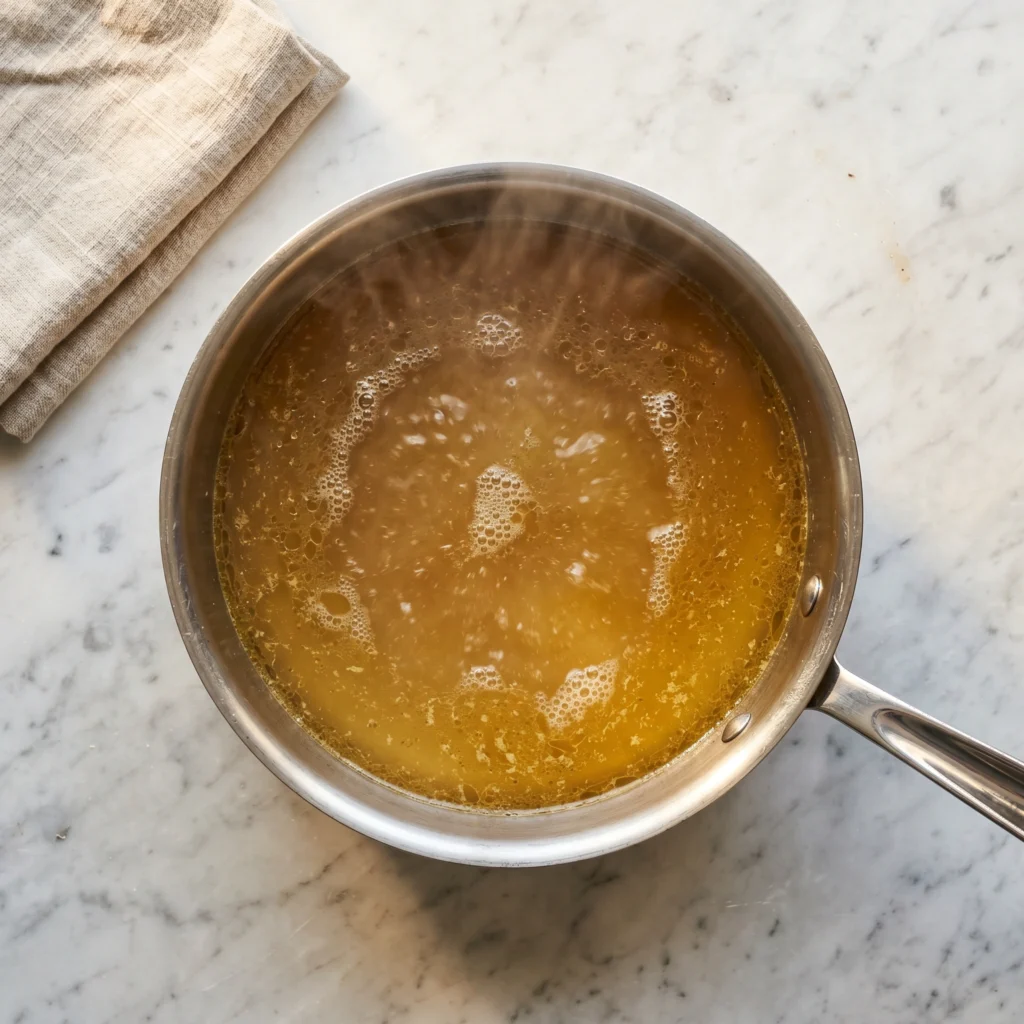
Pour the chicken or vegetable broth and water into a medium saucepan. Bring to a gentle boil over medium-high heat. Taste the broth before adding the pasta — if it’s well-seasoned, you may need very little added salt at the end. If it’s on the bland side, add a small pinch of salt to the liquid now.
Using good broth here is genuinely important. Pastina has so few ingredients that every one of them shows up in the final flavor. A flat, watery broth produces a flat, watery pastina. A rich, savory broth produces something that tastes like it’s been simmering for hours even though it took twelve minutes.
Step 2: Cook the Pastina
Add the gluten free pastina directly to the boiling broth. Stir immediately and reduce the heat to medium. Gluten free small pasta can clump together if left unstirred, so give it a stir every minute or so as it cooks.
Cook according to the package directions, but start checking a minute or two early. Gluten free pasta can go from perfectly al dente to soft and mushy faster than wheat pasta, so watch it closely. You want the pasta to be tender but still holding its shape — not breaking apart. The broth will reduce significantly as the pasta absorbs it, which is exactly what you want. The final consistency should be creamy and thick, somewhere between a risotto and a loose porridge.
If the liquid evaporates before the pasta is cooked through, add a splash more broth or water, a few tablespoons at a time.
Step 3: Beat the Egg
While the pasta finishes cooking, crack the egg into a small bowl and beat it well with a fork until the yolk and white are fully combined. If you’re using only egg yolks for extra richness, beat those in the same way. Set aside.
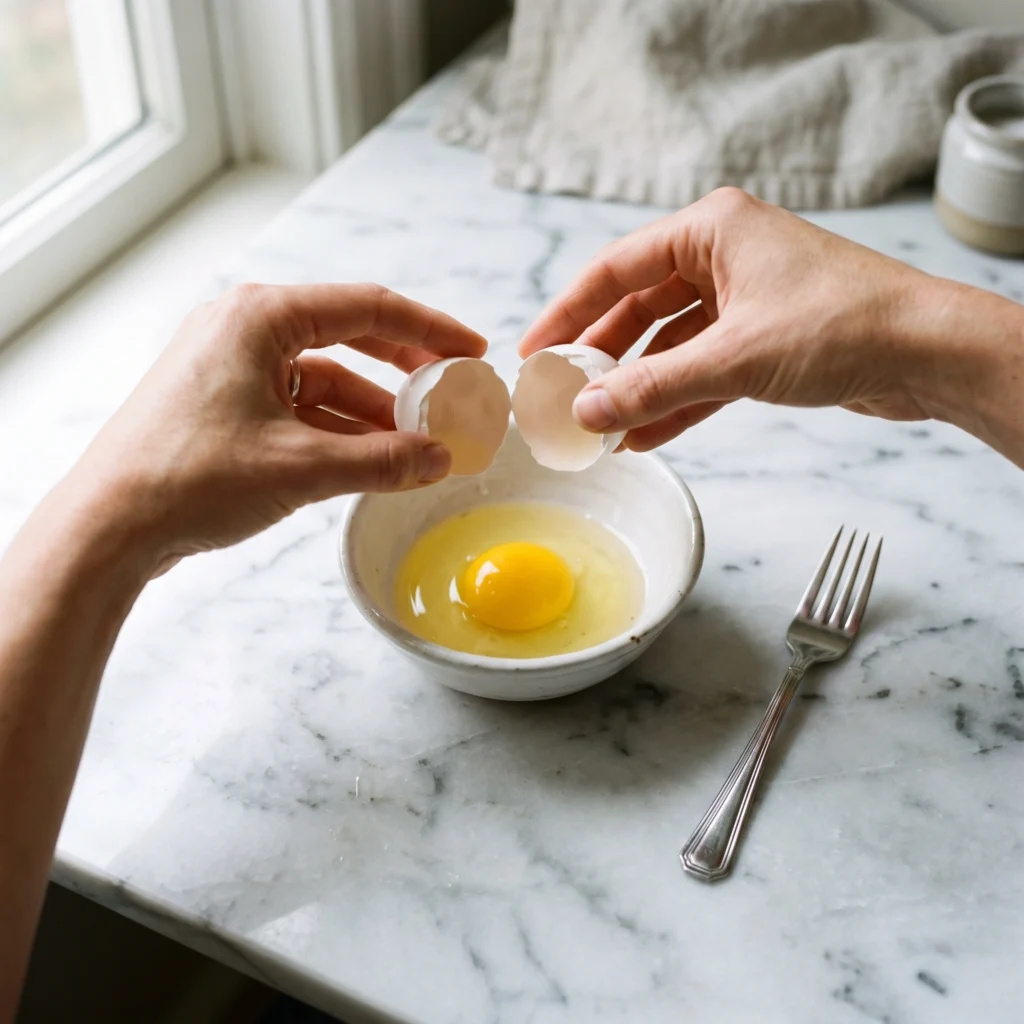
Step 4: Remove from Heat and Add the Egg
This step requires a tiny bit of technique but it’s genuinely simple once you understand why. Remove the saucepan from the heat completely before adding the beaten egg. This is critical. Adding egg directly to boiling or very hot pasta will scramble it, giving you bits of cooked egg rather than the silky, emulsified coating that makes pastina so special.
With the pot off the heat, pour the beaten egg over the hot pastina in a thin, slow stream while stirring constantly and vigorously with a wooden spoon. The residual heat of the pasta and the pot will gently cook the egg into a creamy, custard-like sauce that coats every tiny piece of pasta. Keep stirring for about 30 to 45 seconds until the egg has been fully incorporated and the pastina looks glossy and cohesive.
Step 5: Add Butter and Parmesan
Add the butter and grated Parmigiano-Reggiano to the pot and stir until both are fully melted and incorporated into the pastina. The butter adds a final layer of richness and gloss. The Parmesan adds that unmistakable savory, slightly sharp depth that pulls the whole bowl together.
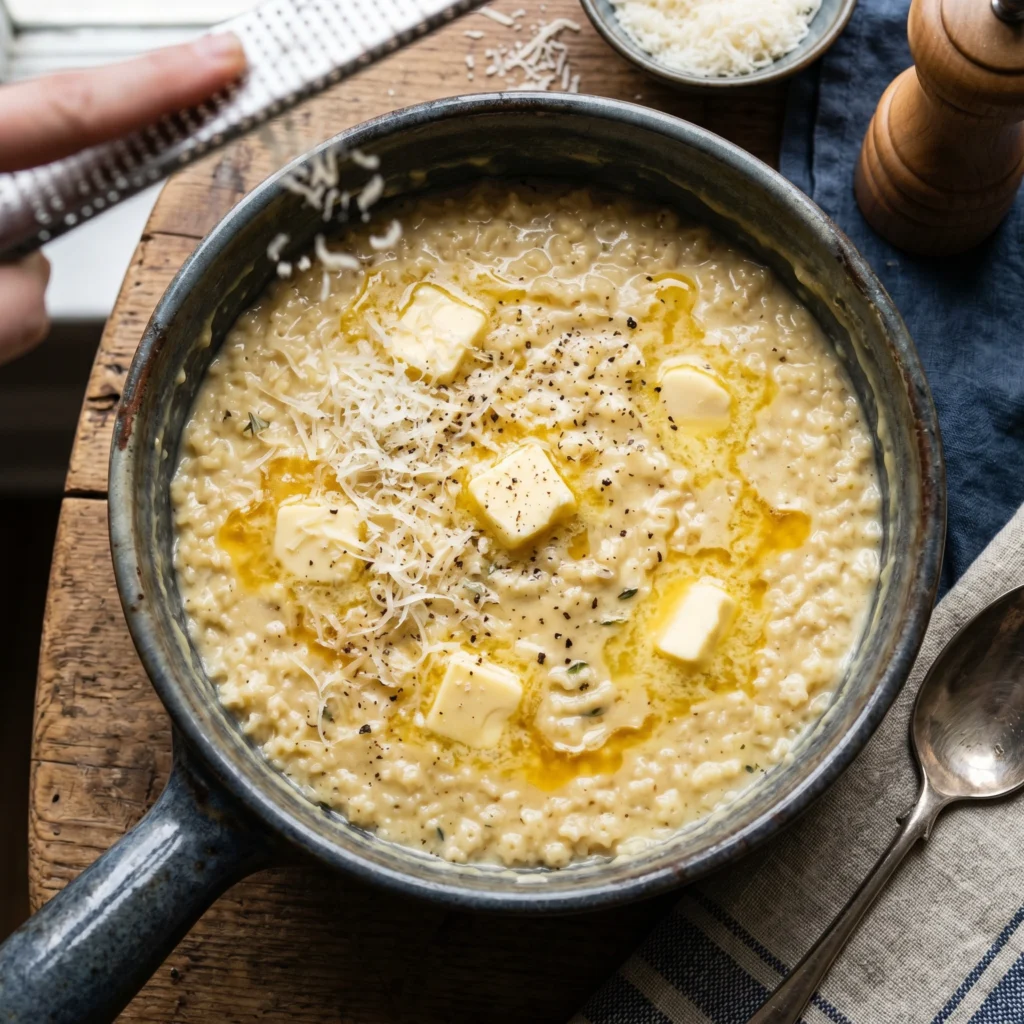
Step 6: Taste and Adjust
Taste the pastina and adjust the seasoning with salt and freshly ground black pepper. If you’d like a looser, more soup-like consistency, stir in a splash of warm broth. If you prefer it thicker, let it sit for a minute — it thickens quickly as it stands.
Step 7: Serve Immediately
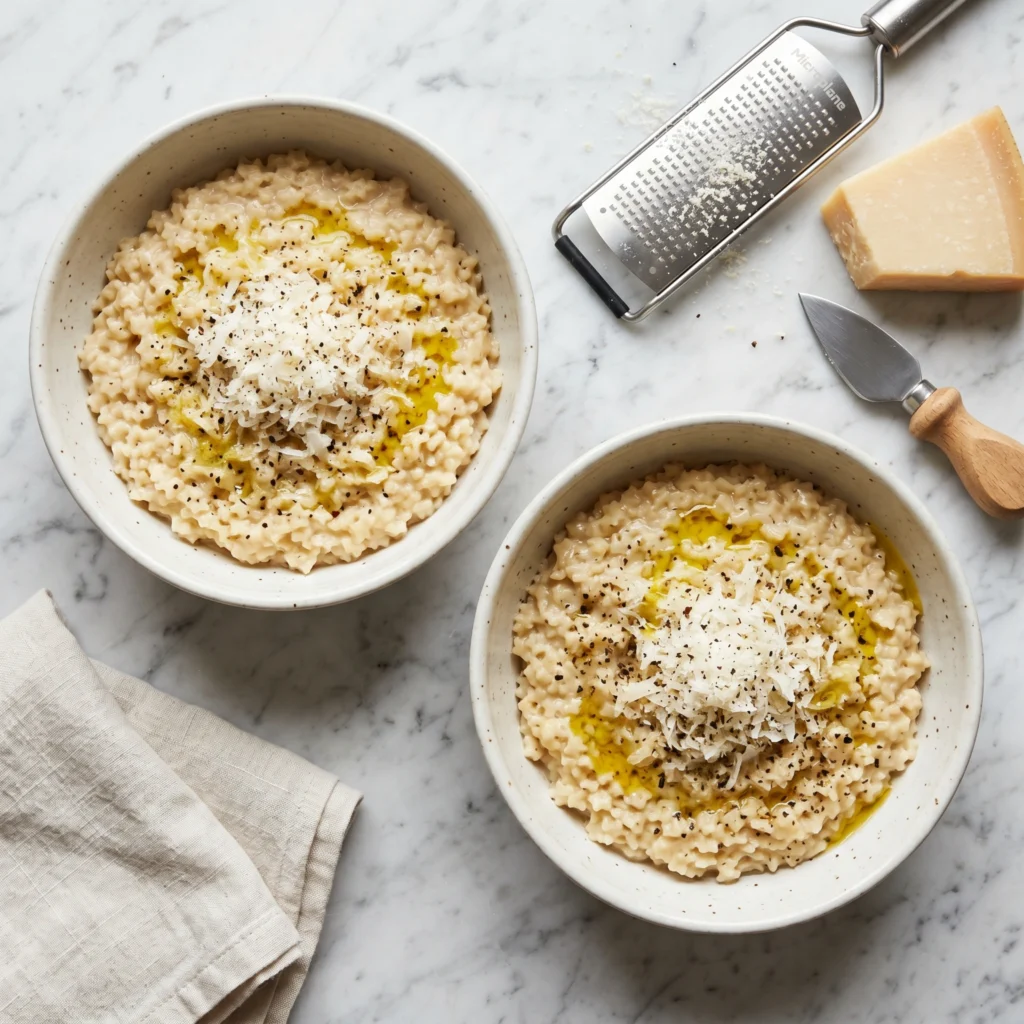
Ladle the gluten free pastina into warm bowls. Top with an extra grating of Parmigiano-Reggiano, a crack of black pepper, and a drizzle of good olive oil if you like. Serve right away — pastina waits for no one. It thickens as it sits, so eat it while it’s hot and at its silkiest best.
Pro Tips for Gluten Free Pastina
Use warm bowls. This sounds like a minor detail but it makes a real difference with pastina. Pour a little boiling water into your serving bowls while you finish cooking, then tip it out and dry them before ladling in the pastina. The bowl stays warm longer and the pastina maintains its silky texture through the whole meal.
Don’t salt your cooking liquid heavily upfront. Gluten free broth varies wildly in sodium content. Taste your broth before you start and season conservatively — you can always add more salt at the end, but you can’t take it out.
Take the pot fully off the heat before adding the egg. No exceptions. Scrambled egg bits are not what we’re going for here. Off the heat, slow stream, constant stirring — that’s the method.
Use freshly grated Parmesan, not the pre-shredded kind. Pre-shredded Parmesan contains anti-caking agents that prevent it from melting smoothly. Freshly grated will melt into the hot pastina in seconds, giving you that beautiful silky finish.
Add the butter cold. Cutting cold butter into small pieces and adding it off the heat helps it emulsify into the pastina rather than just pooling on top. This is a small technique borrowed from risotto finishing and it genuinely improves the texture.
Adjust consistency to your mood. Some days you want thick and creamy. Some days you want something more like a loose, brothy soup. Both are valid. Add warm broth to thin it out, or let it sit a minute to thicken up. The recipe is flexible.
Make it your own. The base recipe is a blank canvas. Stir in a handful of baby spinach, add a squeeze of lemon, top with a soft poached egg for extra protein, or finish with a tiny drizzle of truffle oil. Pastina adapts beautifully to whatever you have on hand.
Common Mistakes to Avoid
Using a gluten free pasta that’s not certified. For anyone with celiac disease or a serious gluten intolerance, “made without gluten” is not the same as “certified gluten free.” Cross-contamination at manufacturing facilities is a real concern. Always use certified gluten free pasta and verified gluten free broth.
Adding the egg while the pot is still on the heat. This is the single most common mistake people make with pastina. The egg needs to cook gently from residual heat, not from direct boiling heat. Scrambled egg in pastina is a texture disaster. Take the pot off the burner completely.
Overcooking the gluten free pasta. Gluten free pasta has a narrower window between perfectly cooked and overcooked compared to wheat pasta. Start checking it a minute before the package instructions say to, and pull it from the heat as soon as it’s tender.
Not stirring frequently enough. Small gluten free pasta can clump together and stick to the bottom of the pot if left unattended. Stir every minute, especially in the first half of cooking.
Letting it sit too long before serving. Pastina thickens dramatically as it cools and sits. It’s meant to be eaten immediately. If it does thicken too much before you get to it, simply stir in a splash of warm broth to loosen it back up.
Using pre-grated Parmesan from a can. This isn’t just a flavor issue — that product contains fillers that won’t melt into the pastina properly. Buy a small wedge of real Parmigiano-Reggiano and grate it yourself. The difference is enormous.
Storage and Serving Suggestions
How to Store Gluten Free Pastina
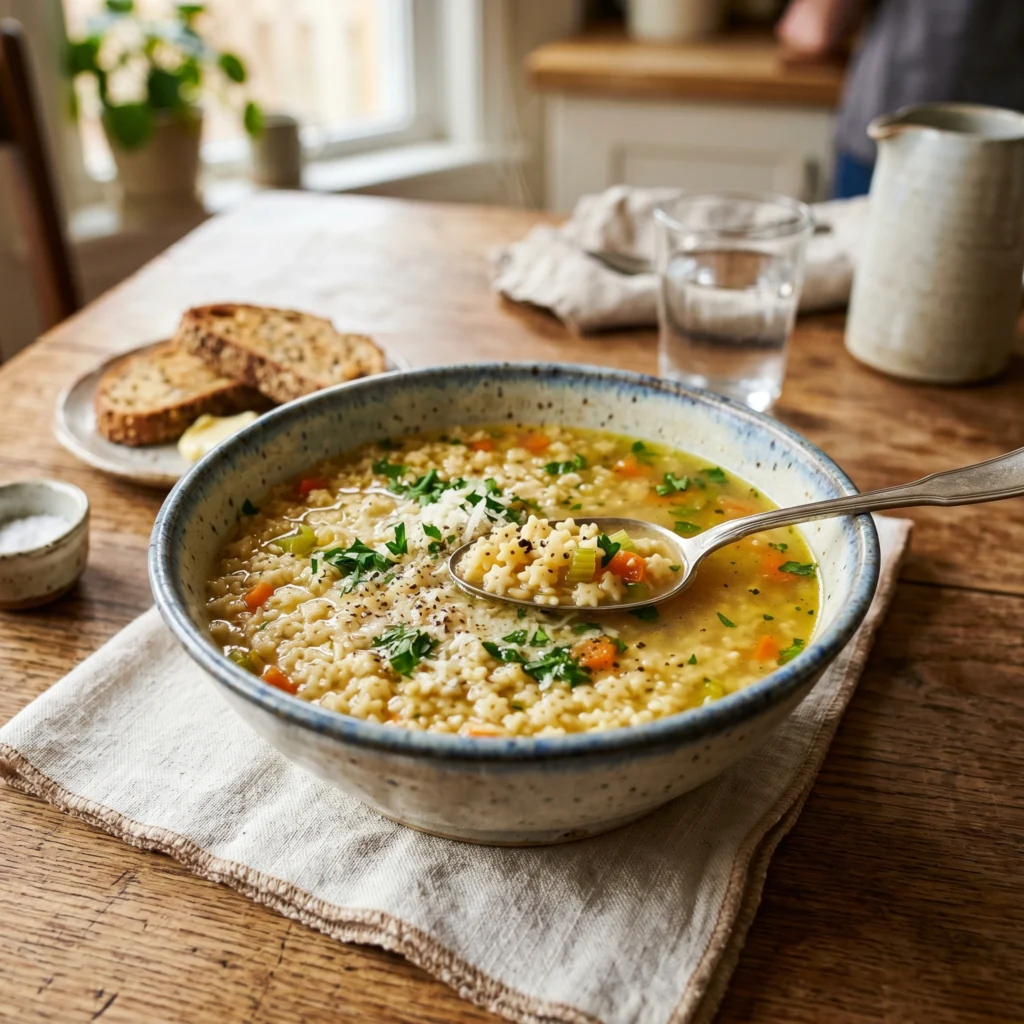
Pastina is best eaten immediately after making it. That said, leftovers can be stored in an airtight container in the refrigerator for up to 2 days. The pasta will absorb most of the remaining liquid as it sits and will thicken considerably.
To reheat, place the pastina in a small saucepan over low heat with a generous splash of warm broth or water. Stir gently as it heats, adding liquid until it reaches your desired consistency. Reheat slowly — medium-low heat — and don’t let it boil, as this can make the texture grainy.
Freezing is not recommended. The texture of gluten free pasta changes significantly after freezing and thawing, and the egg-enriched sauce does not hold up well.
How to Serve Gluten Free Pastina
Classic comfort bowl: Serve as is, topped with extra Parmigiano-Reggiano and black pepper. This is the original and it needs nothing else.
For sick days: Make it slightly thinner and more broth-forward. This is easier on upset stomachs and the warmth and salt of the broth are genuinely restorative.
For kids: Keep it simple — butter, Parmesan, and a tiny bit of salt. Most children are devoted to this version from the very first taste.
As a side dish: Serve alongside roasted chicken, grilled fish, or a simple green salad for a light, comforting weeknight dinner.
Elevated version: Drizzle with a good truffle oil, top with a soft-poached egg, and finish with fresh chives and a few shavings of aged Pecorino Romano for a sophisticated, restaurant-worthy bowl.
Frequently Asked Questions (FAQ)
Is pastina naturally gluten free?
Traditional pastina is made from semolina wheat, which contains gluten — so no, classic pastina is not gluten free. However, several brands now produce certified gluten free versions made from rice, corn, or a blend of gluten free flours that closely replicate the texture and delicate quality of the original. Always look for certified gluten free on the label.
What is the best gluten free pasta to use for pastina?
Certified gluten free stelline (tiny stars) made from brown rice is the closest substitute to traditional pastina, both in texture and in the nostalgic eating experience. Jovial Foods is one of the most trusted brands for this specific shape. Acini di pepe and small gluten free orzo are also excellent alternatives. Avoid pasta made from chickpeas or lentils for this particular recipe, as the earthier flavor can overpower the delicate broth base.
Can I make gluten free pastina dairy-free?
Yes, with a few substitutions. Replace the butter with a good-quality dairy-free butter (such as Miyoko’s or Earth Balance). Omit the Parmigiano-Reggiano or substitute with a dairy-free Parmesan alternative — nutritional yeast also works well and adds a savory, cheesy depth. The egg can remain, as it’s naturally dairy-free and is key to the texture of the dish.
Can I make this recipe egg-free?
You can skip the egg entirely and still have a delicious, comforting bowl of pastina — it just won’t have that silky, custard-like coating that the egg provides. Without the egg, the dish will be more broth-based and lighter in texture. To compensate for the lost richness, use an extra tablespoon of butter and finish with a more generous amount of Parmesan.
Is gluten free pastina good for sick days?
Absolutely, and it’s one of the best things you can make for someone who isn’t feeling well. The warm broth is hydrating and soothing, the tiny pasta is easy to digest, and the whole dish is gentle on upset stomachs. It’s also incredibly easy to eat — no chewing effort required — which makes it ideal for sore throats, nausea, or general illness fatigue. This is precisely why Italian grandmothers have been prescribing it for generations.
How do I keep gluten free pastina from getting gummy?
Two things help most: cook it in broth rather than plain water (the starch in the broth helps the pasta release more smoothly), and stir it frequently throughout cooking to prevent clumping. Also, avoid using too much pasta for the amount of liquid — the ratio matters. The pasta should have plenty of room to move and absorb liquid evenly rather than sitting on top of itself. Pull it off the heat while it still looks slightly looser than your ideal final consistency, as it will thicken as it rests.
Approximate Nutrition Information
Per serving, based on 2 servings per recipe. Values are estimates and may vary based on specific ingredients and broth used.
| Nutrient | Amount Per Serving |
|---|---|
| Calories | ~380 kcal |
| Total Fat | 18g |
| Saturated Fat | 10g |
| Cholesterol | 130mg |
| Sodium | 620mg |
| Total Carbohydrates | 42g |
| Dietary Fiber | 1g |
| Total Sugars | 1g |
| Protein | 13g |
Sodium will vary significantly depending on whether you use a low-sodium or regular broth.
Conclusion
Gluten free pastina is proof that the most meaningful food is often the simplest. Five ingredients, one pot, fifteen minutes — and the result is something that genuinely comforts you from the inside out. It’s not trying to be impressive or complicated. It’s trying to make you feel better, and it does exactly that, every single time.
For those of us navigating celiac disease, gluten intolerance, or a gluten free household, this recipe is a small but real gift. It means that nobody has to sit out the bowl of pastina that’s being passed around. It means the kids in your life can have the same golden, buttery, tiny-pasta experience that so many of us grew up with. It means that “comfort food” doesn’t have to come with a disclaimer.
The key details are simple: use a good certified gluten free pasta, cook it in quality broth, take the pot off the heat before you add the egg, and eat it immediately. Follow those steps and you will have a bowl of gluten free pastina that is not a consolation prize for missing the real thing — it is the real thing.
Make it for yourself on a hard day. Make it for someone who needs taking care of. Make it because it’s Tuesday and your kitchen should smell like something warm and good. However you come to this recipe, I hope it brings you exactly what pastina has always promised: a moment of genuine, uncomplicated comfort.
Recipe developed and written by cleantastehub.com. All content is original. Please do not republish without permission.

Gluten Free Pastina
Ingredients
Equipment
Method
- Pour the certified gluten free chicken or vegetable broth and water into a medium saucepan. Bring to a gentle boil over medium-high heat. Taste the broth and add a small pinch of salt if needed — season conservatively as broth sodium levels vary widely.
- Add the certified gluten free pastina directly to the boiling broth. Stir immediately and reduce heat to medium. Stir every minute throughout cooking to prevent clumping. Cook according to package directions, checking for doneness 1 to 2 minutes early. The pasta should be tender but still holding its shape. The liquid will reduce significantly — this is correct. If liquid evaporates before the pasta is cooked, add a splash more broth or water a few tablespoons at a time. The final consistency should be thick and creamy, similar to a loose risotto.
- While the pasta finishes cooking, crack the egg into a small bowl and beat well with a fork until the yolk and white are fully combined. If using egg yolks only, beat those together in the same way. Set aside.
- Remove the saucepan completely from the heat. Pour the beaten egg over the hot pastina in a thin, slow stream while stirring constantly and vigorously with a wooden spoon. The residual heat will gently cook the egg into a silky, custard-like sauce that coats every piece of pasta. Continue stirring for 30 to 45 seconds until the egg is fully incorporated and the pastina looks glossy and cohesive. Do not add the egg while the pot is still on the heat — this will scramble it.
- Add the cold butter pieces and freshly grated Parmigiano-Reggiano to the pot. Stir until both are fully melted and incorporated into the pastina. The butter and cheese will create a rich, glossy, cohesive sauce.
- Taste the pastina and adjust seasoning with fine sea salt and freshly ground black pepper. For a looser, more soup-like consistency, stir in a splash of warm broth. For a thicker result, let it rest for one minute — it thickens quickly as it stands.
- Ladle immediately into warm bowls. Top with an extra grating of Parmigiano-Reggiano, a crack of fresh black pepper, and a drizzle of good extra virgin olive oil if desired. Serve right away — pastina thickens as it sits and is best eaten immediately.