
The Best Buttery Almond Cookies (Crisp Edges, Soft Centers, Irresistible Flavor)
Introduction
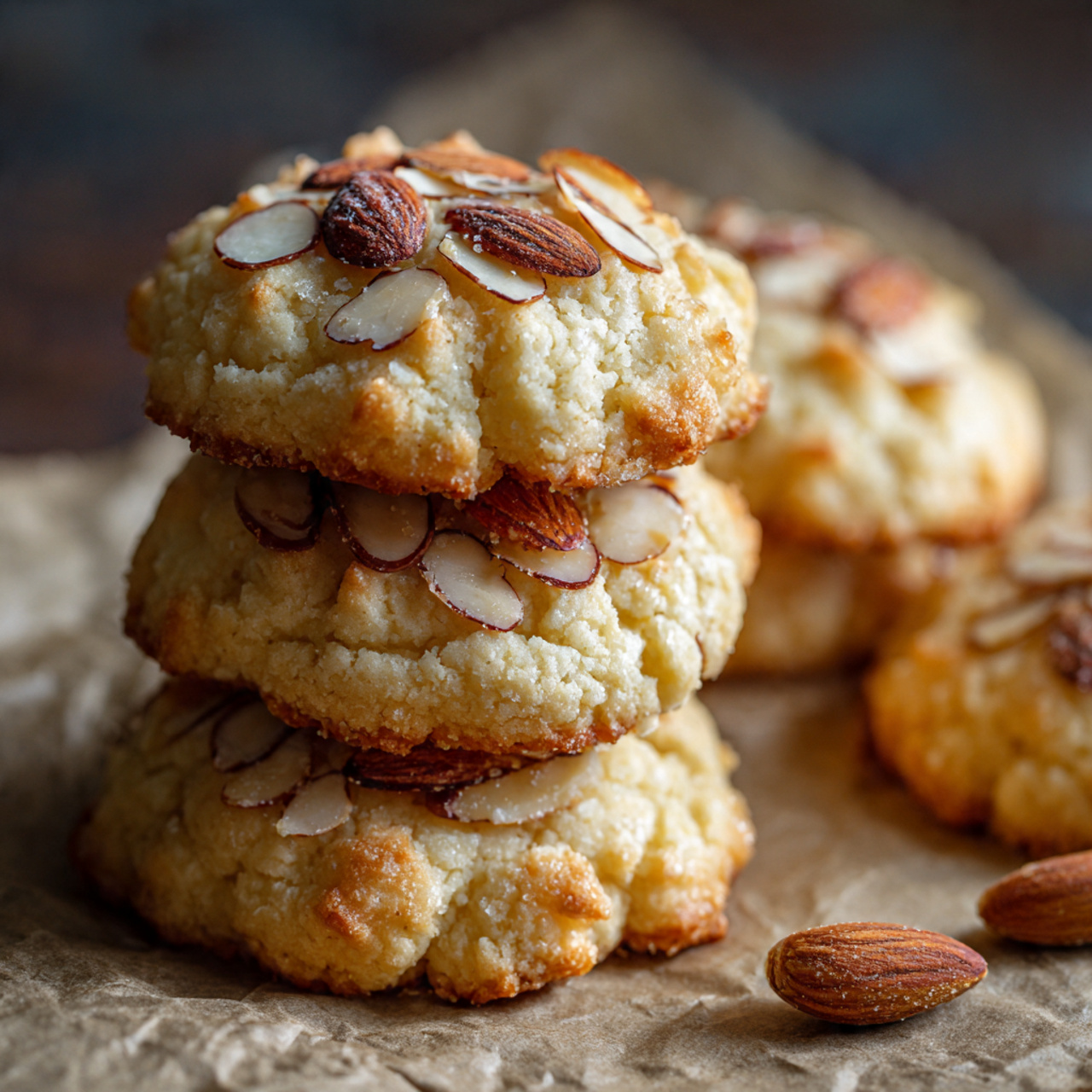
Buttery almond cookies are one of those timeless treats that never go out of style — delicate, fragrant, and impossibly satisfying in that quiet way only the simplest baked goods can be. There is something almost magical about how a handful of humble ingredients — butter, sugar, flour, and the warm, nutty perfume of almond — can come together to produce a cookie that feels both nostalgic and elegant at the same time.
These are not the thick, frosted, loaded cookies that demand your full attention. They are something subtler and more refined. A thin, golden edge that gives way to a slightly tender center. A gentle crunch that dissolves into buttery richness on the tongue. A lingering almond fragrance that fills your kitchen while they bake and stays with you long after the last one has disappeared from the plate.
If you have ever bitten into a perfectly made buttery almond cookie at a bakery and immediately wanted to recreate it at home, this is the recipe you have been looking for. It is straightforward enough for a beginner baker on a Tuesday afternoon, yet polished enough to bring to a holiday cookie exchange, a dinner party dessert table, or a gift tin for someone you want to impress. Once you make them, they will become a permanent fixture in your baking rotation — guaranteed.
Why You Will Love These Buttery Almond Cookies
There are thousands of cookie recipes in the world. Here is why this one earns a place at the top of your list.
Simple, accessible ingredients. Nothing obscure, nothing that requires a specialty store. Everything you need is likely already in your kitchen right now.
Ready in under 30 minutes. From mixing bowl to cooling rack in less than half an hour. No chilling the dough overnight, no complicated technique, no stand mixer required.
Universally loved flavor. Almond is one of those flavors that transcends age, season, and preference. Children love them, adults adore them, and they work equally well in the middle of summer or on a snowy December evening.
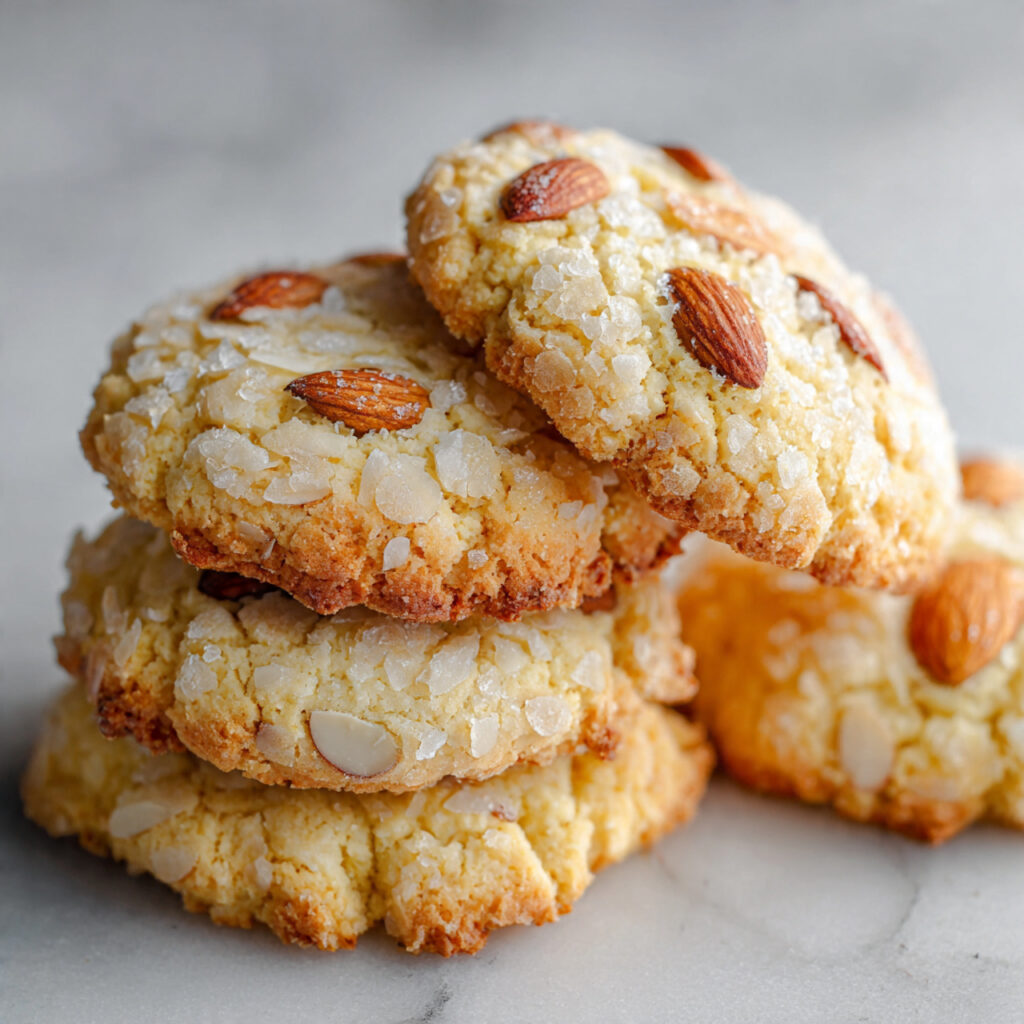
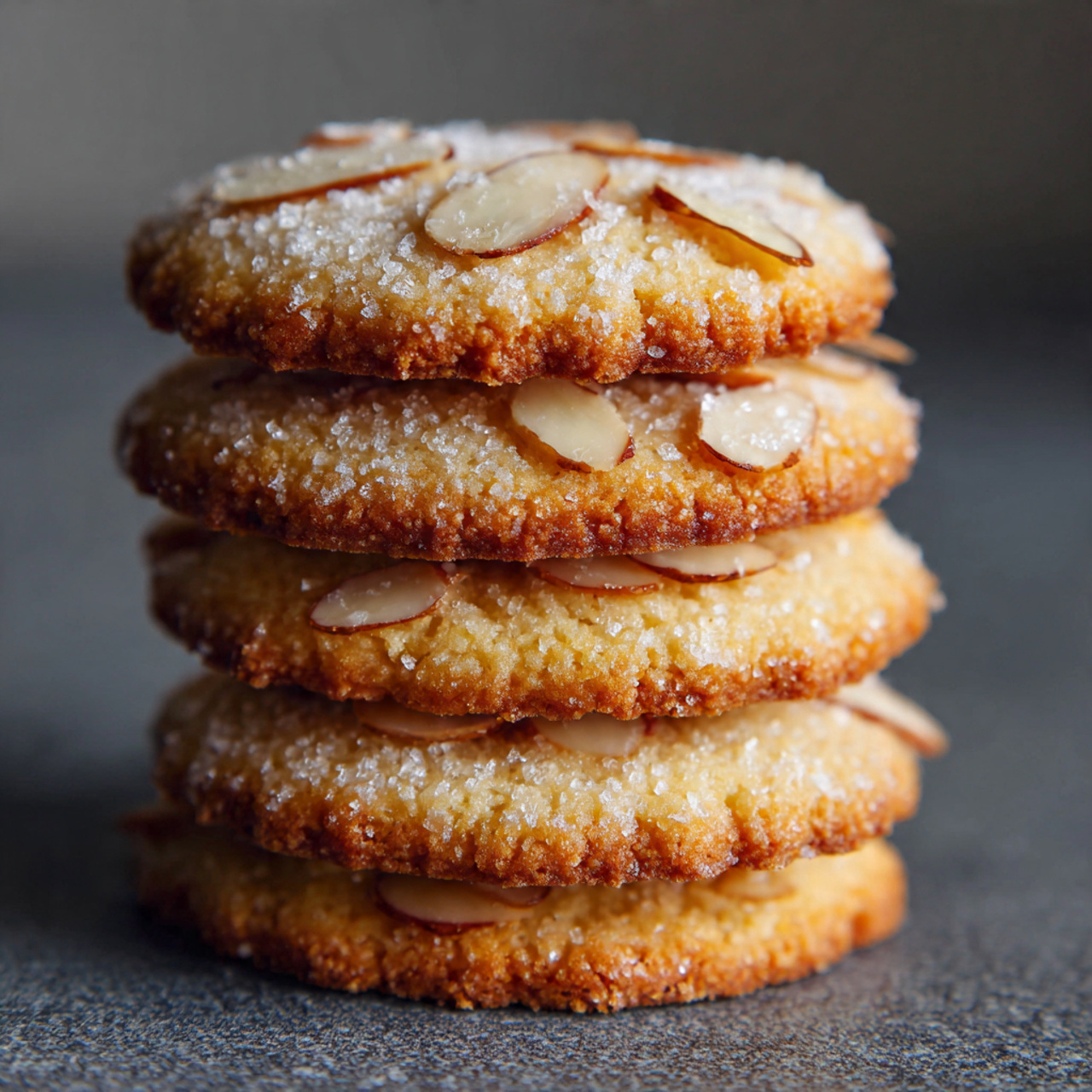
Gorgeous without effort. A simple press of a sliced almond on top and a light dusting of powdered sugar transforms these into cookies that look like they came from a proper patisserie.
Keeps beautifully. Unlike many cookies that go stale within a day, buttery almond cookies stay crisp and delicious for up to a week when stored properly — making them ideal for gifting and advance baking.
Ingredients
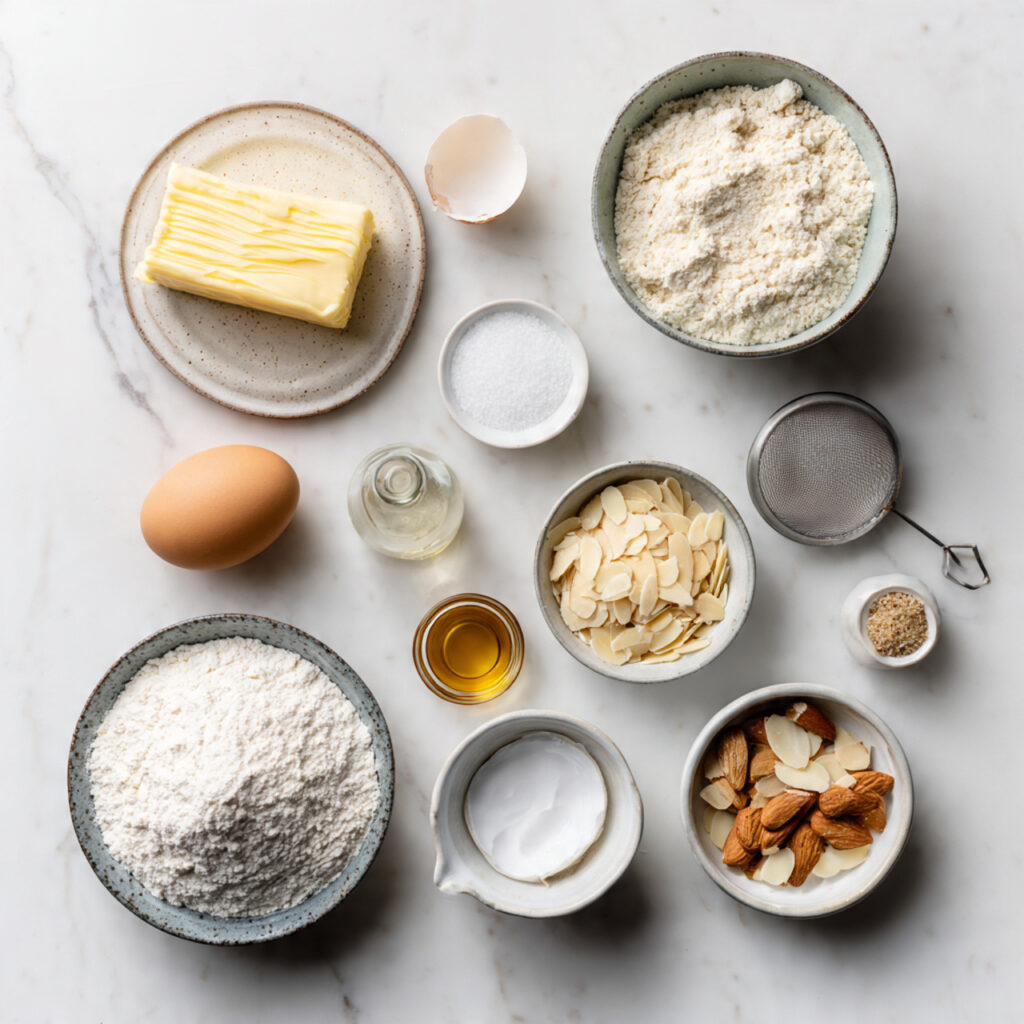
These quantities make approximately 24 cookies. All measurements are for standard US cups and spoons.
For the Cookie Dough
- 1 cup (225g) unsalted butter, softened to room temperature
- ¾ cup (150g) granulated sugar
- ¼ cup (30g) powdered sugar, sifted
- 1 large egg, room temperature
- 1 teaspoon pure almond extract
- ½ teaspoon pure vanilla extract
- 2 cups (250g) all-purpose flour, spooned and leveled
- ½ cup (50g) almond flour or finely ground blanched almonds
- ½ teaspoon baking powder
- ¼ teaspoon fine salt
For Topping
- ½ cup (60g) sliced almonds
- 2 tablespoons powdered sugar for dusting, optional
- 1 egg white, lightly beaten, for brushing (helps almonds adhere)
Step-by-Step Instructions
Follow these steps carefully and you will have a batch of perfect buttery almond cookies every single time.
Step 1: Prepare Your Workspace
Preheat your oven to 350°F (175°C). Line two large baking sheets with parchment paper or silicone baking mats and set aside. Take your butter and egg out of the refrigerator at least 30 minutes before you begin — room temperature ingredients are non-negotiable for a smooth, properly emulsified dough.
Step 2: Cream the Butter and Sugars
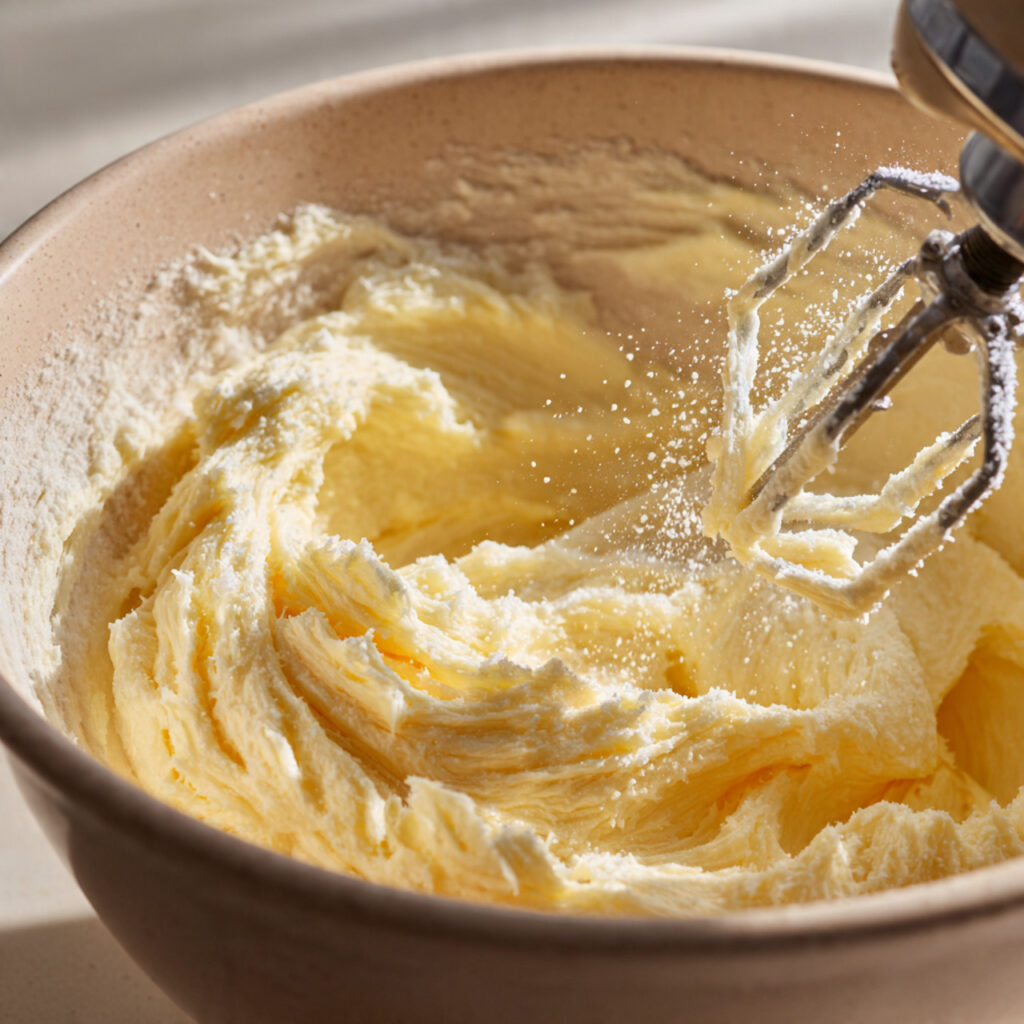
In a large mixing bowl, beat the softened butter with the granulated sugar and powdered sugar using a hand mixer or a stand mixer fitted with the paddle attachment. Beat on medium speed for 3 to 4 minutes until the mixture is pale, light, and noticeably fluffy. Do not rush this step — properly creamed butter and sugar create the foundation for a cookie with the right texture. The mixture should look almost white and feel airy when you rub a small amount between your fingers.
Step 3: Add the Egg and Extracts
Add the egg to the creamed butter mixture and beat on medium speed until fully incorporated, about 1 minute. Scrape down the sides and bottom of the bowl with a rubber spatula to make sure everything is evenly combined. Add the almond extract and vanilla extract and mix for another 30 seconds. The dough will smell absolutely incredible at this point — that warm, marzipan-like almond fragrance is a preview of exactly how good these cookies are going to taste.
Step 4: Add the Dry Ingredients
In a separate medium bowl, whisk together the all-purpose flour, almond flour, baking powder, and fine salt until evenly combined. Add the dry ingredients to the butter mixture in two additions, mixing on low speed after each addition just until the flour disappears into the dough. Stop mixing the moment the last streak of flour is gone — overmixing at this stage develops gluten and leads to tough, dense cookies rather than the tender, delicate texture you are after.
Step 5: Shape the Cookies
Use a medium cookie scoop or a tablespoon to portion the dough into balls roughly the size of a walnut — about 1.5 tablespoons of dough each. Roll each portion briefly between your palms to smooth them, then place them on the prepared baking sheets about 2 inches apart. Gently flatten each ball with the palm of your hand or the bottom of a flat-bottomed glass to about ½ inch thickness. The cookies will spread slightly as they bake, but not dramatically, so the shape you create now is largely the shape they will keep.
Step 6: Add the Almond Topping
Lightly brush the top of each flattened cookie with a thin layer of beaten egg white — this acts as a natural glue that holds the sliced almonds in place during baking and gives the tops a beautiful light sheen. Press 4 to 5 sliced almonds gently onto the top of each cookie in a decorative fan or cluster pattern. Press firmly enough that they embed slightly into the surface of the dough.
Step 7: Bake to Golden Perfection
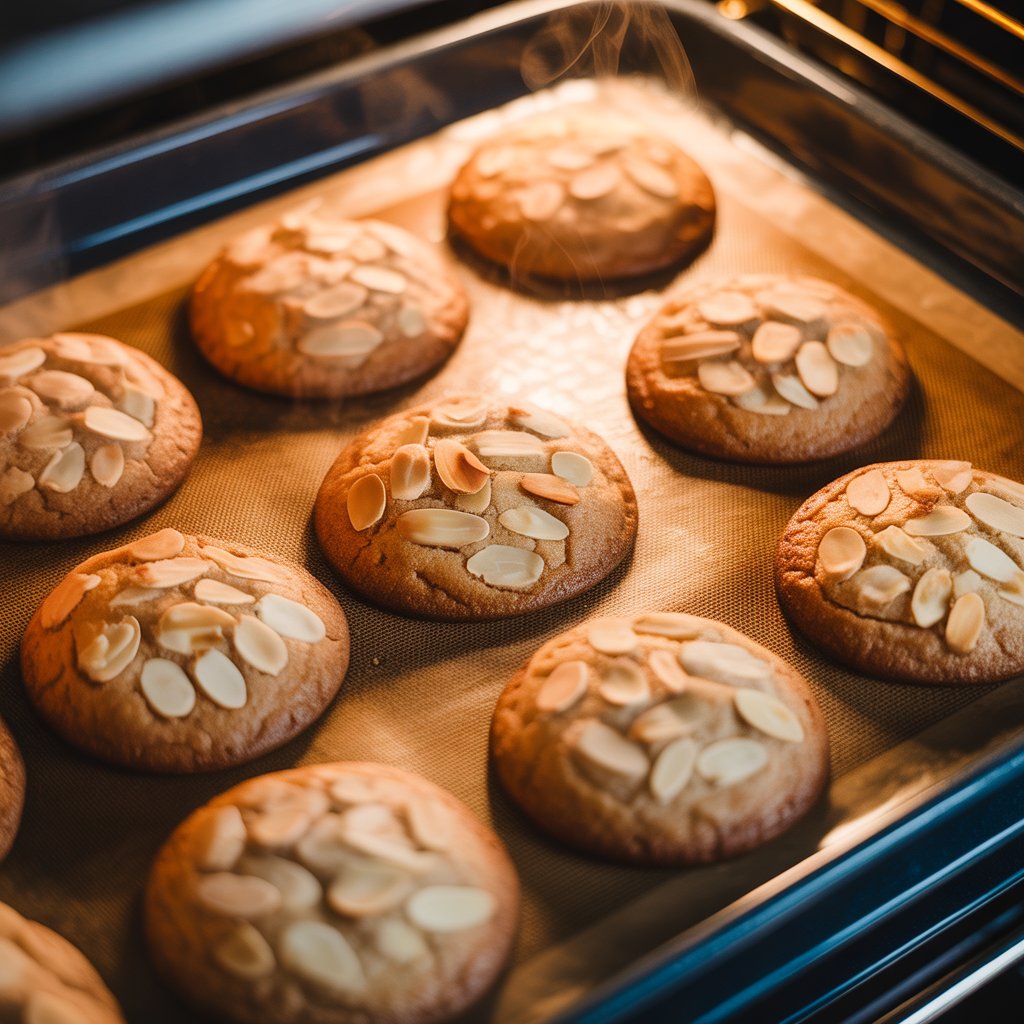
Place the baking sheets in the preheated oven and bake for 12 to 14 minutes, until the edges are lightly golden and the centers look just set — they may appear very slightly underdone in the very middle, which is exactly right. They will firm up as they cool. If you are baking two sheets at once, rotate them halfway through for even browning. Keep a close eye during the final 2 minutes — the line between perfectly golden and over-baked is narrow with these delicate cookies.
Step 8: Cool and Finish
Remove from the oven and allow the cookies to cool on the baking sheet for 5 minutes before transferring to a wire rack. They are fragile when hot. Once fully cooled, dust lightly with sifted powdered sugar if desired. The powdered sugar is optional but adds a lovely finishing touch that makes them look beautifully bakery-worthy.
Pro Tips for Perfect Buttery Almond Cookies
These are the details that separate a good batch from an exceptional one.
Use High-Quality Almond Extract
Almond extract is the soul of this recipe and the quality makes an enormous difference. Pure almond extract — made from bitter almonds or benzaldehyde — has a clean, intensely fragrant quality that imitation almond extract simply cannot match. A little goes a long way, but using the real thing means every bite carries that distinctive, warm almond note you are baking toward.
Do Not Skip the Almond Flour
The addition of almond flour alongside all-purpose flour is what gives these buttery almond cookies their characteristic tender, slightly crumbly texture rather than the chewier texture of a plain butter cookie. It also deepens the almond flavor from within the dough itself, not just from the extract. If you cannot find almond flour, pulse blanched almonds in a food processor until finely ground — stop before it turns to almond butter.
Butter Temperature Matters More Than You Think
If your butter is too cold, it will not cream properly and your cookies will be dense. If it is too warm or melted, the dough will be greasy and the cookies will spread too thin and flat. Properly softened butter should leave a slight indent when pressed with your finger but still hold its shape. When in doubt, leave it at room temperature for 45 minutes to an hour.
Chill the Dough if It Gets Sticky
On warm days or in warm kitchens, the dough can become soft and sticky after mixing, making it hard to shape cleanly. If this happens, cover the bowl with plastic wrap and refrigerate for 20 to 30 minutes. The dough will firm up and become much easier to handle without affecting the final texture of the baked cookie.
Press the Almonds Firmly
Sliced almonds have a tendency to fall off cookies if they are just laid on top without proper adhesion. The egg white brush is essential, but you should also press each almond down firmly with your fingertip so that it is partially embedded in the surface of the dough. This way they will stay put through baking, cooling, and even being stacked in a tin.
Bake One Sheet at a Time for Best Results
If your oven has hot spots or uneven heat distribution — which most home ovens do — baking one sheet at a time on the center rack produces the most consistent results. If you must bake two sheets at once, rotate them top to bottom and front to back at the halfway point.
Common Mistakes to Avoid
Even a straightforward recipe like this one has a few pitfalls worth knowing about in advance.
Using Melted or Cold Butter
This is the single most common mistake in cookie baking, and it affects everything. Cold butter will not cream, leaving you with a lumpy, dense dough. Melted butter produces cookies that spread too aggressively into thin, greasy puddles. Take the time to properly soften your butter and the rest of the recipe becomes significantly easier.
Measuring Flour by Scooping Directly from the Bag
Scooping the measuring cup directly into the flour bag compacts the flour, meaning you end up with significantly more than the recipe intends. This leads to dry, crumbly dough that produces dense, hard cookies. Always use the spoon-and-level method: spoon the flour into the measuring cup, then sweep a straight edge across the top to level it. Better yet, use a kitchen scale.
Overmixing After Adding the Flour
Once the flour goes into the dough, mix only until it just disappears. Every extra second of mixing develops more gluten, which toughens the cookies. The moment you see no more dry streaks, stop the mixer and switch to a rubber spatula for any final folding if needed.
Overbaking
Buttery almond cookies should come out of the oven looking slightly underdone in the very center. If they look fully set and golden all the way across when you pull them from the oven, they are already overdone. The residual heat from the baking sheet continues to cook them for several minutes after they leave the oven. Trust the process and pull them when the edges are golden but the centers still look just barely set.
Skipping the Resting Time After Baking
It is deeply tempting to transfer these cookies to a rack immediately, especially when they smell so good. Resist the urge. Freshly baked buttery almond cookies are extremely fragile when hot — the structure has not yet set. Give them a full 5 minutes on the baking sheet before attempting to move them or they will crack and crumble.
Using Pre-Ground Almond Meal Instead of Blanched Almond Flour
Almond meal and almond flour are often used interchangeably in casual baking, but they are not the same thing. Almond meal is ground from whole almonds with their skins intact, giving it a coarser texture and a slightly bitter edge. Blanched almond flour is made from skinned almonds and is finer, paler, and more delicate in flavor. For these cookies, blanched almond flour produces a better texture and a cleaner almond taste.
Storage and Serving Suggestions
How to Store Buttery Almond Cookies
One of the great practical virtues of this recipe is how well these cookies keep when stored properly.
Room temperature: Store in an airtight container at room temperature for up to 7 days. Place a sheet of parchment paper between layers if stacking to prevent the sliced almond topping from breaking off. Keep away from direct sunlight and heat sources.
Freezer: These cookies freeze exceptionally well. Place fully cooled cookies in a single layer on a baking sheet and freeze until solid, about 1 hour, then transfer to a zip-top freezer bag or airtight container with parchment between layers. They will keep for up to 3 months. Thaw at room temperature for 20 to 30 minutes before serving.
Freezing the dough: You can also freeze the shaped, unbaked cookie dough balls for up to 2 months. Bake directly from frozen, adding 2 to 3 minutes to the baking time.
How to Serve Buttery Almond Cookies
These cookies are wonderful on their own, but here are a few serving ideas that elevate the experience.
With coffee or espresso. The slight bitterness of a good espresso plays beautifully against the sweet, nutty richness of these cookies. They are the ideal mid-morning or post-dinner treat with a small cup.
With afternoon tea. Their delicate flavor and refined appearance make them a natural fit for a classic afternoon tea spread alongside finger sandwiches and scones.
As a gift. Stack them in a clear cellophane bag tied with a ribbon, or layer them in a decorative tin with parchment paper between layers. They make a thoughtful, homemade gift for holidays, birthdays, or thank-you gestures.
With ice cream. Crumble a cookie or two over a scoop of vanilla or amaretto ice cream for a simple, elegant dessert.
On a holiday cookie platter. Their golden color, sliced almond topping, and powdered sugar dusting make them visually striking alongside other holiday cookies — a guaranteed standout on any dessert table.
Recipe Variations Worth Trying
Lemon almond cookies: Add the zest of one lemon to the dough along with the extracts for a bright, citrusy lift that complements the almond beautifully.
Chocolate dipped: Once cooled, dip half of each cookie into melted dark chocolate and set on parchment to firm. The bittersweet chocolate against the sweet almond is stunning.
Cardamom almond cookies: Add ¼ teaspoon of ground cardamom to the dry ingredients for a warmly spiced, Middle Eastern-inspired variation.
Almond thumbprint cookies: Before baking, press a small indent into the center of each cookie and fill with a teaspoon of raspberry jam or apricot preserves for a classic thumbprint variation.
Frequently Asked Questions
Can I make buttery almond cookies without almond flour? Yes, you can substitute the almond flour with an equal weight of all-purpose flour, though the texture will be slightly less tender and the almond flavor will rely entirely on the extract rather than the ground almonds in the dough. For a closer substitute, finely ground whole blanched almonds processed in a food processor work very well.
Why did my cookies spread too much? Excessive spreading is almost always caused by one of three things: butter that was too warm or partially melted when creamed, too little flour measured by the scoop-and-pack method, or dough that was too warm when it went into the oven. Make sure your butter is properly softened but not greasy, measure flour correctly, and chill the dough for 20 minutes if your kitchen is warm before baking.
Can I use salted butter instead of unsalted? You can, but reduce or omit the added salt in the recipe to compensate. The flavor profile will be very slightly different — some bakers actually prefer salted butter in these cookies because the extra salt enhances the almond flavor — but the texture will be essentially the same.
How do I know when buttery almond cookies are done baking? The edges should be lightly golden — a warm honey color rather than deep brown — and the centers should look just barely set when you pull them from the oven. They will look slightly underdone in the middle, and that is correct. They firm up completely as they cool on the baking sheet. If the centers look fully set in the oven, they will be overdone once cooled.
Can I add whole almonds instead of sliced almonds on top? Yes, one whole blanched almond pressed into the center of each cookie is a classic presentation used in many traditional European almond cookie recipes. The look is clean and elegant. Just make sure to press it firmly into the dough so it does not roll off during baking.
Can I double the recipe? Absolutely. This recipe scales up very easily. Simply double all ingredients and bake in batches as usual. The dough can also be made ahead and refrigerated for up to 48 hours before shaping and baking, which makes large-batch baking much more manageable.
Are these cookies gluten-free? As written, no — the recipe contains all-purpose flour. However, they can be made gluten-free by substituting a good quality 1-to-1 gluten-free baking flour blend for the all-purpose flour. The almond flour is naturally gluten-free. Results may vary slightly depending on the brand of GF flour used.
Nutrition Information (Approximate per Cookie)
Based on 24 cookies as written. Values will vary based on specific brands used and exact portion sizes.
- Calories: 145 kcal
- Total Fat: 9g
- Saturated Fat: 5g
- Cholesterol: 28mg
- Sodium: 45mg
- Total Carbohydrates: 15g
- Dietary Fiber: 1g
- Total Sugars: 7g
- Protein: 2g
- Calcium: 2% DV
- Iron: 4% DV
- Vitamin E: 6% DV
These cookies are a moderate indulgence by any reasonable standard — rich enough to feel satisfying after just one or two, which makes portion control considerably easier than with more aggressively sweet baked goods.
Conclusion
Buttery almond cookies are the kind of recipe that quietly becomes one of the most important in your collection — not because it is flashy or complicated, but because it is reliably, consistently wonderful. Every time you make them, they deliver exactly what you hope for: that perfect balance of crisp and tender, that unmistakable almond fragrance that fills the kitchen, and that simple, clean sweetness that makes it nearly impossible to stop at just one.
What makes this recipe worth returning to again and again is its versatility and ease. You can dress it up with chocolate dipping and fancy presentation for a dinner party, keep it simple with just a powdered sugar dusting for an everyday treat, or customize the flavors with citrus zest and warm spices depending on the season. The base dough is forgiving, the baking time is short, and the result is always something you are genuinely proud to share.
If you are new to baking, this is an ideal recipe to build your confidence — the steps are clear, the ingredients are forgiving, and the payoff is immediate and delicious. If you are an experienced baker, you will appreciate the elegance of a recipe that does not overcomplicate what is already a beautiful thing.
Make a batch this weekend. Share them with someone. Watch their face when they take the first bite. That moment — that quiet, involuntary expression of pure satisfaction — is exactly why baking homemade buttery almond cookies will always be worth every minute.

Buttery Almond Cookies
Ingredients
Equipment
Method
- Preheat your oven to 350°F (175°C). Line two large baking sheets with parchment paper or silicone baking mats. Take butter and egg out of the refrigerator at least 30 minutes before beginning to ensure they are at room temperature.
- In a large mixing bowl, beat the softened butter with the granulated sugar and powdered sugar using a hand mixer or stand mixer on medium speed for 3 to 4 minutes, until the mixture is pale, light, and fluffy. The mixture should look almost white and feel airy.
- Add the egg to the creamed butter mixture and beat on medium speed for 1 minute until fully incorporated. Scrape down the sides of the bowl. Add the almond extract and vanilla extract and mix for another 30 seconds.
- In a separate bowl, whisk together the all-purpose flour, almond flour, baking powder, and salt. Add the dry ingredients to the butter mixture in two additions, mixing on low speed after each addition just until the flour disappears. Stop mixing the moment no dry streaks remain.
- Scoop the dough into balls about 1.5 tablespoons each. Roll briefly between your palms to smooth, then place 2 inches apart on the prepared baking sheets. Gently flatten each ball to about ½ inch thickness with the palm of your hand or the bottom of a flat glass.
- Lightly brush the top of each flattened cookie with beaten egg white. Press 4 to 5 sliced almonds firmly onto the top of each cookie in a decorative pattern, embedding them slightly into the surface of the dough.
- Bake for 12 to 14 minutes until the edges are lightly golden and the centers look just set. If baking two sheets at once, rotate halfway through. Remove from oven and cool on the baking sheet for 5 minutes before transferring to a wire rack.
- Once fully cooled, dust lightly with sifted powdered sugar if desired. Serve as is or alongside coffee, tea, or ice cream.

