
Mushroom Chicken: 6 Wonderfully Simple Steps to the Most Gloriously Creamy One-Pan Dinner
Introduction: Why Mushroom Chicken Is the Most Wonderfully Reliable Dinner You Can Put on the Table Tonight
Mushroom chicken is the kind of dinner that makes everyone at the table go quiet in the best possible way — that specific, deeply contented silence that means the food is genuinely good and deserves full attention. It is a dish that has been earning that silence in kitchens around the world for a very good reason: the combination of golden-seared, juicy chicken with a silky, deeply savoury mushroom cream sauce is one of the genuinely great flavour pairings in all of everyday cooking, and it delivers a result that feels elegant and restaurant-worthy while being entirely achievable on a weeknight in under forty-five minutes.
What makes mushroom chicken particularly brilliant as a recipe is the way it manages to be simultaneously simple and sophisticated. The technique is not complicated — you sear the chicken, cook the mushrooms, build a pan sauce from the fond left behind, and bring everything together with cream and fresh herbs. But the result of those simple steps is something that has genuine depth and complexity — layers of savoury flavour from the seared chicken fond, the caramelised mushrooms, the garlic and shallots, the wine or stock, and the cream that carries all of those flavours together into something more unified and elegant than any individual component suggests.
I have been making versions of mushroom chicken for years — for weeknight family dinners, for dinner parties where I need something impressive that does not require me to be absent from the room for extended periods, for the evenings when the refrigerator contains chicken thighs and mushrooms and the objective is to make something genuinely wonderful from what is already on hand. Every time, it delivers. Every time, the pan is clean before the dinner conversation has progressed beyond the first topic.
This guide gives you the complete picture — the ingredients, the step-by-step technique with all the details that make the difference between a good mushroom chicken and a transcendent one, the pro tips, the mistakes to avoid, the storage and serving suggestions, a complete FAQ, and a full nutrition breakdown. Everything you need for the best mushroom chicken you have ever made is right here.
What Makes This Mushroom Chicken Recipe Stand Out
There are dozens of mushroom chicken recipes online, and most of them produce a perfectly acceptable result. This recipe produces an exceptional one, and the difference comes down to three specific decisions that are built into the technique.
The first is the searing method. The chicken is seared in a hot pan with enough patience to develop a genuinely deep golden-brown crust rather than a pale, steamed surface. That crust is not just visual — it represents the Maillard reaction products that are the primary source of savoury depth in the finished dish. The brown bits that stick to the pan after the chicken is removed — called fond — are pure concentrated flavour that the liquid deglazing step lifts and incorporates into the sauce.
The second is the mushroom treatment. The mushrooms are cooked in batches over high heat rather than crowded into the pan at once. This is the difference between caramelised, golden-brown mushrooms with a meaty, concentrated flavour and grey, steamed mushrooms with a watery, muted taste. The mushroom cooking step takes an extra four minutes and makes a flavour difference that is immediately and obviously detectable.
The third is the sauce construction. Rather than simply adding cream and calling it done, this recipe builds the sauce in layers — shallots and garlic first, then wine or stock to deglaze and reduce, then the cream which then reduces further with the chicken returned to finish cooking. Each reduction step concentrates and deepens the flavour of everything in the pan.
Ingredients
For the Chicken
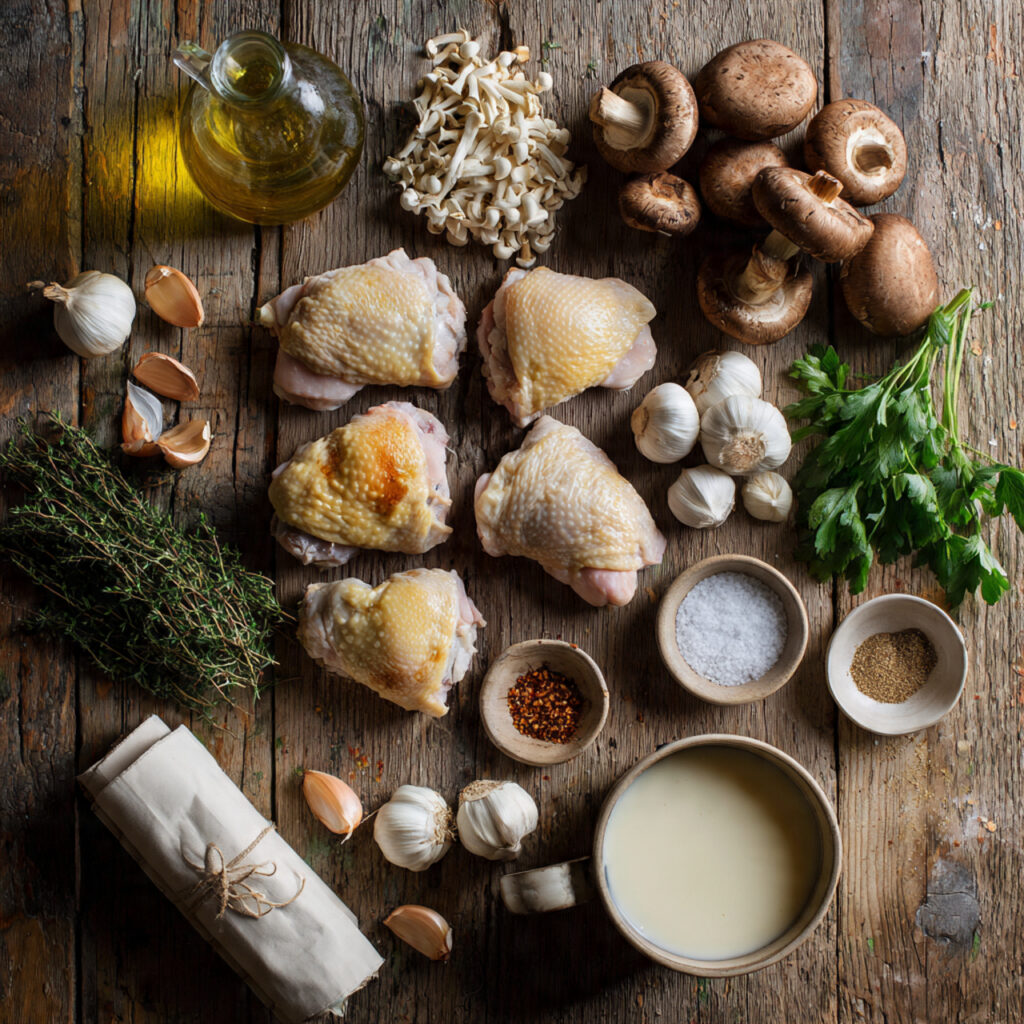
- 4 bone-in skin-on chicken thighs or 4 boneless skinless chicken breasts (approximately 700–800g total)
- 1½ teaspoons fine sea salt
- 1 teaspoon freshly cracked black pepper
- 1 teaspoon garlic powder
- ½ teaspoon smoked paprika
- 2 tablespoons olive oil
- 1 tablespoon unsalted butter
For the Mushroom Cream Sauce
- 500g (approximately 5 cups) mixed mushrooms — cremini, shiitake, and oyster mushrooms in roughly equal portions
- 3 shallots, finely diced
- 5 garlic cloves, minced
- 150ml (⅔ cup) dry white wine — Pinot Grigio or Sauvignon Blanc (or substitute with chicken stock)
- 300ml (1¼ cups) heavy whipping cream
- 150ml (⅔ cup) good quality chicken stock
- 2 tablespoons unsalted butter (for the mushrooms)
- 2 tablespoons fresh thyme leaves (or 1 teaspoon dried thyme)
- 1 tablespoon fresh flat-leaf parsley, finely chopped
- 1 teaspoon Dijon mustard — adds depth and gentle tang
- ½ teaspoon fine sea salt, plus more to taste
- ¼ teaspoon white pepper
- 1 tablespoon freshly grated Parmesan (optional — adds a subtle savoury depth to the sauce)
Optional Additions
- 1 teaspoon truffle oil — a few drops stirred in at the end for a luxurious finish
- 1 tablespoon cognac or brandy — added after the wine for additional depth
- Fresh tarragon in place of thyme — gives the sauce a slightly more French bistro character
- 1 teaspoon lemon juice — a small squeeze at the end brightens the entire sauce
Step-by-Step Instructions
Step 1: Season and Prepare the Chicken
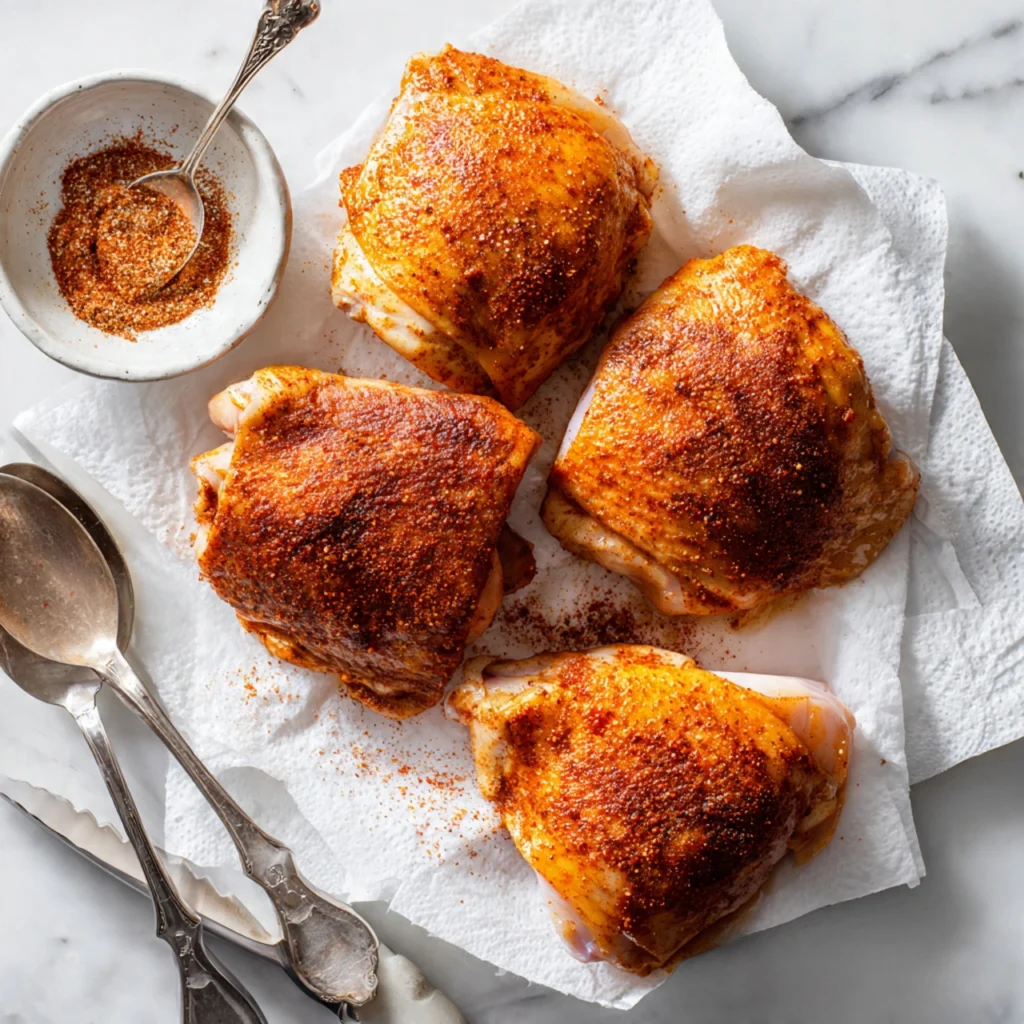
Pat the chicken pieces completely dry with paper towels — every surface, including underneath the skin if using skin-on thighs. This is the most important preparation step for achieving a proper sear. Surface moisture steams the chicken rather than allowing it to brown, and steamed chicken produces neither the colour nor the flavour that makes mushroom chicken exceptional. In a small bowl, combine the fine sea salt, black pepper, garlic powder, and smoked paprika. Rub the spice mixture generously over all surfaces of the chicken — on the skin, underneath the skin, and on the underside. Allow the seasoned chicken to sit at room temperature for 15–20 minutes while you prepare the remaining ingredients. This brief resting period helps the surface dry slightly further and allows the salt to begin penetrating the meat.
Step 2: Sear the Chicken
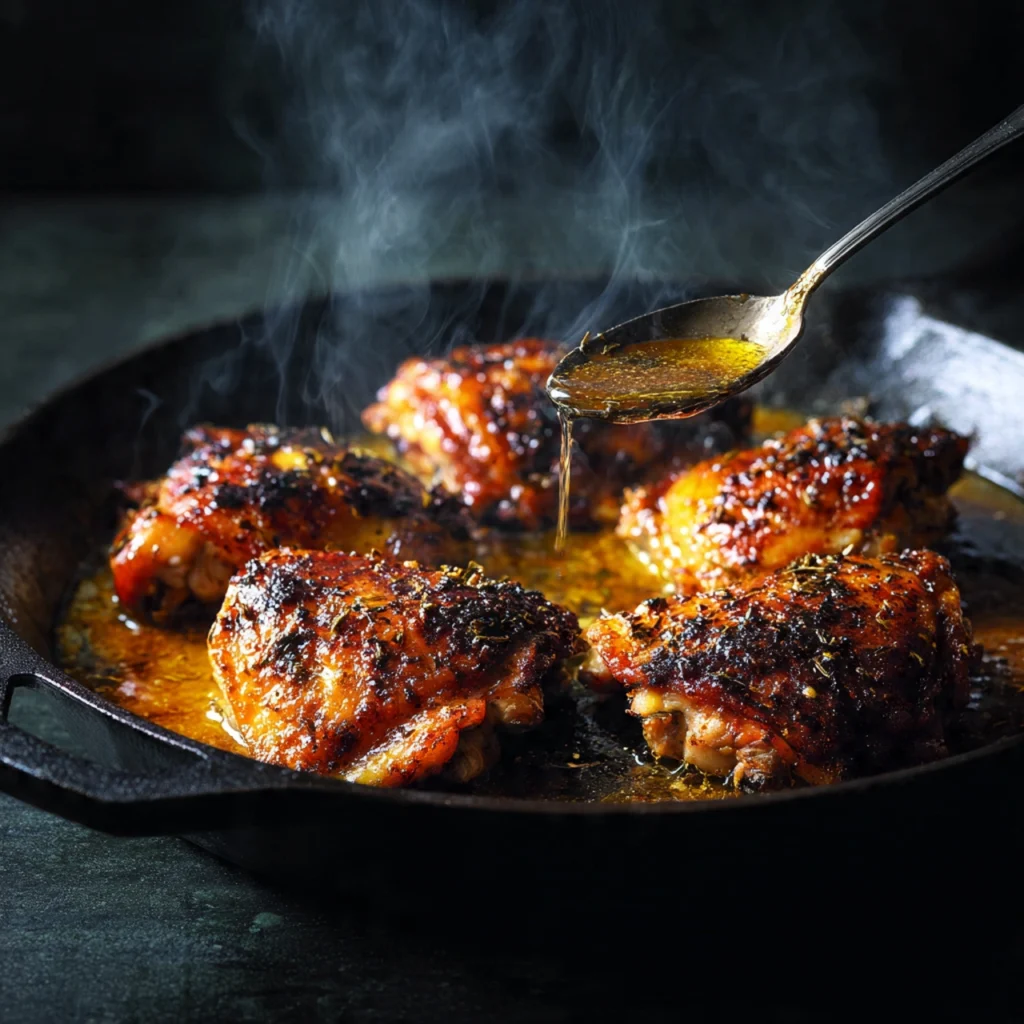
Heat a large, heavy-bottomed skillet — cast iron is ideal, stainless steel works beautifully — over medium-high heat until genuinely hot. Add the olive oil and let it shimmer before adding the chicken. Place the chicken pieces skin-side down (or presentation-side down for boneless breasts) in the hot pan, pressing each one gently flat with a spatula for the first thirty seconds to ensure full contact with the pan surface. Cook without moving for 5–7 minutes for skin-on thighs or 4–5 minutes for boneless breasts until deeply golden-brown and the pieces release naturally from the pan surface. Add the tablespoon of butter to the pan and baste the tops of the chicken with the foaming butter using a spoon.
Flip the chicken and cook the other side for 3–4 minutes until golden. For bone-in thighs, the chicken does not need to be fully cooked through at this stage — it will finish in the sauce. For boneless breasts, cook until an instant-read thermometer reads 68°C (155°F) — they will reach 74°C (165°F) during the sauce finishing stage. Remove the chicken from the pan and place on a plate. Do not clean the pan — every brown bit left in the skillet is flavour.
Step 3: Cook the Mushrooms
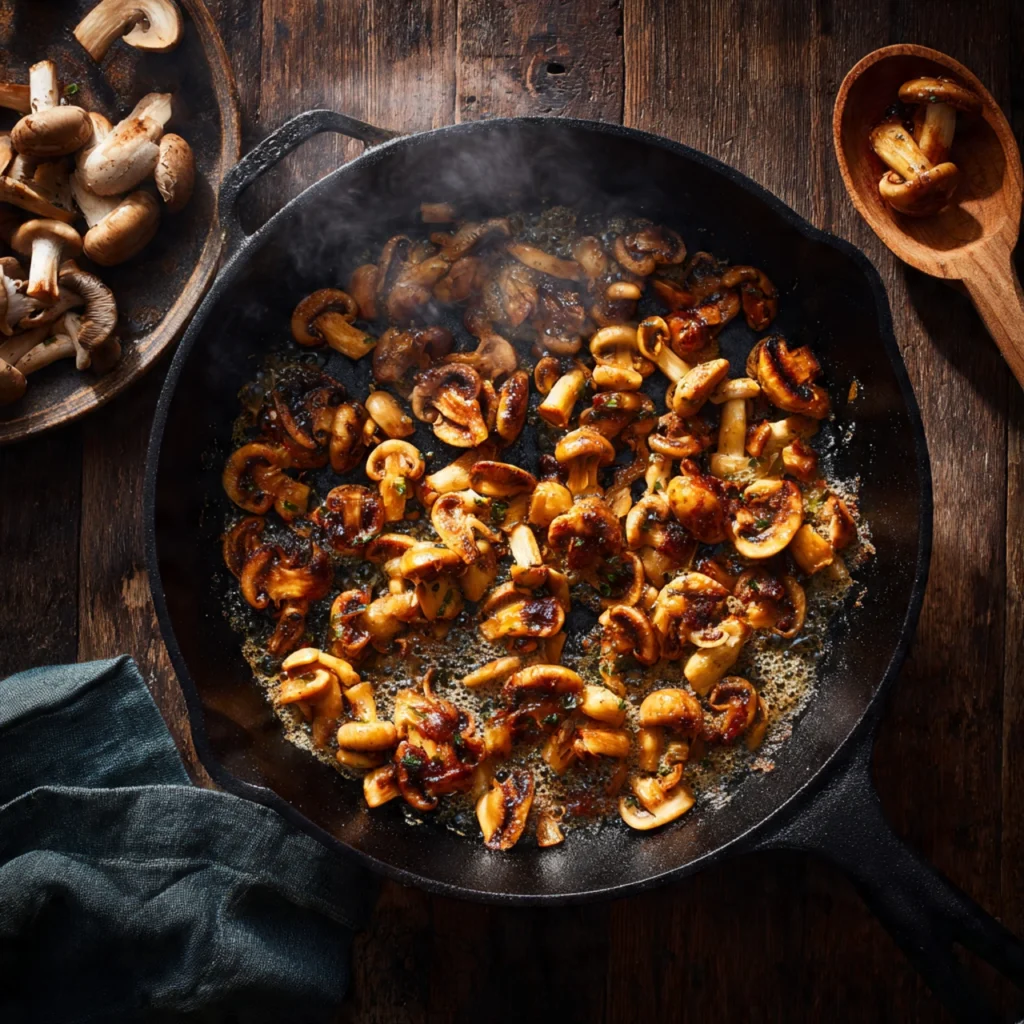
Wipe the mushrooms clean with a damp cloth — never wash under running water as they absorb moisture and steam rather than sear. Slice the cremini mushrooms thickly, tear the oyster mushrooms into natural pieces, and slice the shiitake caps, discarding the tough stems. Add 1 tablespoon of the butter to the same pan over high heat. When the foam subsides, add half the mushrooms in a single layer. Do not stir for 2–3 minutes — let them sit undisturbed and caramelise. When deeply golden on the bottom, stir and cook for another minute. Season with a pinch of salt and transfer to the plate with the chicken. Repeat with the remaining butter and mushrooms. The mushrooms must be cooked in batches — a crowded pan steams them and produces grey, watery, flavourless results.
Step 4: Build the Sauce Base
Reduce the heat to medium. Add the finely diced shallots to the same pan and cook for 3–4 minutes, stirring occasionally, until softened and translucent — they will pick up the colour from the pan fond and turn a golden-amber colour. Add the minced garlic and cook for 60 seconds until fragrant, stirring constantly. Add the fresh thyme leaves and stir for 30 seconds.
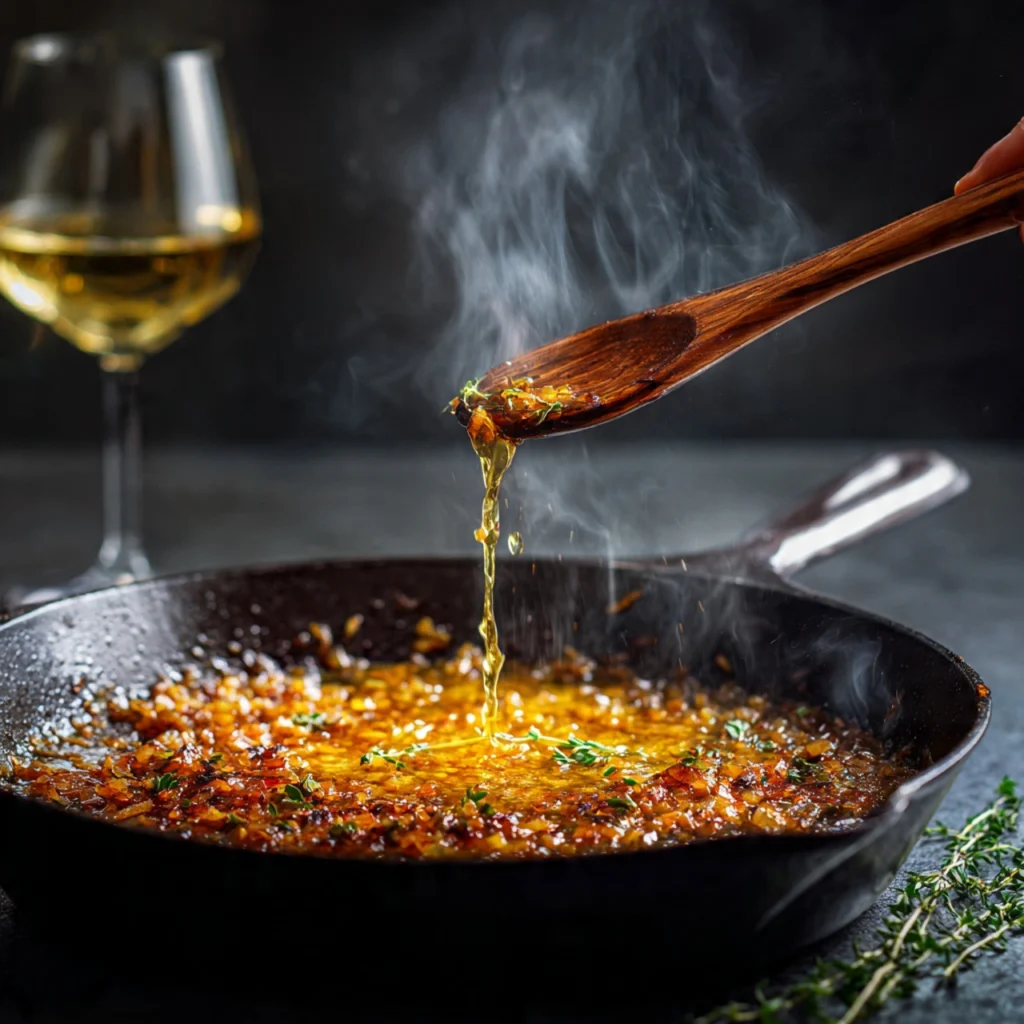
Pour the white wine into the pan — it will sizzle dramatically and immediately begin to deglaze the fond from the bottom. Use a wooden spoon to scrape up every caramelised brown bit from the base of the pan — these are the concentrated flavour compounds that give the sauce its depth. Reduce the wine until it is almost completely evaporated — this takes approximately 2–3 minutes over medium-high heat and removes the raw alcohol flavour while leaving behind the wine’s aromatic complexity.
Step 5: Build and Develop the Cream Sauce
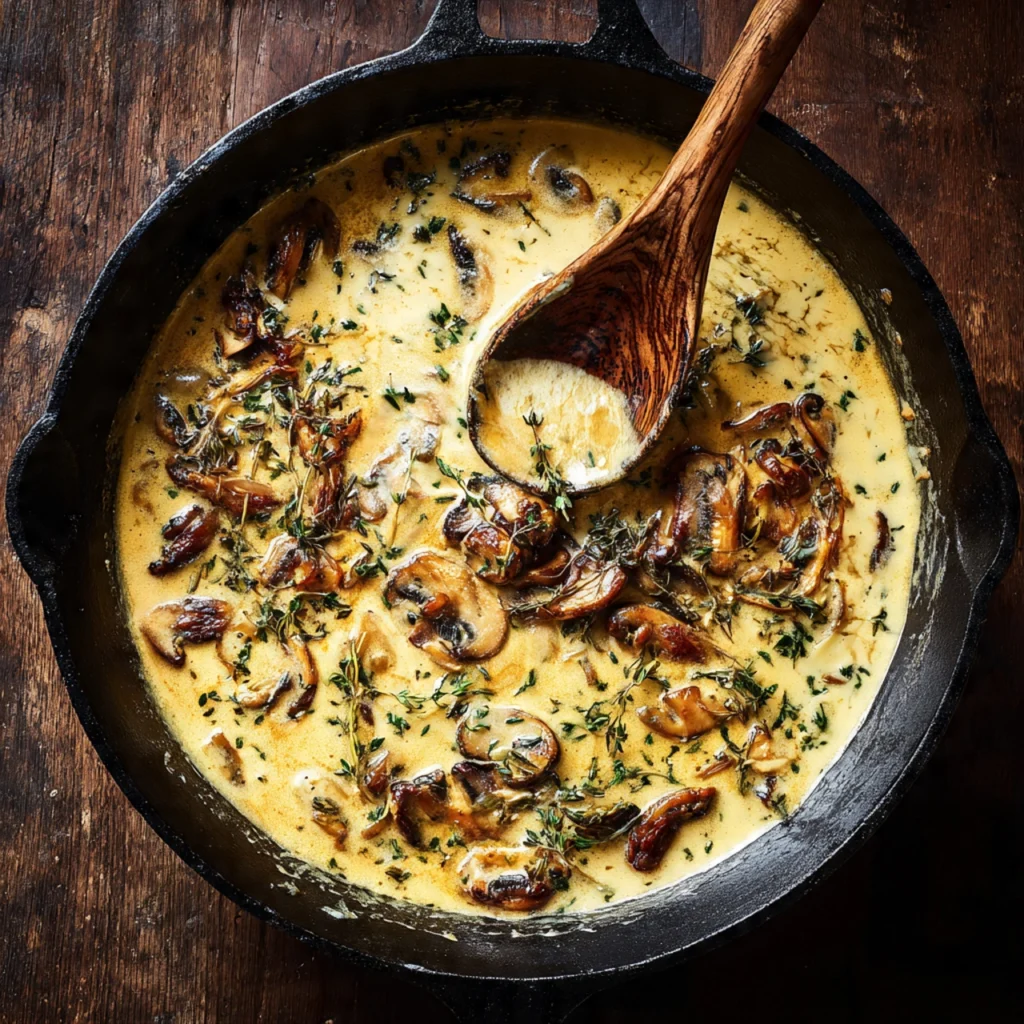
Add the chicken stock to the pan and reduce by half over medium-high heat — approximately 3–4 minutes. This double reduction technique — wine first, then stock — creates a concentrated flavour base that gives the cream sauce significantly more depth than simply adding cream to an unreduced liquid. Pour in the heavy cream and stir in the Dijon mustard. Return the caramelised mushrooms to the pan and stir everything together. Season with the fine sea salt and white pepper. Reduce the heat to medium and allow the sauce to simmer gently for 4–5 minutes until it has thickened enough to coat the back of a spoon — when you drag your finger across the back of a spoon dipped in the sauce, the line should hold cleanly.
Step 6: Return the Chicken and Finish
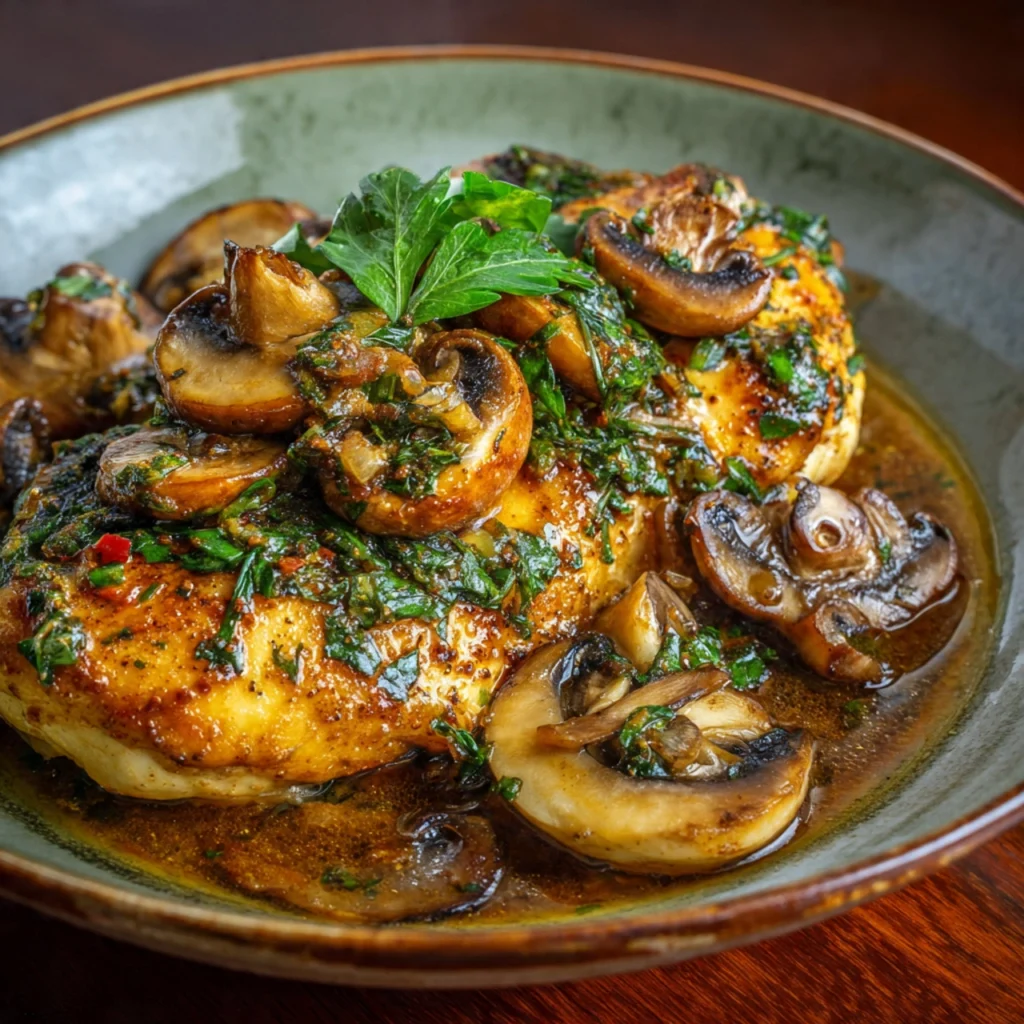
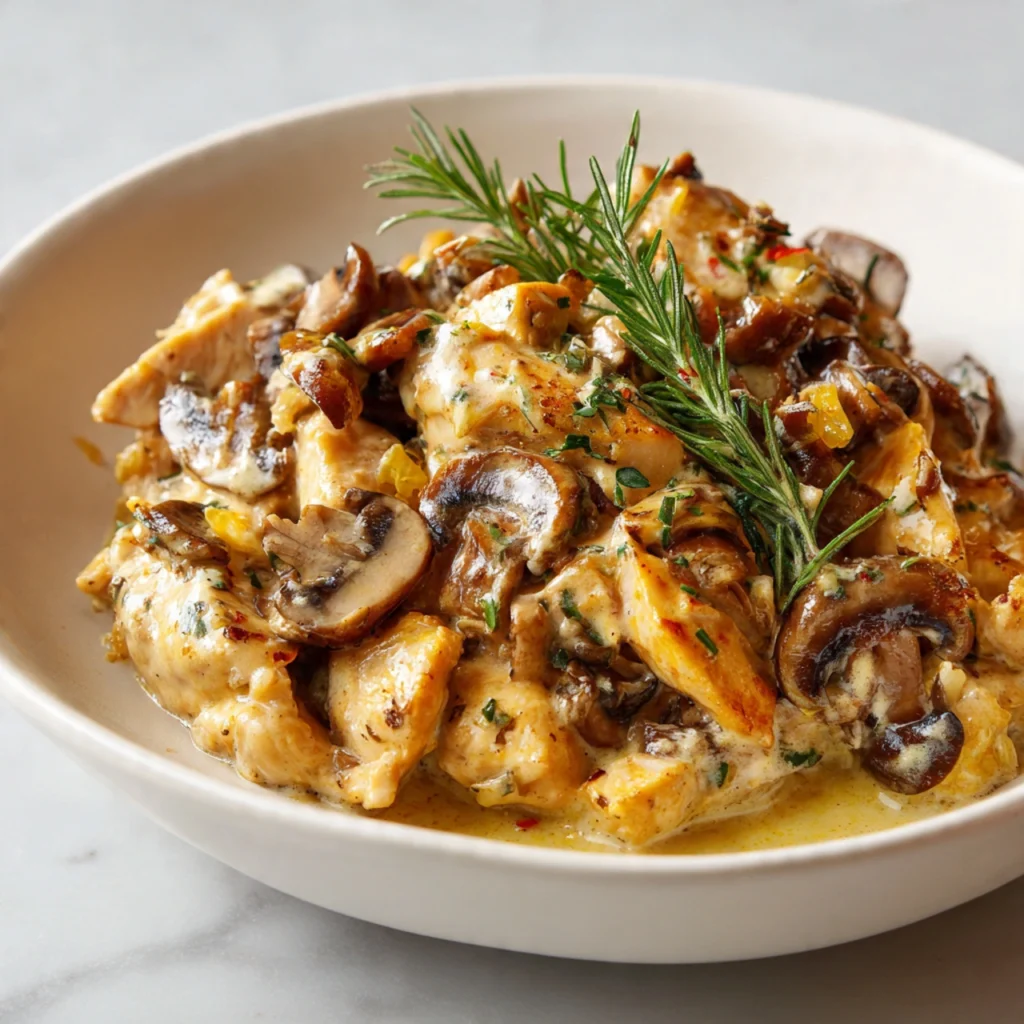
Nestle the seared chicken pieces back into the sauce, skin-side up for thighs or presentation-side up for breasts. Spoon the sauce and mushrooms over and around the chicken. For bone-in thighs, cover the pan with a lid and simmer on medium-low heat for 12–15 minutes until the chicken is fully cooked through and an instant-read thermometer reads at least 80°C (176°F) for dark meat. For boneless breasts that were seared close to temperature, simmer uncovered for 4–5 minutes until fully cooked through at 74°C (165°F). Taste the sauce and adjust seasoning — add more salt, a squeeze of lemon juice if the sauce needs brightness, or a few drops of truffle oil if you are going the luxurious route. Scatter the fresh chopped parsley over the top and serve immediately from the pan.
Pro Tips for the Perfect Mushroom Chicken
Dry the Chicken Completely Before Searing
Surface moisture is the enemy of the golden crust that provides the foundational flavour of this dish. Pat every surface dry with paper towels and let the seasoned chicken sit at room temperature for at least fifteen minutes before cooking. For an even better crust, place the patted-dry seasoned chicken on a wire rack in the refrigerator uncovered for one hour before cooking — the extended air-drying produces a noticeably superior sear.
Never Crowd the Mushrooms
This cannot be said emphatically enough. Mushrooms contain 90% water by weight, and when they are crowded in a pan, they release that water faster than it can evaporate. The result is mushrooms sitting in their own liquid, steaming rather than searing, turning grey and soft rather than golden and meaty. Cook in batches, use high heat, and do not stir for the first 2–3 minutes of each batch. The extra time this takes is entirely worth it.
Use the Fond — Every Drop of It
The brown bits stuck to the bottom of the pan after searing the chicken are the most flavourful thing in the entire recipe. The white wine deglazing step exists specifically to lift and incorporate them into the sauce. Use a wooden spoon and scrape thoroughly — every caramelised bit that you leave behind is flavour that does not make it into the sauce.
Reduce in Stages for Maximum Depth
The wine-then-stock double reduction approach in this recipe is the technique that separates a deeply flavoured mushroom chicken sauce from a thin, underdeveloped one. Each reduction concentrates the flavour of whatever liquid was just added and creates a progressively more complex flavour base for the cream to finish. Do not rush either reduction and do not skip the stock reduction by going straight to cream.
The Dijon Mustard Is Invisible and Essential
You will not taste Dijon mustard in the finished sauce — what you will taste is a depth, a complexity, and a subtle tang that you cannot quite identify but would immediately miss if it were not there. Mustard acts as both a flavour enhancer and an emulsifier in cream sauces, helping the cream maintain a stable, glossy consistency rather than separating during cooking. It is one teaspoon and it makes the sauce noticeably better.
Rest the Chicken Briefly Before Serving
Even in a pan sauce, the chicken benefits from a minute or two of resting after it reaches temperature before it is cut into or served. The juices redistribute through the meat and every bite is noticeably more succulent than chicken served the moment it comes off the heat.
Common Mistakes to Avoid
Not drying the chicken before searing. This is the most common and most impactful mistake. Wet chicken steams in the pan rather than searing, producing a pale, flavourless crust and a watery pan with no fond. Dry chicken hitting a hot pan produces the golden crust and the flavour foundation that makes mushroom chicken exceptional. Pat dry, every time, before anything else.
Using a cold pan. A cold or insufficiently hot pan means the chicken spends its initial time warming the surface rather than searing against it. The result is chicken that sticks, tears, and produces a grey rather than golden exterior. Preheat the pan until the oil shimmers and moves freely before the chicken goes in.
Washing the mushrooms under water. Mushrooms are porous and absorb water rapidly. Washed mushrooms release that water into the pan during cooking and steam rather than sear. Always wipe clean with a damp cloth — it takes thirty seconds and produces a dramatically better result.
Crowding the mushrooms. As discussed in detail above, crowded mushrooms steam and turn grey. Cook in two batches over high heat. The extra four minutes this takes makes an immediately and obviously detectable difference in the flavour of the finished sauce.
Not reducing the wine fully before adding stock. Insufficiently reduced wine leaves a raw, alcohol-forward harshness in the sauce that does not cook out during the cream stage. Reduce until almost completely evaporated before adding the stock — the pan should look almost dry before you add the next liquid.
Adding cream to a boiling pan. High heat causes cream to separate and curdle, producing a greasy, broken sauce with visible fat pooling on the surface. Always reduce the heat to medium — a gentle simmer is what you want when the cream is in the pan. The cream should bubble gently at the edges, not boil aggressively.
Over-cooking boneless chicken breasts. Chicken breasts taken past 74°C (165°F) become dry and stringy very quickly. Use an instant-read thermometer and pull them at 68–70°C (155–158°F) — they will reach the safe temperature during the brief sauce finishing stage. Bone-in thighs are far more forgiving and can go to 80–85°C for a more tender result.
Storage and Serving Suggestions
Mushroom chicken stores well and reheats beautifully — the sauce actually improves slightly overnight as the flavours continue to develop and deepen in the refrigerator. Allow to cool to room temperature, then transfer the chicken and sauce together to an airtight container. Refrigerate for up to 3 days. The sauce will thicken considerably in the refrigerator as the cream sets — this is completely normal and it returns to its original consistency when gently reheated.
To reheat, place the chicken and sauce in a skillet over low heat with a small splash of chicken stock or cream to loosen the sauce as it warms. Heat gently, spooning the sauce over the chicken as it warms, until heated through — approximately 8–10 minutes over low heat. Avoid the microwave for skin-on thighs as it softens the skin irreversibly.
For freezing, the cream-based sauce does not freeze particularly well — dairy-based sauces can separate during freezing and thawing. If you want to freeze mushroom chicken, freeze the chicken separately from the sauce in individual portions. The chicken alone freezes well for up to 2 months. Make a fresh sauce when reheating using the same technique with the pan drippings from warming the chicken.
For serving, mushroom chicken is one of the most versatile dinner mains in the repertoire. The sauce is so flavourful and abundant that it needs something substantial to absorb and carry it. Creamy mashed potatoes are the most natural and most satisfying accompaniment — the buttery potato provides the perfect vehicle for the mushroom cream sauce and turns the dish into a complete, deeply comforting plate. Wide pasta such as pappardelle or tagliatelle works beautifully — toss the pasta in the sauce before plating and serve the chicken on top. Crusty bread for sauce-scooping is essentially mandatory. For a lighter option, serve over steamed basmati rice or alongside roasted asparagus and let the sauce be the star.
For a dinner party presentation, serve from the pan at the table on a heavy wooden trivet — the sight of golden chicken pieces nestled in a glossy, herb-scattered mushroom cream sauce being brought directly to the table is one of the most impressively casual and genuinely inviting serving presentations in all of weeknight cooking.
Frequently Asked Questions
Q1: Can I use chicken breasts instead of chicken thighs for mushroom chicken? Yes, and the recipe works beautifully with both. Chicken thighs — especially bone-in skin-on — are more forgiving, more flavourful due to their higher fat content, and produce more flavoursome pan drippings for the sauce. Boneless skinless chicken breasts produce a leaner, cleaner result that works excellently but requires more careful attention to internal temperature to avoid dryness. If using breasts, pound them to an even thickness before searing for more uniform cooking, and be rigorous about pulling them at 68–70°C (155–158°F) rather than letting them go beyond that.
Q2: Can I make mushroom chicken without cream? Yes — several non-dairy alternatives work well. Full-fat coconut cream produces a sauce with a subtle coconut note that is actually very complementary to mushrooms and works beautifully with Asian-inspired seasoning additions. Cashew cream — made by blending soaked cashews with water — produces a neutral-tasting, richly textured sauce that is almost indistinguishable from dairy cream in the finished dish. Evaporated milk is a lower-fat alternative that works reasonably well but produces a thinner sauce that needs longer reduction. For a non-cream version entirely, a good quality chicken stock reduced more aggressively and finished with a tablespoon of cold butter produces a lighter but still beautifully flavourful pan sauce.
Q3: What mushrooms work best for mushroom chicken? A mixture always outperforms a single variety. Cremini mushrooms form the reliable, earthy foundation. Shiitake caps add a distinctive savoury depth and meaty texture — remove and discard the stems which are too tough to eat. Oyster mushrooms add a delicate, silky element and beautiful natural shapes. If you can find them, a small amount of fresh porcini elevates the dish dramatically with their intensely earthy, almost meaty flavour. For a simpler version, cremini mushrooms alone work very well and are available in any supermarket.
Q4: Can I make mushroom chicken ahead of time for a dinner party? Yes — this is actually one of its great strengths as an entertaining dish. Make the complete recipe up to 24 hours ahead, cool to room temperature, and refrigerate. When ready to serve, reheat gently in the skillet over low heat with a splash of cream or stock to loosen the sauce, covered, for 12–15 minutes until heated through. The flavour will actually be slightly better than day-one as it has had time to develop. Add the fresh parsley garnish immediately before serving.
Q5: Why did my cream sauce break or become greasy? A broken cream sauce is almost always caused by too-high heat after the cream was added. Cream separates when subjected to a rapid or sustained boil — the fat and water components separate from each other, producing a greasy, curdled-looking sauce. Reduce heat to medium before adding cream and maintain a gentle simmer throughout. The Dijon mustard in this recipe acts as an emulsifier that helps prevent separation, so do not skip it. If your sauce does break, remove from heat, add a tablespoon of cold cream, and stir vigorously — it will often come back together.
Q6: What wine works best for mushroom chicken? A dry white wine with good acidity and neutral flavour works best — Pinot Grigio, Sauvignon Blanc, unoaked Chardonnay, or a dry Vermouth all work beautifully. Avoid sweet wines which make the sauce unbalanced, heavily oaked Chardonnay which can make the sauce bitter after reduction, and cooking wine which contains additives and salt that affect the flavour. The wine should be something you would drink — if it tastes good in the glass it will taste good in the sauce. If you prefer not to use wine, replace with additional chicken stock — the sauce will be slightly less complex but still very good.
Q7: Can I make this recipe in a slow cooker? You can but with significant modifications and the understanding that the result will be different from the stovetop version. Sear the chicken and cook the mushrooms on the stovetop first — this step cannot be skipped as it provides the foundational flavour. Transfer everything to the slow cooker, add the stock and aromatics but not the cream. Cook on low for 4–5 hours. In the final 30 minutes, stir in the cream and Dijon mustard and cook uncovered on high to allow the sauce to thicken slightly. The result will be a more braised, fall-off-the-bone chicken with a slightly thinner sauce than the stovetop version — excellent but different in character.
Nutrition Information (Approximate Per Serving)
Based on 4 servings using the full recipe with bone-in skin-on chicken thighs, without optional additions or serving accompaniments.
| Nutrient | Amount Per Serving |
|---|---|
| Calories | ~520 kcal |
| Total Fat | 38g |
| Saturated Fat | 18g |
| Cholesterol | 175mg |
| Sodium | 680mg |
| Total Carbohydrates | 8g |
| Dietary Fiber | 1g |
| Total Sugars | 3g |
| Added Sugars | 0g |
| Protein | 36g |
| Iron | 12% DV |
| Vitamin D | 8% DV |
| Zinc | 15% DV |
| Potassium | 620mg |
Note: Values are approximate and will vary based on specific chicken cut used, exact cream quantity, mushroom varieties, and whether optional additions such as Parmesan or truffle oil are included. Calculated for bone-in skin-on chicken thighs with the full cream sauce without serving accompaniments.
Conclusion
There are weeknight dinners that are merely functional and weeknight dinners that are genuinely memorable — meals that people mention later, that get requested by name, that make a Tuesday evening feel like an occasion worth sitting down for properly. Mushroom chicken is firmly in the second category and has been for every version of it I have ever made and served.
The recipe in this guide is not complicated. It is methodical and it is attentive — it asks you to sear properly, to cook the mushrooms in batches, to reduce in stages, and to watch the sauce as it develops. None of this is difficult. All of it is deliberate. And the result of that deliberateness is a dish with the kind of depth and cohesion that makes people lean across the table and say something genuinely appreciative before they have even finished the first bite.
Make it once on a weeknight when you have forty-five minutes and want something that tastes like considerably more effort than it required. Make it again for guests when you want something that looks and tastes impressive without keeping you in the kitchen throughout the evening. By the third time you make it, you will have adjusted it slightly — more thyme, a splash of cognac, a different mushroom combination — and it will be yours in the way that only happens when a recipe fits naturally into how you cook.
That is the best possible outcome for any recipe. And mushroom chicken earns it every single time.
Now dry that chicken and heat that pan.

Mushroom Chicken
Ingredients
Equipment
Method
- Pat the chicken pieces completely dry with paper towels — every surface including underneath the skin for skin-on thighs. Combine the fine sea salt, black pepper, garlic powder, and smoked paprika in a small bowl. Rub the spice mixture generously over all surfaces of the chicken. Allow the seasoned chicken to sit at room temperature for 15–20 minutes before cooking.
- Heat a large heavy-bottomed skillet over medium-high heat until genuinely hot. Add the olive oil and let it shimmer. Place the chicken skin-side down, pressing flat for the first 30 seconds. Cook without moving for 5–7 minutes for skin-on thighs or 4–5 minutes for boneless breasts until deeply golden-brown. Add 1 tablespoon butter and baste the tops with the foaming butter. Flip and cook the other side for 3–4 minutes. Remove chicken to a plate — do not clean the pan.
- Wipe mushrooms clean with a damp cloth — never wash under running water. Slice cremini thickly, tear oyster mushrooms into pieces, and slice shiitake caps discarding tough stems. Add 1 tablespoon butter to the same pan over high heat. Add half the mushrooms in a single layer and cook undisturbed for 2–3 minutes until deeply golden on the bottom. Stir and cook one more minute. Season with a pinch of salt and transfer to the plate with the chicken. Repeat with remaining butter and mushrooms.
- Reduce heat to medium. Add the finely diced shallots to the same pan and cook for 3–4 minutes until softened and golden-amber, picking up colour from the fond. Add the minced garlic and cook for 60 seconds, stirring constantly. Add the fresh thyme and stir for 30 seconds. Pour in the white wine — scrape up every caramelised brown bit from the base of the pan with a wooden spoon. Reduce until almost completely evaporated — approximately 2–3 minutes.
- Add the chicken stock and reduce by half over medium-high heat — approximately 3–4 minutes. Pour in the heavy cream and stir in the Dijon mustard. Return the caramelised mushrooms to the pan and stir everything together. Season with fine sea salt and white pepper. Reduce heat to medium and simmer gently for 4–5 minutes until the sauce thickens enough to coat the back of a spoon and holds a clean line when you drag your finger across it.
- Nestle the seared chicken pieces back into the sauce skin-side up. Spoon the sauce and mushrooms over and around the chicken. For bone-in thighs, cover and simmer on medium-low for 12–15 minutes until an instant-read thermometer reads at least 80°C (176°F). For boneless breasts, simmer uncovered for 4–5 minutes until reaching 74°C (165°F). Taste and adjust seasoning — add a squeeze of lemon juice to brighten if needed or a few drops of truffle oil for a luxurious finish. Scatter fresh chopped parsley over the top and serve immediately from the pan.


