Easy Rhubarb Sauce Recipe: Sweet, Tart & Ready in 20 Minutes
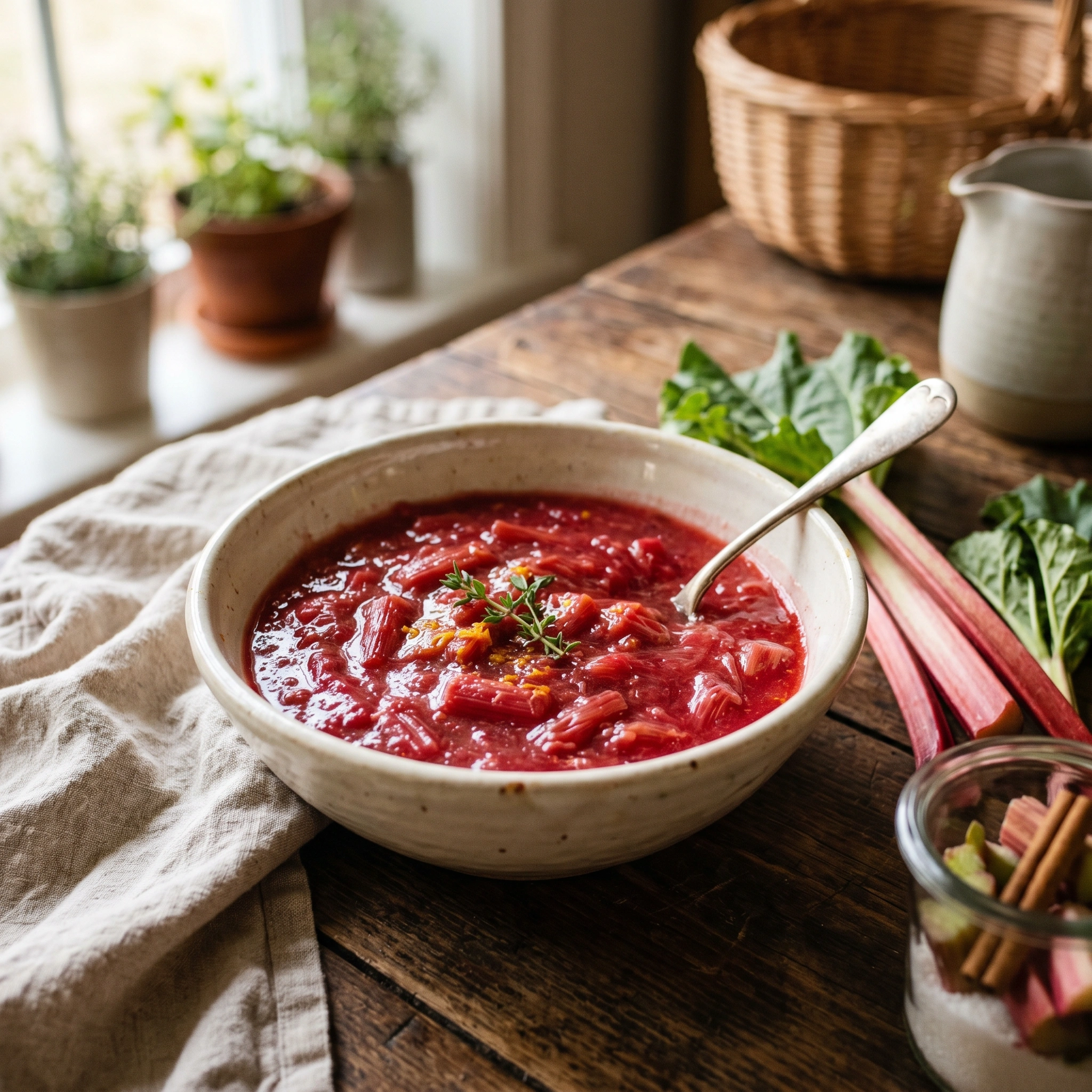
Rhubarb sauce is one of those old-fashioned recipes that quietly outperforms everything flashier in your repertoire. There’s something almost magical about watching those stiff, celery-like stalks dissolve into a glossy, jewel-toned condiment that tastes equally at home spooned over morning oatmeal and drizzled over a pork tenderloin at dinner. If you’ve ever grown rhubarb in your garden — or found yourself staring at a towering bundle of it at the farmers’ market with absolutely no plan — this recipe is your answer.
I’ve been making rhubarb sauce every spring for well over a decade, tweaking and refining the balance of sweet to tart until it hits that precise note where your mouth puckers just slightly before the sugar swoops in to soften everything. It takes less than 30 minutes from stalk to jar, requires no special equipment, and stays fresh in the fridge for weeks. Once you taste it, you’ll wonder how you ever considered buying the bottled stuff.
Whether this is your first encounter with rhubarb or you’re a seasoned spring cook looking to refresh your approach, this complete guide walks you through everything: the exact ingredients, step-by-step instructions, professional-level tips, mistakes to avoid, and creative ways to serve this underrated kitchen staple.
What Is Rhubarb Sauce, Exactly?
Before we get into the how, a quick word on the what. Rhubarb sauce is a cooked condiment made by simmering fresh or frozen rhubarb stalks with sugar and a liquid (usually water or juice) until the pieces completely break down into a thick, pourable sauce. It’s closely related to rhubarb compote, though compote tends to preserve more fruit texture, while rhubarb sauce is typically smoother and more uniform.
The flavor is bracingly tart right off the stalk, mellowing beautifully once sugar is introduced. The final product sits somewhere between a fruit curd and a jam — intensely fruited, bright, and versatile in the best possible way.
Why You’ll Love This Rhubarb Sauce Recipe
There are dozens of versions of this recipe floating around the internet. Here’s what sets this one apart:
- Balanced flavor: The ratio of sugar to rhubarb has been carefully calibrated for a sauce that’s sweet without being cloying.
- Simple ingredients: Nothing fussy. Everything you need is already in your pantry.
- Endlessly customizable: A handful of optional add-ins let you tailor this sauce to whatever you’re serving it with.
- Long shelf life: Stores well in the refrigerator and can also be frozen for months.
- Works with both fresh and frozen rhubarb: No need to wait until peak season.
Ingredients for Rhubarb Sauce
Makes approximately 2 cups | Prep time: 10 minutes | Cook time: 15–20 minutes
Base Ingredients
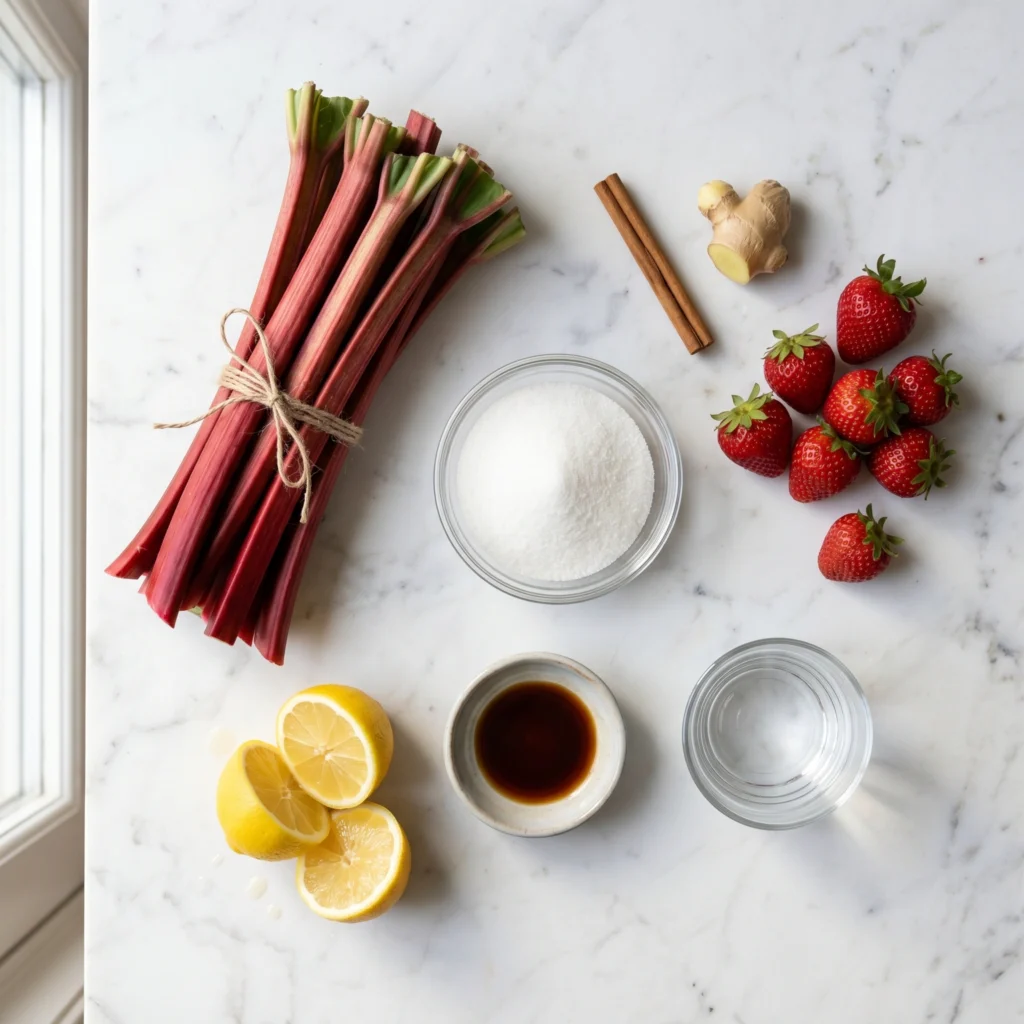
- 4 cups (about 500g) fresh rhubarb stalks, trimmed and cut into ½-inch pieces
- ¾ cup (150g) granulated white sugar (adjust to taste depending on tartness preference)
- 3 tablespoons water
- 1 tablespoon fresh lemon juice
- ½ teaspoon pure vanilla extract (added off the heat for best flavor)
Optional Flavor Additions
- ½ teaspoon ground cinnamon — adds warmth; pairs beautifully with pork dishes
- 1 teaspoon freshly grated ginger — gives the sauce a bright, lively kick
- ¼ cup orange juice (in place of water) — deepens the citrus notes
- 1 cup hulled and halved strawberries — the classic pairing; softens the tartness dramatically
- Pinch of cardamom — floral and unexpected; wonderful with yogurt or cheese
- Zest of one lemon or orange — intensifies the brightness without adding liquid
Ingredient Notes
On sugar: White granulated sugar gives the cleanest flavor and the most vibrant color. Brown sugar can be used for a deeper, more caramel-like result, though it will darken the sauce considerably. Honey works as a substitute but adds its own flavor; start with slightly less as honey is sweeter by volume.
On rhubarb: Only use the stalks. Rhubarb leaves are toxic and must be completely discarded. Choose stalks that are firm and brightly colored — deep red stalks will produce a more vivid pink-red sauce, while greener stalks give a more muted color without affecting flavor.
Step-by-Step Instructions: How to Make Rhubarb Sauce
Step 1 — Prep Your Rhubarb
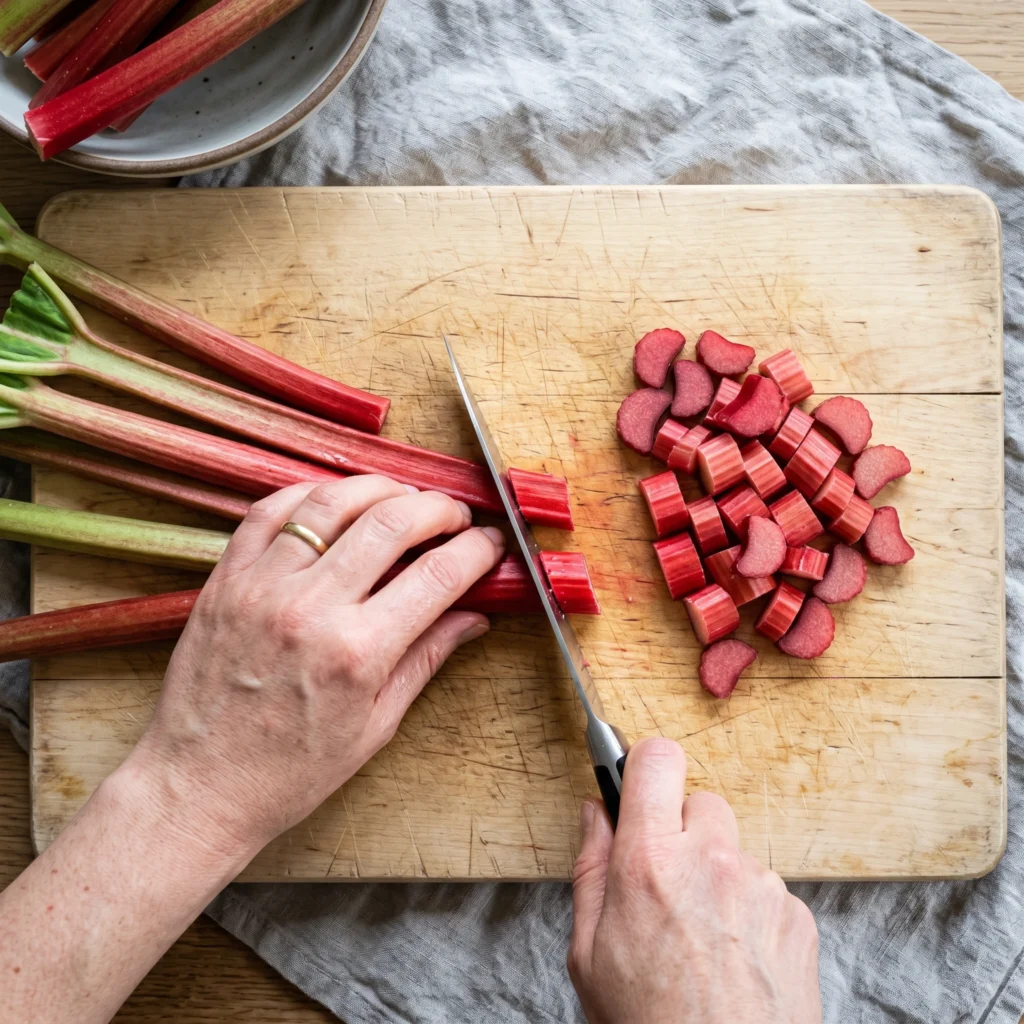
Rinse the rhubarb stalks under cold running water. Trim both ends — the leafy top and the white base — and discard them. Cut the stalks into uniform ½-inch pieces. Consistency in size matters here: pieces that are too large will take much longer to break down and may leave you with uneven texture in the final sauce.
Tip: If your rhubarb is particularly fibrous (common in older, larger stalks), you can peel away the outermost strings just as you would with celery. It’s rarely necessary but can improve the final texture.
Step 2 — Combine Rhubarb, Sugar, and Water in the Pan
Add the chopped rhubarb, granulated sugar, and water to a medium saucepan. If you’re using cinnamon, ginger, cardamom, or citrus zest, add those now as well. Give everything a quick stir to coat the rhubarb in the sugar.
Use a heavy-bottomed saucepan if you have one — it distributes heat evenly and significantly reduces the risk of scorching, which is the number one way to ruin this recipe.
Step 3 — Cook Over Medium Heat, Stirring Frequently
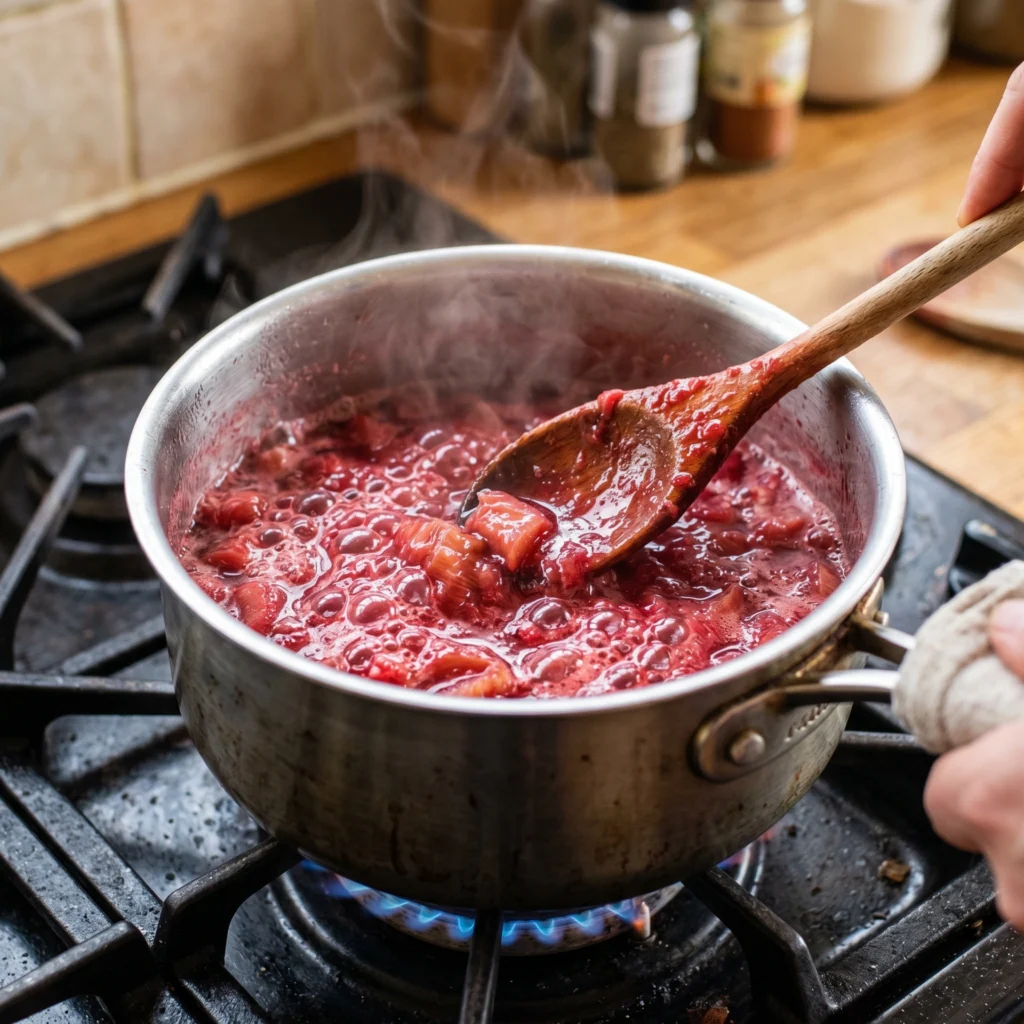
Place the saucepan over medium heat. Within about 3 to 5 minutes, the rhubarb will begin releasing its natural juices and the sugar will dissolve into the liquid. You’ll see the mixture go from dry and granular to bubbling and fragrant almost like a switch was flipped.
Continue cooking, stirring every minute or two, until the rhubarb is completely tender and breaking apart — this usually takes between 12 and 18 minutes depending on the freshness and age of the stalks. Older, woodier rhubarb takes longer. Fresh spring rhubarb practically dissolves on contact.
Watch the heat: If the mixture begins boiling aggressively, reduce the heat to medium-low. A gentle, steady simmer is what you want. Hard boiling can cause the sauce to splatter and may cook off too much liquid too quickly.
Step 4 — Adjust Consistency and Taste
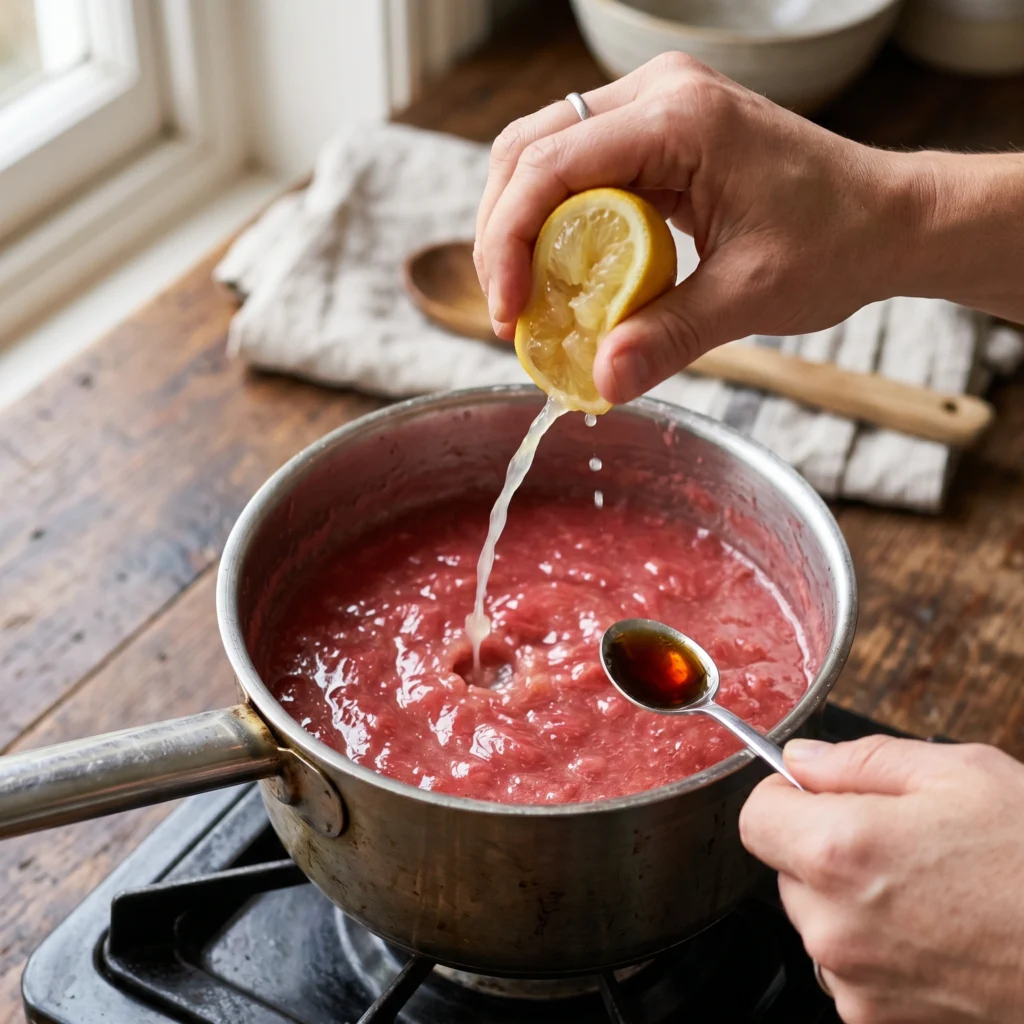
Once the rhubarb has fully broken down, remove the pan from the heat and stir in the lemon juice and vanilla extract.
Now taste it. This step is non-negotiable. Rhubarb varies enormously in tartness depending on the variety and time of year. Some batches will need an extra tablespoon or two of sugar; others will be perfect as written. Trust your palate over the recipe.
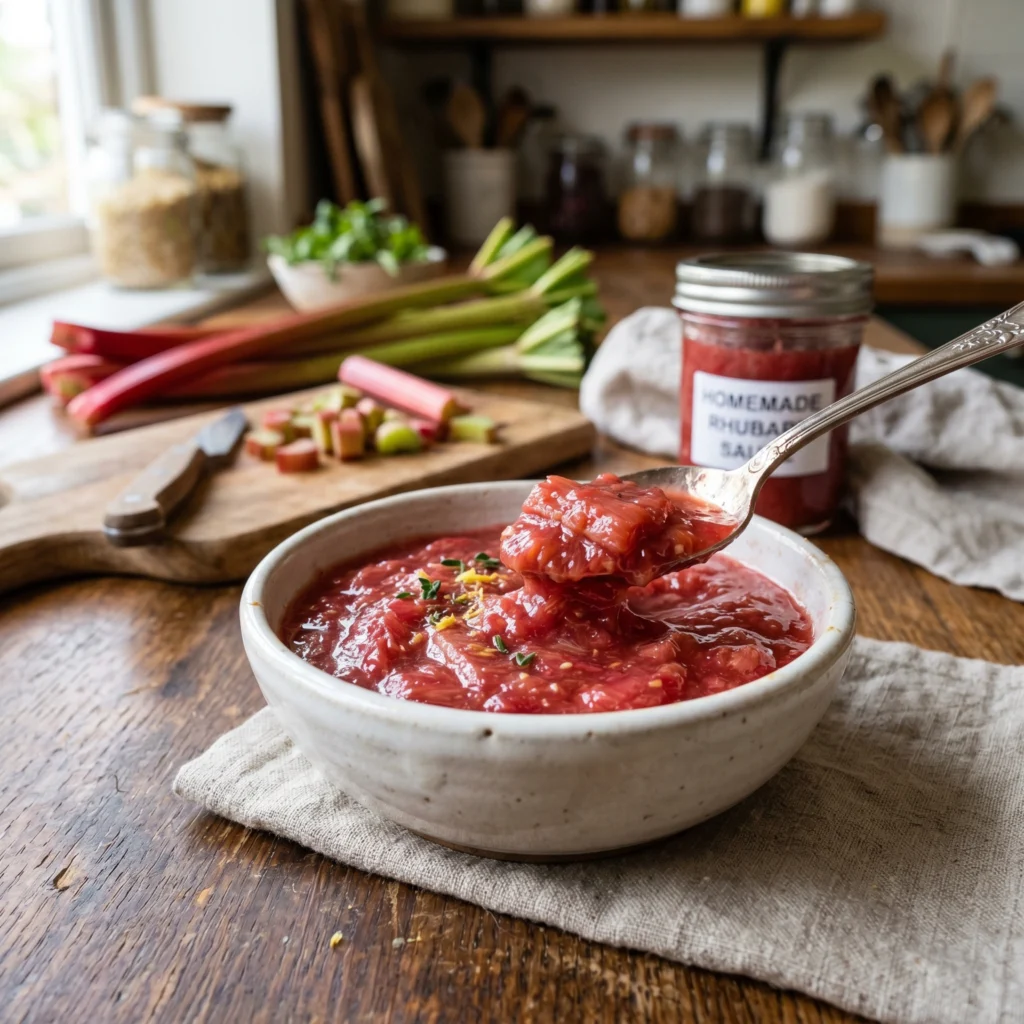
For a smoother sauce: Use the back of a wooden spoon or a potato masher to break down any remaining chunks, then pass the sauce through a fine-mesh sieve or give it a quick blend with an immersion blender.
For a chunkier, more rustic sauce: Skip the blending entirely. Leave the pieces partially intact for a texture closer to a compote.
Step 5 — Cool and Transfer
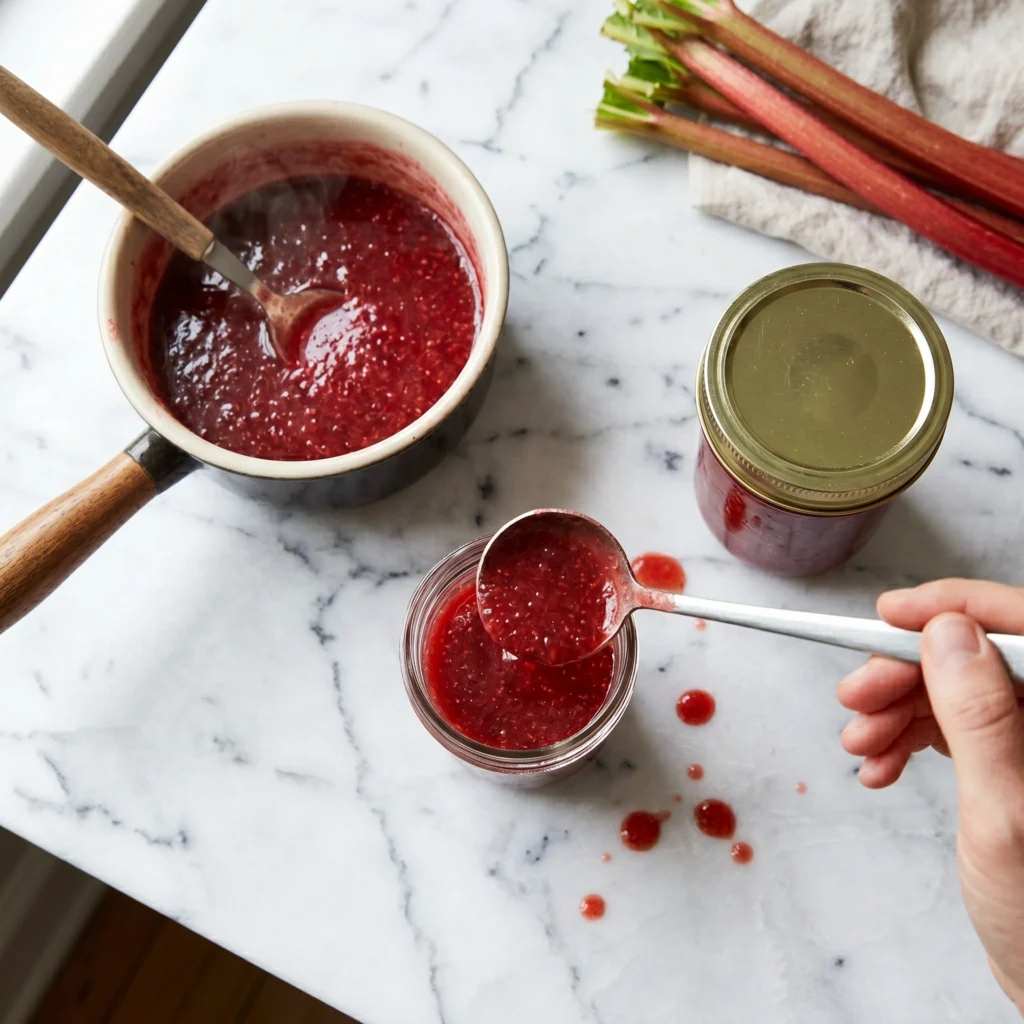
Let the sauce cool in the pan for at least 15 minutes before transferring it to a clean jar or airtight container. It will thicken noticeably as it cools — don’t be alarmed if it looks slightly thin while still hot.
Once at room temperature, transfer to the refrigerator. The sauce is ready to use immediately, but the flavor deepens and mellows beautifully after a night in the fridge.
Pro Tips for the Best Rhubarb Sauce
These are the hard-won lessons from years of making this recipe, the details that don’t always make it into the instructions but make all the difference in the bowl.
1. Don’t skip the lemon juice. Rhubarb already has plenty of natural acidity, so this might seem redundant. But the lemon juice added at the end brightens the entire sauce, lifting it from flat-sweet to vivid and alive. Add it off the heat to preserve its fresh flavor.
2. Add vanilla extract at the end, never the beginning. Vanilla is heat-sensitive. Added to the pan at the start, it cooks off quickly and leaves behind a slightly bitter, hollow note. Added after you remove the pan from heat, it blooms fully into the sauce.
3. Macerate the rhubarb for a deeper flavor. If you have time, toss the chopped rhubarb with the sugar and let it sit for 30 minutes to an hour before cooking. The sugar draws out the juices, and you can cook the mixture entirely in its own liquid without needing any added water. The result is a more intensely flavored, slightly more syrupy sauce.
4. Use the right pan size. A pan that’s too large will cause the liquid to evaporate too quickly. A pan that’s too small risks boiling over. A medium saucepan (2–3 quart capacity) is the sweet spot for a 4-cup batch of rhubarb.
5. Color = flavor. Deep red stalks don’t just look prettier — they tend to be sweeter and have a fuller flavor than their pale green counterparts. When shopping, reach for the reddest stalks you can find.
6. Freeze it in ice cube trays. Once fully cooled, freeze portions of the sauce in an ice cube tray. Transfer the frozen cubes to a freezer bag and use them individually throughout the year. Each cube is roughly 2 tablespoons — perfect for stirring into oatmeal, adding to smoothies, or topping a single serving of yogurt.
7. Don’t walk away from the stove. Rhubarb sauce can go from perfect to scorched quickly once the moisture cooks down. Stay close and stir regularly, especially in the final 5 minutes.
Common Mistakes to Avoid When Making Rhubarb Sauce
Even a simple recipe like this has its pitfalls. Here’s what to watch out for.
Mistake #1: Using the leaves. Rhubarb leaves contain oxalic acid in concentrations high enough to cause serious illness. They must always be removed and discarded — never composted, never cooked, never consumed in any form. This is not a flavor preference; it’s a safety requirement.
Mistake #2: Adding too much liquid. The instinct to add more water “just in case” is understandable, but rhubarb releases an enormous amount of its own moisture once it hits heat. Starting with too much liquid produces a thin, watery sauce that takes forever to reduce and lacks intensity. Stick to the 3 tablespoons called for in the recipe.
Mistake #3: Cooking on too high a heat. High heat causes the sauce to scorch on the bottom while the surface is still simmering, resulting in an unpleasant bitter note throughout. Medium heat — patient and steady — is always the right call.
Mistake #4: Not tasting before removing from heat. Sugar levels in rhubarb vary widely by variety and season. The recipe provides a starting point, not a fixed truth. Taste, adjust, taste again. A sauce that’s slightly too tart can be rescued with an extra tablespoon of sugar. One that’s too sweet is much harder to correct (though a splash of extra lemon juice can help).
Mistake #5: Storing while still hot. Transferring hot sauce directly into a sealed glass jar traps steam, creates condensation, and dilutes the top layer of your sauce. Allow it to cool to at least room temperature before sealing and refrigerating.
Mistake #6: Expecting the color to stay bright. Fresh rhubarb sauce has a gorgeous, vivid pink-red color straight out of the pan. Over days in the fridge, it oxidizes slightly and shifts toward a brownish-pink. This is completely normal and doesn’t affect flavor. If presentation matters for a special occasion, make the sauce the same day you plan to serve it.
Storage and Serving Suggestions
How to Store Rhubarb Sauce
Refrigerator: Transfer cooled sauce to a clean, airtight glass jar or container. It will keep in the refrigerator for up to 2 weeks. The flavor actually improves after the first 24 hours as the ingredients meld together.
Freezer: Rhubarb sauce freezes exceptionally well for up to 6 months. Freeze in small portions (ice cube trays, small freezer bags, or silicone molds) for easy, on-demand use. Thaw overnight in the refrigerator or gently rewarm in a small saucepan over low heat.
Canning: If you’d like to preserve a larger batch for pantry storage, rhubarb sauce can be water-bath canned. Because rhubarb is naturally high in acid, it’s safe for hot water bath canning. Process half-pint jars for 10 minutes. Follow approved USDA canning guidelines for food safety.
Ways to Serve Rhubarb Sauce
The beauty of rhubarb sauce is its willingness to go just about anywhere. Here are some of the best ways to use it:
For breakfast:
- Swirled into plain Greek yogurt or layered into a parfait
- Spooned over buttermilk pancakes or French toast in place of maple syrup
- Stirred into overnight oats or warm porridge
- Dolloped on top of ricotta toast with a drizzle of honey
For dessert:
- Poured warm over vanilla bean ice cream or frozen yogurt
- Layered into a trifle with whipped cream and pound cake
- Used as a filling for crepes or blintzes
- Swirled into cheesecake batter before baking
- Served alongside shortbread cookies for dipping
For savory applications:
- Spooned over roasted pork tenderloin or grilled pork chops (add cinnamon and reduce the sugar slightly)
- Served as an accompaniment to roast duck or chicken
- Used as a glaze on salmon fillets with a dash of soy sauce stirred in
- Stirred into a vinaigrette for a spring salad dressing
For drinks:
- Stirred into sparkling water with a squeeze of lime for a homemade rhubarb soda
- Shaken with gin, lemon juice, and ice for a rhubarb cocktail
- Used as a simple syrup substitute in lemonade or iced tea
Frequently Asked Questions About Rhubarb Sauce
1. Can I use frozen rhubarb to make rhubarb sauce?
Absolutely, and it works beautifully. Frozen rhubarb has already been partially broken down by the freezing process, which actually speeds up the cooking time by a few minutes. Use it directly from frozen — no need to thaw — and reduce the added water to 1 tablespoon or eliminate it entirely, since frozen rhubarb releases more liquid during cooking.
2. How do I make my rhubarb sauce thicker?
If your sauce is thinner than you’d like after cooking, simply continue simmering it over medium-low heat with the lid off. Every additional 3–5 minutes of cooking will reduce the liquid further and concentrate the sauce. Alternatively, you can stir in a slurry of 1 teaspoon of cornstarch dissolved in 1 tablespoon of cold water during the last few minutes of cooking. The sauce will thicken considerably as it cools regardless, so give it time before deciding it needs more work.
3. Can I reduce the sugar or use a sugar substitute?
Yes, with some adjustments. You can reduce the sugar by up to half for a more tart, less sweet sauce — excellent for savory applications. For sugar-free versions, granulated stevia or monk fruit sweetener work well in equal amounts. Honey and maple syrup both work as natural alternatives; start with slightly less than the recipe calls for and taste as you go. Keep in mind that all of these substitutions will slightly alter the final texture and color of the sauce.
4. Why did my rhubarb sauce turn brown or gray?
A brownish hue after cooking can result from a few things: using very green stalks (which contain less of the red pigment), cooking too long, or using a reactive pan (like uncoated aluminum). To preserve the prettiest color, cook in a stainless steel or enameled cast iron pan, avoid overcooking, and add the lemon juice at the end as instructed — the acid helps preserve the pink color. Oxidation in the fridge over several days is normal and unavoidable.
5. How is rhubarb sauce different from rhubarb jam or rhubarb preserves?
Great question — the distinction matters, especially when it comes to uses and storage. Rhubarb sauce is cooked briefly and relies solely on the fruit’s natural pectin and sugar concentration for body; it’s meant to be pourable and spoonable rather than spreadable. Jam and preserves are cooked longer and often with added pectin to achieve a firm, spreadable set. Sauce is generally less sweet and has a shorter shelf life. If you want something to spread on toast, go with jam. If you want a topping, glaze, or condiment, rhubarb sauce is the one.
6. Can I make rhubarb sauce without any added sugar?
You can, but be prepared — unsweetened rhubarb sauce is very tart, almost startlingly so. It has its uses (particularly in savory cooking, where you might want that sharpness to cut through rich meats), but as a dessert topping or breakfast condiment, most people find it too bracingly sour. A small amount of sugar genuinely improves the flavor, not just the sweetness. Even ¼ cup of sugar in a 4-cup batch takes the edge off significantly. If you’re avoiding refined sugar for dietary reasons, even a tablespoon of honey goes a long way.
7. What can I do with rhubarb sauce if I made too much?
Lucky you. Beyond the serving ideas listed above, extra rhubarb sauce can be frozen in silicone molds for later use, stirred into smoothies, used as a topping for waffles, blended into a salad dressing, or given away in small jars as a thoughtful homemade gift. It pairs particularly well with creamy or rich things — ice cream, cheesecake, thick yogurt — so if you have a surplus, hosting a dessert night is never a wrong answer.
Nutrition Information (Approximate Per 2-Tablespoon Serving)
Based on the base recipe using white sugar, yielding approximately 2 cups / 16 servings. Values are estimates only and will vary with ingredient brands and any substitutions made.
| Nutrient | Amount Per Serving |
|---|---|
| Calories | 45 kcal |
| Total Carbohydrates | 11g |
| Sugars | 10g |
| Dietary Fiber | 0.4g |
| Total Fat | 0g |
| Saturated Fat | 0g |
| Protein | 0.2g |
| Sodium | 1mg |
| Vitamin C | 3% DV |
| Calcium | 2% DV |
| Potassium | 80mg |
A note on nutrition: Rhubarb itself is low in calories and a reasonable source of fiber, Vitamin K, and calcium. The majority of the caloric content in rhubarb sauce comes from the added sugar. Reducing the sugar by half cuts the calorie count nearly in half as well.
A Few Words on Rhubarb Season and Sourcing
Rhubarb season runs from late April through early July in most temperate climates, with the sweetest and most tender stalks typically available in May and June. Farmers’ market rhubarb is almost always superior to grocery store rhubarb — fresher, more flavorful, and often sold in a wider variety of colors.
If you grow your own, harvest stalks that are at least 10 inches long by snapping them at the base rather than cutting. Never harvest more than half the plant’s stalks in a single season — rhubarb needs its leaves to photosynthesize and build energy for next year’s growth.
Out of season, frozen rhubarb is a completely acceptable substitute and is available year-round in most large supermarkets.
Conclusion
There’s a reason rhubarb sauce has been part of home kitchens for generations — it works. It transforms a tart, astringent plant into something genuinely elegant with nothing more than sugar, a little heat, and a few minutes of patience. The result is versatile enough to bridge breakfast and dinner, sweet enough to satisfy dessert cravings, and tart enough to hold its own alongside savory dishes.
Making your own rhubarb sauce from scratch is one of those small kitchen victories that costs almost nothing, takes almost no time, and earns a disproportionate amount of appreciation from everyone who tastes it. Whether you’re spooning it over a bowl of vanilla ice cream on a Tuesday night or serving it alongside a roasted pork shoulder at a weekend dinner party, it never feels out of place.
If you try this recipe, I’d love to hear how it turned out. Did you add strawberries? Go the savory route with ginger and black pepper? Swirl it into a cheesecake? The comments section is below — and so is your next batch of rhubarb sauce.
Did you make this recipe? Tag it with #rhubarbsauce and share your creation!
Pin this recipe for later | Print this recipe | Save to your recipe box
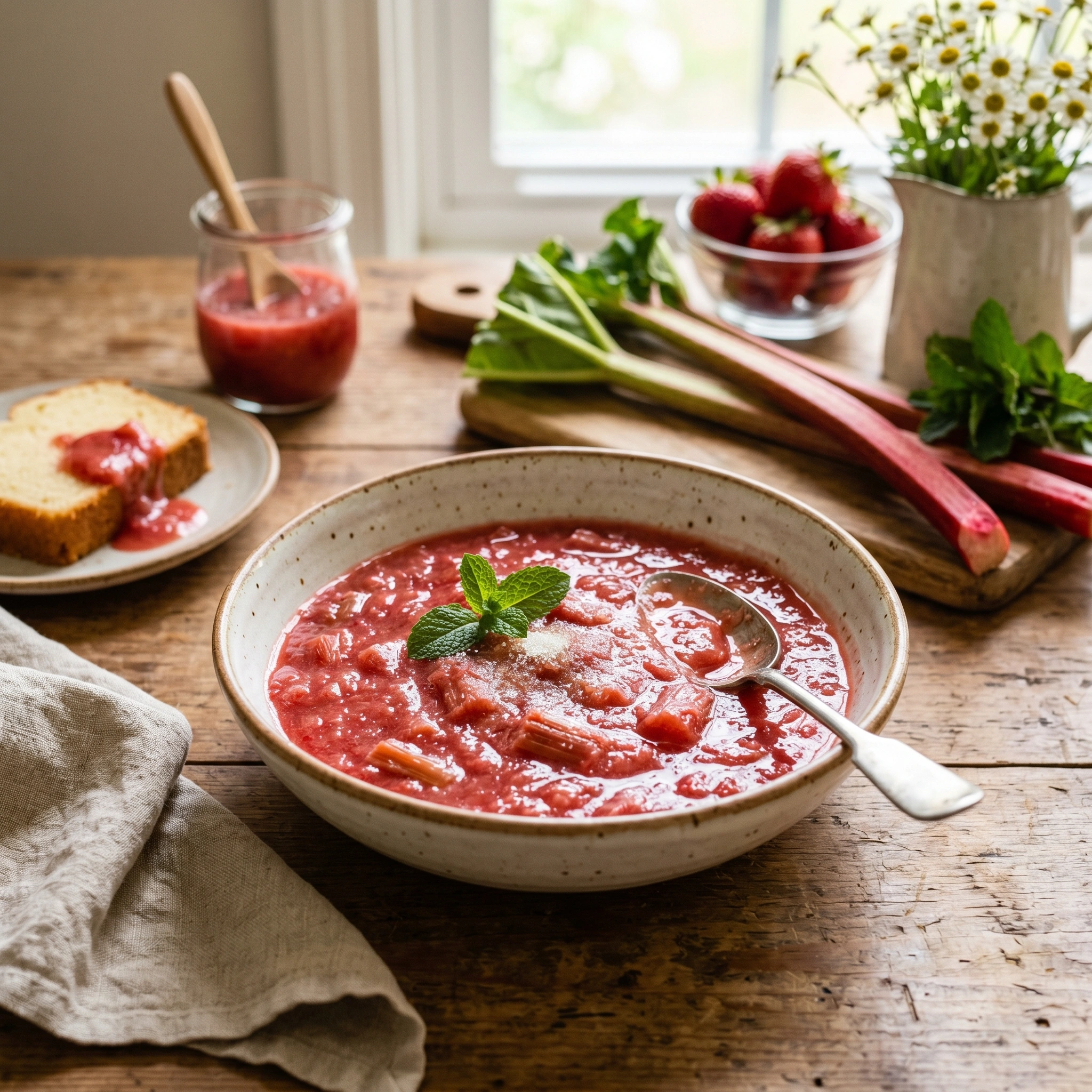

Rhubarb Sauce
Ingredients
Equipment
Method
- Rinse the rhubarb stalks under cold running water. Trim and discard both ends. Cut stalks into uniform ½-inch pieces — even sizing ensures the sauce breaks down at the same rate. If stalks are particularly fibrous, peel away the outermost strings as you would with celery.
- Add the chopped rhubarb, granulated sugar, and water to a medium heavy-bottomed saucepan. If using cinnamon, ginger, cardamom, or citrus zest, add those now as well. Stir briefly to coat the rhubarb in the sugar.
- Place the pan over medium heat. Stir every 1–2 minutes. After about 3–5 minutes, the rhubarb will begin releasing its natural juices and the sugar will dissolve. Continue cooking for 12–18 minutes until the rhubarb is completely tender and broken down into a saucy consistency. If the mixture boils aggressively, reduce heat to medium-low. A gentle, steady simmer is ideal.
- Remove the pan from heat. Stir in the lemon juice and vanilla extract. Taste the sauce and add more sugar one tablespoon at a time if needed — rhubarb varies widely in tartness. For a smooth sauce, use an immersion blender or pass through a fine-mesh sieve. For a chunkier, more rustic texture, leave as is.
- Allow the sauce to cool in the pan for at least 15 minutes — it will thicken noticeably as it cools. Transfer to a clean, airtight glass jar or container. Refrigerate until ready to use. The flavor deepens and mellows beautifully after a night in the fridge.